
 Need help?
Do you have a question about the Kubota SK1050 and is the answer not in the manual?
Details the location of the serial number for identification.
Describes the purpose and scope of the SK1050 unit's operation.
Outlines guidelines and risks associated with modifying the equipment.
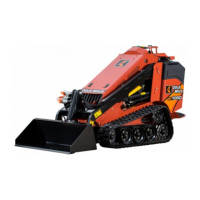
Identifies and illustrates the main parts of the unit.
Provides a visual guide to the different sides of the unit.
Explains how the manual is structured and how to use its elements.
Explains the importance of the manual and how to use it for reference.
Provides essential safety rules and procedures to follow before operating.
Lists chemicals known to cause cancer or reproductive harm.
Details actions to take in case of electric strike, gas line damage, or fire.
Explains the meaning of DANGER, WARNING, CAUTION, NOTICE, and IMPORTANT.
Illustrates and explains various safety decals and warnings on the machine.
Identifies and explains the dashboard gauges and warning lights.
Details the various indicators and readouts on the machine's display.
Explains how to access and navigate the service reminder screen.
Identifies and describes the primary operator controls and switches.
Locates and describes the battery disconnect switch in the engine area.
Explains the function of the level indicator and attachment latches.
Steps for collecting necessary data before starting work.
Procedures for identifying potential hazards at the jobsite.
Methods for classifying jobsite hazards based on underground utilities.
Ensuring all necessary supplies and equipment are ready for use.
Steps for safely connecting and securing an attachment to the unit.
Instructions for connecting hydraulic hoses for attachments.
Procedure for safely starting the machine's engine.
Basic guidelines and safety precautions for operating the machine.
Factors and precautions for operating the machine on slopes.
Steps for properly shutting down the machine's engine.
Details on identifying lifting points and the procedure for lifting the unit.
Instructions for loading, tying down, and unloading the unit for transport.
Procedures for towing or retrieving the unit if it breaks down.
Steps for cleaning the equipment after use.
Procedure for safely disconnecting an attachment from the unit.
Guidance on securing tools and accessories after the job.
General safety warnings and specific precautions for service work.
Lists recommended lubricants, fluids, and service symbols.
Information on the correct type of diesel fuel and fueling safety.
Explains the Diesel Particulate Filter (DPF) regeneration process.
Tasks to perform during initial startup and every 10 operating hours.
Maintenance tasks required every 50 operating hours.
Maintenance tasks required every 250 operating hours.
Maintenance tasks required every 500 operating hours.
Maintenance tasks required every 1000 operating hours.
Maintenance tasks performed based on inspection or specific conditions.
Dimensions and physical characteristics of the basic unit.
Details on engine, hydraulic system, noise, and vibration levels.
Steps for reporting malfunctions and ordering parts.
Information on obtaining publications, training, and dealer support.
Outlines the terms, conditions, and exclusions of the product warranty.
A log to record performed service, dates, and operating hours.
Lists diagnostic trouble codes (P-codes) for the engine system.
 General
| Brand | Kubota |
|---|---|
| Model | SK1050 |
| Category | Multi Terrain Loaders |
| Language | English |

 To Next Page