EasyManua.ls Logo

KYLAND PTS-10 - User Manual

KYLAND PTS-10
19 pages
Print Icon
To Next Page IconTo Next Page
Loading...
www.kyland.com
3
PTS-10
Time Server
Reference
Manual
Question and Answer IconNeed help?

Do you have a question about the KYLAND PTS-10 and is the answer not in the manual?

Summary

PTS-10 Time Server Features

Introduction to PTS-10

Provides an overview of the PTS-10 Time Server's capabilities, synchronization sources, and key features.

LCD Interface and Status

Main Screen Overview

Details the default main screen layout, showing time and server status information.

Front Panel Controls

Explains the function of front panel indicator lights and navigation/control keys for user interaction.

Detailed Status Indicators

Describes the detailed status indications for system reference time and various time reference sources.

PTP and Sync Source Display

Covers the display of PTP operational modes and the status indicators for different sync sources.

Operations and System Configuration

Accessing Settings

Outlines the process of entering and navigating the settings configuration screen for device adjustments.

Sync Source Setup

Details the settings for configuring various sync sources like GPS, BDS, GLONASS, and PTP.

Clock and NTP Configuration

Explains how to configure clock settings (UTC/TAI, timezone) and NTP server parameters for time accuracy.

PTP Network Synchronization

Describes PTP mode, domain, priority, media, and VLAN settings for network synchronization.

Output Signal Management

Details the configuration of various output signals including SO, O1-O5, and IRIG-B-AC.

Network Interface Management

Covers the configuration of network settings such as IP addresses and subnet masks for multiple interfaces.

Overview

The KYLAND PTS-10 Time Server is a sophisticated and versatile device designed to provide high-precision time synchronization across various applications. It serves as a standard time server, capable of synchronizing to absolute time sources such as GPS, BDS (BeiDou Navigation Satellite System), and GLONASS. Additionally, it can synchronize to local time sources via an external IRIG-B interface, PPS interface, or other local time sources, ensuring robust and flexible timekeeping.

Function Description:

The primary function of the PTS-10 is to act as a central time reference, distributing accurate time signals to connected systems and devices. Its built-in OXCO (Oven Controlled Crystal Oscillator) provides a stable reference frequency source, crucial for maintaining precision even when external synchronization sources are temporarily unavailable. The system incorporates a multi-source time synchronization auto-selection algorithm, enabling stable switching between various reference sources like GPS, BDS, GLONASS, IRIG-B, PTP (Precision Time Protocol), and local clocks. This intelligent algorithm also supports sky/ground and master/slave clock backup mechanisms, enhancing reliability and fault tolerance.

The PTS-10 offers flexible time synchronization signal output slots, allowing users to configure different timing output interface channels to suit specific requirements. These output channels include PPS (Pulse Per Second), PPM (Pulse Per Minute), 10M (10 MHz frequency reference), IRIG-B (DC), IRIG-B (AC), and Serial Time Signal (TOD - Time Of Day, etc.). This wide array of output options makes it compatible with a diverse range of industrial and communication systems.

Furthermore, the PTS-10 supports network synchronization time protocols such as NTP/SNTP (Network Time Protocol/Simple Network Time Protocol) and IEEE1588 V2.0 (Precision Time Protocol). The IEEE1588 functionality is highly configurable, allowing the device to operate in several modes, including grandmaster clock, slave clock, and boundary clock, depending on the network architecture and synchronization needs.

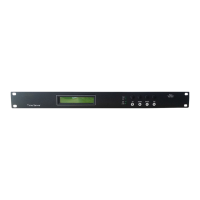
For ease of configuration and status monitoring, the PTS-10 features an integrated LCD display and a keyboard. This allows users to view real-time status information and perform configurations directly on the device. Beyond local interaction, the PTS-10 is designed to communicate timing source status and clock status to control centers using standard industrial protocols such as IEC61850 MMS, IEC60870-T104, DNP3.0, and Modbus, facilitating centralized monitoring and management in complex operational environments.

Important Technical Specifications:

  • Synchronization Sources: GPS, BDS, GLONASS, IRIG-B, PPS, PTP, Local Clock.
  • Internal Oscillator: OXCO for stable reference frequency.
  • Output Timing Channels: PPS, PPM, 10M, IRIG-B (DC), IRIG-B (AC), Serial Time Signal (TOD).
  • Network Time Protocols: NTP/SNTP, IEEE1588 V2.0.
  • IEEE1588 Modes: Grandmaster Clock, Slave Clock, Boundary Clock.
  • Management Protocols: IEC61850 MMS, IEC60870-T104, DNP3.0, Modbus.
  • Display: LCD for time information and status.
  • Input/Output: Flexible time synchronization signal output slots.

Usage Features:

  • Main Screen Display: The default main screen provides essential information at a glance. The top line shows the current time in yyyy-mm-dd hh:mm:ss format, along with the PTP work mode (M for Master, S for Slave, B for Boundary). The bottom line displays the time server's status, including the current time source and clock status.
  • Indicator Lights: The front panel includes indicator lights for Power (PSW), Satellite Number (SAT), Antenna Status (ANT), and Lock Status (LOCK).
    • PSW: On indicates Power On, Off indicates Power Off.
    • SAT: On indicates Satellite Number >=4, Off indicates Satellite Number <4.
    • ANT: On indicates Antenna is normal, Off indicates Antenna is abnormal.
    • LOCK: Flashing (1 second) indicates Clock is locked; Flashing (3 seconds) indicates Clock is held; Off indicates Clock is unlocked.
  • Keyboard Navigation: The front panel features UP, DOWN, Enter, and ESC keys for navigation and configuration.
    • UP/DOWN: Used to view information in respective directions or select options.
    • Enter: Confirms an operation or enters a setting screen.
    • ESC: Cancels an operation or returns to a higher level menu.
  • Status Indication: Detailed status indications are provided on the LCD.
    • System Reference Time: Shown as YYYY-MM-DD HH:MM:SS.mmm.
    • Time Reference Status: Displays the current time source (e.g., GPS, BDS, GLONASS, IRIG-B, PTP) and synchronization mode (SEEK, INIT, SYNC, LOCK, RCVR, HOLD).
      • SEEK: Seeking status.
      • INIT: Initial status.
      • SYNC: Synchronization status.
      • LOCK: Locked status.
      • RCVR: Time adjust status.
      • HOLD: Hold mode status.
    • PTP Mode: Indicates if the PTS-10 is operating as a PTP Grandmaster Clock, PTP Slave Clock, or PTP Boundary Clock.
    • Sync Source Details: Provides specific information about the active synchronization source. For GPS, BDS, and GLONASS, it shows the number of locked satellites, antenna status (OK, UV, NV, OC), and fix mode (3D, 2D, HD, No). For IRIG-B, it displays the input format (DC, AC, Modified Manchester Code) and the number of input source frames. For PTP, it shows the offset, mode (E2E or P2P), and delay.
  • Configuration Settings: The device allows extensive configuration through the LCD and keyboard, organized into several categories:
    • Sync Source Settings: Configure external clock sources (GPS, BDS, GLONASS, IRIG-B, PTP), set priority for signal sources, IRIG-B time service, and antenna time delay compensation. It supports both single and multiple working modes for source selection.
    • Clock Settings: Set reference time as UTC or TAI, configure time zone offset, and define output modes (Always/Lock).
    • NTP Settings: Configure NTP timing signal output and time zone offset between UTC in hours.
    • PTP Settings: Define timing modes, sync time interval, delay time interval, priority, and VLAN settings for PTP operation.
    • Output Settings: Configure individual output channels (SO, O1-O5, AC) for signal type (PPS, IRIG, PPM, 10M), signal delay compensation, polarity, and other parameters.
    • Network Settings: Configure IP addresses, subnet masks, and operating modes for multiple Ethernet interfaces (ETHO, ETH1, ETH2, ETH3).

Maintenance Features:

  • Password Protection: Any modified settings require password confirmation to prevent unauthorized changes. The default password is '8'. The system provides clear feedback for valid or invalid password entries.
  • Antenna Status Monitoring: The device continuously monitors the GPS/BDS/GLONASS antenna status, indicating if it's normal (OK), experiencing low power supply voltage (UV), no power supply voltage (NV), or over current (OC). This helps in diagnosing antenna-related issues.
  • Satellite Tracking Information: For satellite-based synchronization, the display shows the number of locked satellites and the fix mode, which helps in assessing the quality of the satellite signal reception.
  • IRIG-B Input Format and Frame Monitoring: Provides details on the IRIG-B input format and the number of input source frames, aiding in troubleshooting IRIG-B signal reception.
  • PTP Offset and Delay Monitoring: For PTP synchronization, the device displays the PTP offset and delay, which are critical parameters for evaluating synchronization accuracy and network performance.
  • Remote Monitoring: The ability to send timing source and clock status to control centers via industrial protocols (IEC61850 MMS, IEC60870-T104, DNP3.0, Modbus) allows for proactive remote monitoring and maintenance, reducing the need for on-site checks.
  • Screen Backlight Activation: If the screen backlight is off, pressing any key will reactivate it, ensuring visibility when needed.

KYLAND PTS-10 Specifications

General IconGeneral
BrandKYLAND
ModelPTS-10
CategoryNetwork Time Servers
LanguageEnglish