Need help?
Do you have a question about the Lancair ES-P and is the answer not in the manual?
Highlights the importance of reading the handbook and following guidelines for safe operation.
Defines terms related to aircraft weight and balance calculations and their importance.
Describes the function and operation of key engine controls like throttle and mixture.
Defines various airspeed terms and symbols used in the manual.
Lists critical operating speeds (Vne, Va, Vfe, etc.) with their values for safe flight.
Specifies the maximum flight altitude with and without oxygen for safety.
Defines the allowable Center of Gravity range for the aircraft's stability.
Prohibits flight into known icing conditions due to severe safety risks.
Outlines procedures for engine failure during takeoff, in flight, and during restart.
Lists critical airspeeds for various emergency scenarios like descent and glide.
Addresses problems with the electrical system and its components.
Step-by-step guide for preflight checks of aircraft systems and components.
Details normal and maximum performance takeoff and climb procedures.
Procedures for maintaining cruise flight, including power settings and leaning.
Describes the procedure for a normal landing, including touchdown and rollout.
Provides guidance for landing in crosswind conditions to maintain control.
Calculation and value of the empty aircraft's center of gravity.
Calculation and value of the aircraft's center of gravity with full fuel.
Illustrates various loading scenarios and their resulting CG positions.
Explains the aircraft's flight control system and unique airfoil design.
Overview of the engine, its controls, starting procedures, and accessories.
Details the aircraft's fuel tanks, selector valve, pumps, and venting.
Describes the aircraft's electrical system, including alternators, batteries, and indicators.
Outlines FAA required and recommended inspection intervals for airworthiness.
Procedures for safely handling the aircraft on the ground, including jacking and towing.
Guidance on checking and servicing the aircraft's fuel system for water and debris.
Guidance on servicing the aircraft's engine oil system, including oil changes.
Instructions for servicing the propeller, including warnings and inspections.
Details regulations and requirements for flight at different altitudes, including oxygen use.
Describes physiological reactions to altitude and the need for supplemental oxygen.
Advice and preparation tips for the first flight in the aircraft, including preflight checks.
Information and warnings about operating in severe weather conditions like wind shear and turbulence.
Critical warning against flight into icing conditions and handling inadvertent icing.
Discusses causes and procedures related to engine failure, particularly during takeoff.
A comprehensive checklist for annual or 100-hour aircraft inspection.
Detailed inspection steps for the engine section, including checks for leaks and components.
Inspection procedures for the propeller, its hub, governor, and spinner.
Inspection procedures for the aircraft's electrical system, including battery, wiring, and lights.
 General
| Category | Aircraft |
|---|---|
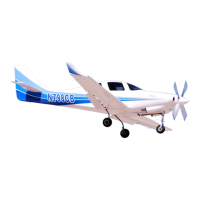
| Manufacturer | Lancair |
| Model | ES-P |
| Engine Type | Piston |
| Max Speed | 230 knots |
| Cruise Speed | 200 knots |
| Range | 1, 000 nm |
| Max Takeoff Weight | 3, 600 lb (1, 633 kg) |


 To Next Page