Your Pico Is Now Ready For Launching!
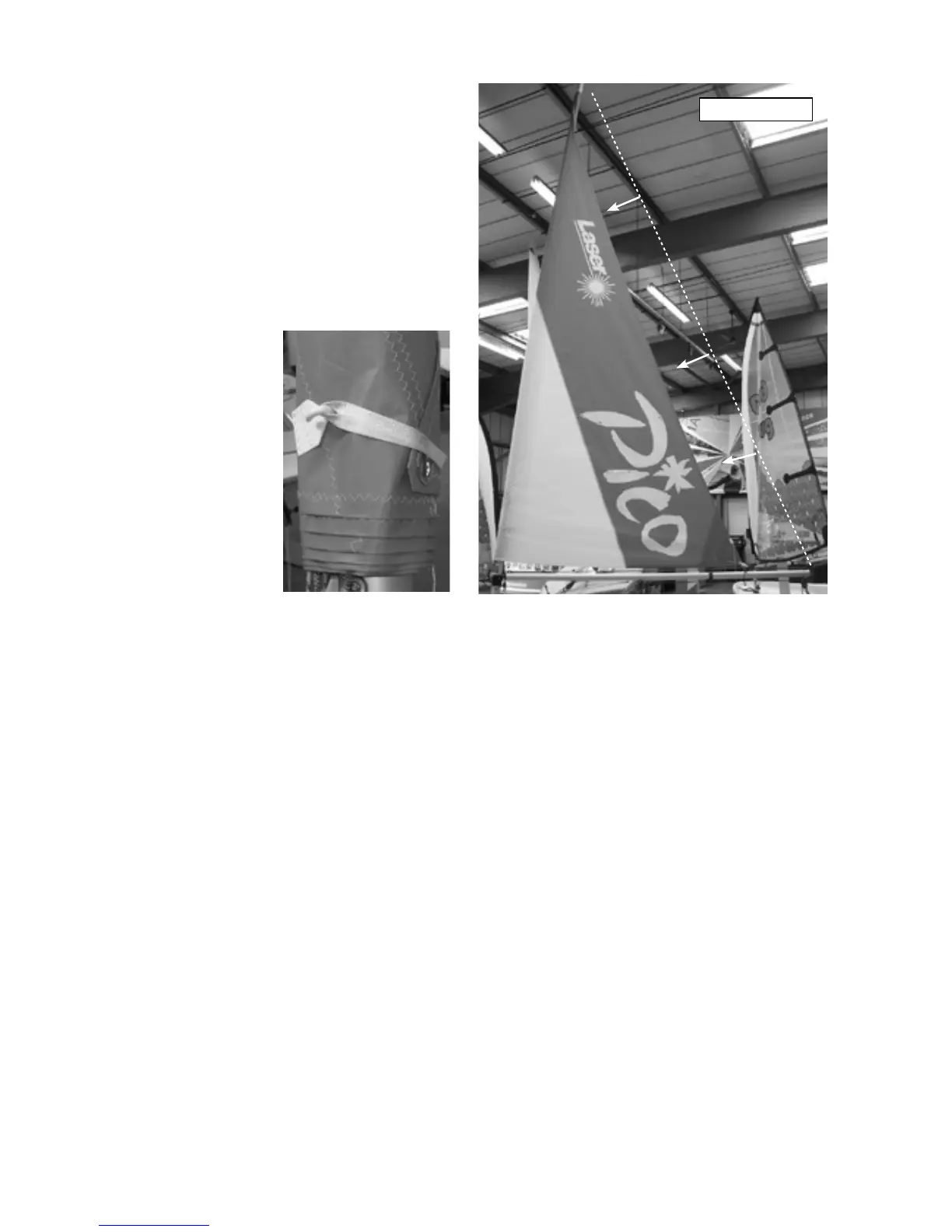
reefed sail
For convenience after sailing, the mainsail can
temporarily be stowed by wrapping the sail around
the mast in a clockwise direction and positioning
the clews webbing strap over the integral plastic
sail hook.
Note: If your Pico is not being used for more than a
day or so, all sails should be stowed dry and clean in
the sail bag provided.
13. Launching and Basic Safety On e Water
Before You Go Sailing:
1. Check to make sure you are wearing suitable
clothing and safety equipment for the conditions
and time of year.
2. Always wear a buoyancy aid or life jacket
3. Make sure a third party knows where you are
sailing and how many of you are sailing.
4. Check the weather forecast
5. Check the time of high and low tides if applicable.
6. Seek advice on local conditions if sailing in a
new area.
7. Always check the condition of your craft before
setting o .
8. Check for overhead cables when rigging, launching
and recovering.
9. e use of a LaserPerformance supplied Pico mast
head float is highly advisable.
(is device will assist in the prevention of complete inversion in
the event of capsize)
Launching
1. Raise the rig with the boat facing into the wind.
2. Launch the boat using the appropriate launching
trolley/dolly.
3. Take the boat into the water with the bow facing into
the wind.
4. Ensure that there is enough water to fl oat the boat o
the trolley/dolly.
5. When there is enough water below you, lower the
daggerboard and rudder fully.
6. Cleat the rudder downhaul in the cleat on the tiller.
7. e rudder and the daggerboard should be raised
before coming ashore.
On e Water
1. Conform to the sailing rules of the road.
2. Look out for changing weather conditions.
3. Never sail beyond your ability or that of your crew.
4. Understand and be competent in sailing skills and
righting techniques.



 To Next Page