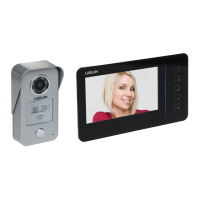
The JB-304 User's manual describes a series of door stations, primarily focusing on models from the 15 series, with an additional mention of Model No. 18. These devices are designed for residential or commercial use, facilitating communication and access control at entry points.
The core function of these door stations is to enable visitors to call residents and, in some models, to allow authorized individuals to release doors using access cards or keypads. This provides a secure and convenient way to manage entry into a building or property.
Usage Features:
The door stations offer various features depending on the specific model:
- Calling Residents: All models are equipped with a call button, allowing visitors to initiate a call to the resident inside. This is a fundamental feature for visitor identification and communication.
- Access Control (Card Reader): Several models, such as Model No. 15D and Model No. 15B, integrate a card reader. This feature allows authorized users to gain entry by presenting a compatible access card to the device, providing a keyless entry solution.
- Access Control (Keypad): Model No. 18 stands out by incorporating a keypad. This enables users to enter a numerical code to unlock the door, offering an alternative or additional layer of access control. Some versions of Model No. 18 also combine the keypad with a card reader for enhanced flexibility.
- Visual Identification: Equipped with a camera, these door stations allow residents to visually identify visitors before granting access. This enhances security by providing a visual confirmation of who is at the door.
- Audio Communication: A speaker and microphone are integrated into the door stations, enabling two-way audio communication between the visitor and the resident. This allows for clear verbal interaction, facilitating the purpose of the visit or providing instructions.
- Name Tag: Models like No. 15C and No. 15A include a name tag slot, which is useful for displaying the resident's name or apartment number, making it easier for visitors to identify the correct call button.
- Mounting Options: The door stations come in different mounting configurations. Some models, like No. 15C and No. 15D, are designed for flush mounting, providing a sleek and integrated appearance with the wall. Others, such as No. 15A and No. 15B, are surface mountable, offering easier installation where flush mounting might not be feasible.
- Environmental Resilience: The devices are designed to operate within a wide range of temperatures, from -40℃ to +45°C, indicating their suitability for various outdoor environments.
Maintenance Features:
While the manual primarily focuses on installation and operation, some aspects touch upon maintenance or design for longevity:
- Durable Construction: The presence of a "Cast aluminium panel" in the structure description suggests a robust build, which contributes to the device's durability and resistance to environmental factors or potential vandalism.
- Modular Design (Implied): The installation instructions describe taking off the door panel from the box and then fixing it back with screws. This modular approach simplifies installation and potentially makes future servicing or component replacement easier, as the main electronic components are housed within the panel.
- Screw-Based Assembly: The use of screws for assembly and disassembly (e.g., taking off and fixing the door panel) indicates that the device can be opened for inspection or repair if needed, rather than being permanently sealed.
- Disposal Information: The manual includes a clear instruction regarding disposal: "This appliance shall not be disposed together with the normal waste. It must be recycled." This highlights a commitment to environmental responsibility and suggests that the device contains materials that should be processed separately for recycling, implying a design that considers end-of-life management.
- FCC Compliance: The FCC statement indicates that the device is designed to comply with regulations regarding electromagnetic interference. This suggests a design that aims for reliable operation and minimizes potential issues with other electronic devices, contributing to overall system stability and reducing the need for troubleshooting related to interference. The troubleshooting tips provided (reorienting antenna, increasing separation, connecting to different circuit) are standard for electronic devices and help users resolve common interference issues, thereby maintaining optimal performance.
In summary, the JB-304 door stations are versatile entry management devices offering a range of features for communication and access control, designed with considerations for durability, ease of installation, and environmental responsibility.

 Need help?
 General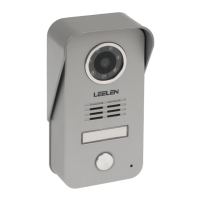

 To Next Page