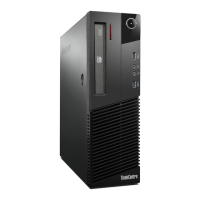
What to do if invalid disc message appears on Lenovo ThinkCentre M93/p Desktop?
- JJessica MeyerSep 4, 2025
If you get an invalid disc or no disc found message on your Lenovo Desktop, ensure a DVD disc is in the drive with the shiny side facing down.
What to do if invalid disc message appears on Lenovo ThinkCentre M93/p Desktop?
If you get an invalid disc or no disc found message on your Lenovo Desktop, ensure a DVD disc is in the drive with the shiny side facing down.
How to fix insufficient memory on Lenovo ThinkCentre M93/p?
Install additional memory on your Lenovo Desktop.
What to do if I cannot connect using the built-in wireless networking card on Lenovo Desktop?
If you cannot connect using the built-in wireless networking card on your Lenovo Desktop, make sure your wireless LAN driver is the latest version.
Why adapter stops working on Lenovo ThinkCentre M93/p?
If the adapter stops working for no apparent reason on your Lenovo Desktop, the network driver files may be corrupt or missing.
Why image is discolored on Lenovo ThinkCentre M93/p Desktop?
If the image is discolored on your Lenovo Desktop, the monitor might be affected by interference from nearby equipment.
How to fix excessive number of fragmented files on Lenovo ThinkCentre M93/p Desktop?
Run the Windows Disk Defragmenter program on your Lenovo Desktop.
What to do if the mouse does not work on Lenovo Desktop?
If the mouse or pointing device does not work on your Lenovo Desktop, verify that the mouse or pointing-device cable is securely attached to the correct connector on the computer.
How to fix 'No Operating System Found' message on Lenovo ThinkCentre M93/p Desktop?
If you see a 'No Operating System Found' message or the system isn't starting from the correct hard disk drive on your Lenovo Desktop, ensure the hard disk drive your computer starts from is listed as the first startup device in the Setup Utility program.
What to do if hard disk drives missing from Setup Utility program on Lenovo ThinkCentre M93/p?
If some or all hard disk drives are missing from the Setup Utility program on your Lenovo Desktop, make sure all hard disk drive signal cables and power cables are connected correctly.
What to do if Lenovo ThinkCentre M93/p Desktop operating system does not start?
If your Lenovo Desktop operating system doesn't start, verify that the startup sequence includes the device where the operating system resides, typically the hard disk drive.
Introduces the computer's features and covers various models.
Lists the physical specifications for your computer.
Describes programs provided by Lenovo to help work more easily and securely.
Explains how to access Lenovo programs on Windows 7.
Explains how to access Lenovo programs on Windows 8 or 8.1.
Provides a brief introduction to some Lenovo programs.
Explains how to locate connectors, parts, and components in the computer.
Shows locations of front connectors, controls, and indicators.
Shows locations of rear connectors and color-coding.
Shows locations of various internal computer components.
Shows locations of parts on the system board.
Explains the locations of internal drives and their bays.
Identifies the computer's machine type and model label.
Provides tips to optimize computer usage and answers common questions.
Instructions on navigating between desktop, Start screen, and applications.
Detailed steps for navigating on Windows 8.
Detailed steps for navigating on Windows 8.1.
How to access Control Panel in Windows 8/8.1.
Information about standard and fingerprint reader keyboards.
Explains the use of Windows logo and context-menu keys.
How to use the integrated fingerprint reader for authentication.
Explains the controls and functions of a wheel mouse.
Information about computer audio and adjustment options.
How to adjust volume using the taskbar icon.
How to adjust volume via Control Panel.
Information about using CD and DVD drives.
Guidelines for handling and storing optical media.
Steps to play audio CDs or watch DVD movies.
Instructions for recording CDs or DVDs.
Information on ergonomic practices for computer use and comfort.
Tips for arranging your work area and computer equipment.
Guidelines for finding a comfortable working position.
How to position your monitor and adjust lighting to minimize glare.
Information on ensuring proper air circulation for the computer and monitor.
Considerations for electrical outlet locations and cable management.
Lenovo's commitment to accessibility and available features.
Features for hearing-impaired users to be aware of computer status.
Features for visually impaired users to be aware of computer status.
Information on the screen reader for visually impaired users.
Information about screen reader technologies and resources.
How to control your computer using voice commands.
How to change text size for better readability.
Using the Magnifier utility to enlarge screen content.
How to use zoom features via keyboard or touch screen.
How to adjust screen resolution for readability.
Keyboard shortcuts for accessing Ease of Access features.
Using the on-screen keyboard for data entry.
Adjusting keyboard settings for easier use.
Information on connectors for assistive devices.
Support for text telephone (TTY) or TDD conversion modem.
Information on accessible documentation formats.
How to register your computer with Lenovo for service benefits.
Considerations for moving your computer to another region.
Overview of available security features on the computer.
How to use a padlock to secure the computer cover.
How to attach a Kensington-style cable lock for security.
How to install a cable lock to secure devices.
Information on setting passwords for security.
Details on Power-On, Administrator, and Hard Disk passwords.
Using passwords within the Windows operating system.
How to configure the fingerprint reader in the Setup Utility.
Information about firewalls and their function.
Information on using antivirus software for protection.
Precautions to avoid static-electricity damage when handling components.
Instructions for installing or replacing computer hardware.
How to connect external options and install software.
Step-by-step instructions for removing the computer cover.
Instructions for removing and reinstalling the front bezel.
How to access system board components and internal drives.
Instructions for installing or replacing PCI cards.
Instructions for installing or replacing memory modules.
Instructions for replacing the optical drive.
Instructions for installing or replacing the card reader assembly.
Instructions for installing or replacing the front USB assembly.
Instructions for replacing the computer's internal battery.
Instructions for installing or replacing an mSATA solid-state drive.
Instructions for replacing the power supply assembly.
Instructions for replacing the heat sink and fan assembly.
Instructions for replacing the microprocessor.
Instructions for replacing the cover presence switch.
Instructions for replacing the primary hard disk drive.
Instructions for installing or replacing a secondary hard disk drive.
Instructions for installing a 2.5-inch solid-state drive.
Instructions for replacing the front fan assembly.
Instructions for replacing the front audio and USB assembly.
Instructions for replacing the internal speaker.
Instructions for replacing the thermal sensor.
Instructions for replacing Wi-Fi units.
Steps to remove the Wi-Fi adapter card.
Steps to remove the Wi-Fi card module.
Steps to install Wi-Fi units.
Instructions for installing or removing the rear Wi-Fi antenna.
Instructions for installing the front Wi-Fi antenna.
Instructions for removing the front Wi-Fi antenna.
Instructions for replacing the keyboard or mouse.
Steps to finish part installation/replacement and reassemble.
Information on recovery solutions for Windows 7.
How to create and use recovery media for data restoration.
How to perform backup and recovery using Rescue and Recovery.
Instructions for performing a backup operation.
Instructions for performing a recovery operation.
Using the Rescue and Recovery workspace for data recovery.
How to create and use a rescue medium for computer recovery.
How to reinstall preinstalled applications and device drivers.
Instructions for reinstalling preinstalled applications.
Instructions for reinstalling preinstalled device drivers.
Solutions for problems accessing recovery features.
Information on recovery solutions for Windows 8/8.1.
How to refresh your computer without losing personal files.
How to reset the computer to factory default settings.
Using advanced startup options for system recovery.
Recovering the OS when it fails to start.
Steps to start the Setup Utility program.
How to view and change system configuration settings.
Setting passwords to prevent unauthorized access to computer and data.
Guidelines for creating strong passwords.
Setting a password required at startup.
Setting a password to change configuration settings.
Setting a password for hard disk drive access.
Procedures for managing passwords in the Setup Utility.
How to erase lost or forgotten passwords by clearing CMOS.
Enabling or disabling devices like USB connectors and SATA controllers.
Selecting the device to start the computer from.
Procedure to select a temporary startup device.
How to view or change the startup device sequence.
Enabling energy-saving mode for reduced electricity consumption.
Adjusting acoustic and thermal performance settings.
Monitoring thermal function under critical situations.
How to save or discard changes and exit the Setup Utility.
Information about system programs like POST and BIOS.
Instructions for updating the BIOS using a disc.
Instructions for updating the BIOS from the operating system.
Procedure to recover from a failed POST/BIOS update.
How to get the latest software and driver updates.
How to download and install updated device drivers from Lenovo.
How to access Microsoft Windows Update for system updates.
Using the System Update program to keep software up-to-date.
Information on maintaining the computer for reliable service.
Basic points for keeping the computer functioning properly.
How to clean the computer, keyboard, and mouse.
Practices to maintain good performance and protect data.
Precautions to take before moving the computer.
Information to help troubleshoot computer problems.
A procedure to diagnose computer problems.
Information to find solutions for problems with definite symptoms.
Troubleshooting steps for audio-related issues.
Troubleshooting steps for CD drive issues.
Troubleshooting steps for DVD drive issues.
Solutions for problems that occur occasionally.
Troubleshooting steps for input device issues.
Troubleshooting steps for monitor display issues.
Troubleshooting common networking problems.
Diagnosing issues with Lenovo hardware options.
Solutions for performance and system lockup issues.
Troubleshooting steps for printer issues.
Troubleshooting steps for serial port issues.
Troubleshooting steps for software issues.
Troubleshooting steps for USB connectivity issues.
Information about the Lenovo Solution Center diagnostic tool.
Accessing useful resources for computing needs.
Accessing Lenovo's information and tool suite.
Introduction to Lenovo features and setup tasks.
Accessing help and support information from Lenovo and Microsoft.
Information on safety, warranty, and setup from the provided guide.
Using the Lenovo website for product information and services.
Accessing technical support information on the Lenovo website.
Information on obtaining help and service.
Using manuals and diagnostic tools for troubleshooting.
How to get help and information by telephone during the warranty period.
Information on international warranty service and other services.
Information on purchasing additional support services.
Information on the product's export classification.
Information regarding electronic emissions for Lenovo PCs.
FCC compliance statement for the device.
Industry Canada Class B emission compliance statement.
EU compliance with EMC Directive and EN 55022 Class B limits.
German Class B compliance statement.
Korea Class B compliance statement.
Japan VCCI Class B compliance statement.
Japan compliance for products connecting to power mains.
Lenovo product service information for Taiwan.
Taiwan compliance statement for keyboards and mice.
Regulatory notice for Brazil regarding hearing damage.
Regulatory notice for Mexico regarding interference.
Reference to further regulatory information on the Lenovo website.
Information on WEEE and e-waste regulations for Lenovo products.
Information on collecting and recycling Lenovo computers/monitors in Japan.
Information on disposing of Lenovo computer components.
Instructions for disposing of lithium batteries.
Recycling information for Brazil.
Battery recycling information for Taiwan.
Battery recycling information for the European Union.
Lenovo's compliance with EU RoHS Directive 2011/65/EU.
Information regarding China RoHS compliance.
Lenovo's compliance with Turkey's RoHS directive.
Information regarding Ukraine RoHS compliance.
Information regarding India RoHS compliance.
Introduces the computer's features and covers various models.
Lists the physical specifications for your computer.
Describes programs provided by Lenovo to help work more easily and securely.
Explains how to access Lenovo programs on Windows 7.
Explains how to access Lenovo programs on Windows 8 or 8.1.
Provides a brief introduction to some Lenovo programs.
Explains how to locate connectors, parts, and components in the computer.
Shows locations of front connectors, controls, and indicators.
Shows locations of rear connectors and color-coding.
Shows locations of various internal computer components.
Shows locations of parts on the system board.
Explains the locations of internal drives and their bays.
Identifies the computer's machine type and model label.
Provides tips to optimize computer usage and answers common questions.
Instructions on navigating between desktop, Start screen, and applications.
Detailed steps for navigating on Windows 8.
Detailed steps for navigating on Windows 8.1.
How to access Control Panel in Windows 8/8.1.
Information about standard and fingerprint reader keyboards.
Explains the use of Windows logo and context-menu keys.
How to use the integrated fingerprint reader for authentication.
Explains the controls and functions of a wheel mouse.
Information about computer audio and adjustment options.
How to adjust volume using the taskbar icon.
How to adjust volume via Control Panel.
Information about using CD and DVD drives.
Guidelines for handling and storing optical media.
Steps to play audio CDs or watch DVD movies.
Instructions for recording CDs or DVDs.
Information on ergonomic practices for computer use and comfort.
Tips for arranging your work area and computer equipment.
Guidelines for finding a comfortable working position.
How to position your monitor and adjust lighting to minimize glare.
Information on ensuring proper air circulation for the computer and monitor.
Considerations for electrical outlet locations and cable management.
Lenovo's commitment to accessibility and available features.
Features for hearing-impaired users to be aware of computer status.
Features for visually impaired users to be aware of computer status.
Information on the screen reader for visually impaired users.
Information about screen reader technologies and resources.
How to control your computer using voice commands.
How to change text size for better readability.
Using the Magnifier utility to enlarge screen content.
How to use zoom features via keyboard or touch screen.
How to adjust screen resolution for readability.
Keyboard shortcuts for accessing Ease of Access features.
Using the on-screen keyboard for data entry.
Adjusting keyboard settings for easier use.
Information on connectors for assistive devices.
Support for text telephone (TTY) or TDD conversion modem.
Information on accessible documentation formats.
How to register your computer with Lenovo for service benefits.
Considerations for moving your computer to another region.
Overview of available security features on the computer.
How to use a padlock to secure the computer cover.
How to attach a Kensington-style cable lock for security.
How to install a cable lock to secure devices.
Information on setting passwords for security.
Details on Power-On, Administrator, and Hard Disk passwords.
Using passwords within the Windows operating system.
How to configure the fingerprint reader in the Setup Utility.
Information about firewalls and their function.
Information on using antivirus software for protection.
Precautions to avoid static-electricity damage when handling components.
Instructions for installing or replacing computer hardware.
How to connect external options and install software.
Step-by-step instructions for removing the computer cover.
Instructions for removing and reinstalling the front bezel.
How to access system board components and internal drives.
Instructions for installing or replacing PCI cards.
Instructions for installing or replacing memory modules.
Instructions for replacing the optical drive.
Instructions for installing or replacing the card reader assembly.
Instructions for installing or replacing the front USB assembly.
Instructions for replacing the computer's internal battery.
Instructions for installing or replacing an mSATA solid-state drive.
Instructions for replacing the power supply assembly.
Instructions for replacing the heat sink and fan assembly.
Instructions for replacing the microprocessor.
Instructions for replacing the cover presence switch.
Instructions for replacing the primary hard disk drive.
Instructions for installing or replacing a secondary hard disk drive.
Instructions for installing a 2.5-inch solid-state drive.
Instructions for replacing the front fan assembly.
Instructions for replacing the front audio and USB assembly.
Instructions for replacing the internal speaker.
Instructions for replacing the thermal sensor.
Instructions for replacing Wi-Fi units.
Steps to remove the Wi-Fi adapter card.
Steps to remove the Wi-Fi card module.
Steps to install Wi-Fi units.
Instructions for installing or removing the rear Wi-Fi antenna.
Instructions for installing the front Wi-Fi antenna.
Instructions for removing the front Wi-Fi antenna.
Instructions for replacing the keyboard or mouse.
Steps to finish part installation/replacement and reassemble.
Information on recovery solutions for Windows 7.
How to create and use recovery media for data restoration.
How to perform backup and recovery using Rescue and Recovery.
Instructions for performing a backup operation.
Instructions for performing a recovery operation.
Using the Rescue and Recovery workspace for data recovery.
How to create and use a rescue medium for computer recovery.
How to reinstall preinstalled applications and device drivers.
Instructions for reinstalling preinstalled applications.
Instructions for reinstalling preinstalled device drivers.
Solutions for problems accessing recovery features.
Information on recovery solutions for Windows 8/8.1.
How to refresh your computer without losing personal files.
How to reset the computer to factory default settings.
Using advanced startup options for system recovery.
Recovering the OS when it fails to start.
Steps to start the Setup Utility program.
How to view and change system configuration settings.
Setting passwords to prevent unauthorized access to computer and data.
Guidelines for creating strong passwords.
Setting a password required at startup.
Setting a password to change configuration settings.
Setting a password for hard disk drive access.
Procedures for managing passwords in the Setup Utility.
How to erase lost or forgotten passwords by clearing CMOS.
Enabling or disabling devices like USB connectors and SATA controllers.
Selecting the device to start the computer from.
Procedure to select a temporary startup device.
How to view or change the startup device sequence.
Enabling energy-saving mode for reduced electricity consumption.
Adjusting acoustic and thermal performance settings.
Monitoring thermal function under critical situations.
How to save or discard changes and exit the Setup Utility.
Information about system programs like POST and BIOS.
Instructions for updating the BIOS using a disc.
Instructions for updating the BIOS from the operating system.
Procedure to recover from a failed POST/BIOS update.
How to get the latest software and driver updates.
How to download and install updated device drivers from Lenovo.
How to access Microsoft Windows Update for system updates.
Using the System Update program to keep software up-to-date.
Information on maintaining the computer for reliable service.
Basic points for keeping the computer functioning properly.
How to clean the computer, keyboard, and mouse.
Practices to maintain good performance and protect data.
Precautions to take before moving the computer.
Information to help troubleshoot computer problems.
A procedure to diagnose computer problems.
Information to find solutions for problems with definite symptoms.
Troubleshooting steps for audio-related issues.
Troubleshooting steps for CD drive issues.
Troubleshooting steps for DVD drive issues.
Solutions for problems that occur occasionally.
Troubleshooting steps for input device issues.
Troubleshooting steps for monitor display issues.
Troubleshooting common networking problems.
Diagnosing issues with Lenovo hardware options.
Solutions for performance and system lockup issues.
Troubleshooting steps for printer issues.
Troubleshooting steps for serial port issues.
Troubleshooting steps for software issues.
Troubleshooting steps for USB connectivity issues.
Information about the Lenovo Solution Center diagnostic tool.
Accessing useful resources for computing needs.
Accessing Lenovo's information and tool suite.
Introduction to Lenovo features and setup tasks.
Accessing help and support information from Lenovo and Microsoft.
Information on safety, warranty, and setup from the provided guide.
Using the Lenovo website for product information and services.
Accessing technical support information on the Lenovo website.
Information on obtaining help and service.
Using manuals and diagnostic tools for troubleshooting.
How to get help and information by telephone during the warranty period.
Information on international warranty service and other services.
Information on purchasing additional support services.
Information on the product's export classification.
Information regarding electronic emissions for Lenovo PCs.
FCC compliance statement for the device.
Industry Canada Class B emission compliance statement.
EU compliance with EMC Directive and EN 55022 Class B limits.
German Class B compliance statement.
Korea Class B compliance statement.
Japan VCCI Class B compliance statement.
Japan compliance for products connecting to power mains.
Lenovo product service information for Taiwan.
Taiwan compliance statement for keyboards and mice.
Regulatory notice for Brazil regarding hearing damage.
Regulatory notice for Mexico regarding interference.
Reference to further regulatory information on the Lenovo website.
Information on WEEE and e-waste regulations for Lenovo products.
Information on collecting and recycling Lenovo computers/monitors in Japan.
Information on disposing of Lenovo computer components.
Instructions for disposing of lithium batteries.
Recycling information for Brazil.
Battery recycling information for Taiwan.
Battery recycling information for the European Union.
Lenovo's compliance with EU RoHS Directive 2011/65/EU.
Information regarding China RoHS compliance.
Lenovo's compliance with Turkey's RoHS directive.
Information regarding Ukraine RoHS compliance.
Information regarding India RoHS compliance.
| Chipset | Intel Q87 |
|---|---|
| Storage | 500GB/1TB/2TB HDD or 128GB/256GB SSD |
| Graphics | Intel HD Graphics 4600 or AMD Radeon HD 8490 (optional) |
| Operating System | Windows 7 Professional/Windows 8.1 Pro |
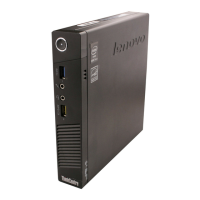
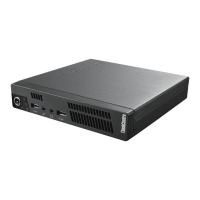
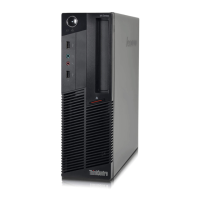
| Form Factor | Tower, Small Form Factor (SFF), Tiny |
| Dimensions (Tower) | 15.4 x 6.0 x 17.4 in |
| Dimensions (SFF) | 3.6 x 14.9 x 13.5 in |
| Dimensions (Tiny) | 7.2 x 7.2 x 1.4 in |
| Weight (Tower) | 24.5 lbs |
| Weight (SFF) | 13.5 lbs |
| Power Supply | 280W (Tower), 240W (SFF), 65W (Tiny) |
| CPU | Intel Core i7-4770 |
| Processor | Intel Core i7-4770 |
| Memory | Up to 32 GB |
| RAM | Up to 32GB DDR3 |
| Ethernet | Gigabit Ethernet |
| Ports | USB 3.0, USB 2.0, DisplayPort, Serial, PS/2 |