
 Need help?
Do you have a question about the Lenovo ThinkPad T420 4236 and is the answer not in the manual?
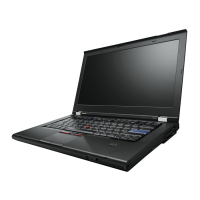
Identifies and describes the physical controls, ports, and indicators on the computer.
Details on finding essential labels like machine type, model, FCC ID, and COA.
Lists key hardware features including processor, memory, display, and keyboard specifics.
Provides technical details on size, heat output, power source, and battery specifications.
Outlines the recommended environmental conditions for computer operation and storage.
Introduces preinstalled Lenovo software for enhanced productivity, security, and system management.
Instructions on how to register your ThinkPad product with Lenovo for support and notifications.
Tips for optimizing ThinkPad notebook usage and troubleshooting common questions.
Details on the functions of special keys like the ThinkVantage button and numeric keypad.
How to use and configure the TrackPoint and touch pad for cursor control and interaction.
Managing battery power, checking status, and using AC power adapters effectively.
Connecting to wired LAN or wireless LAN networks using Ethernet or modem features.
Information on Wireless LAN, WAN, Bluetooth, and WiMAX connectivity options.
Connecting and configuring external monitors or projectors for presentations.
Information on how NVIDIA Optimus Graphics switches between performance and power saving.
Details on using the combo audio jack, built-in speakers, and microphones.
How to attach a physical lock to the computer to prevent theft.
Setting up power-on, hard disk, and supervisor passwords to protect computer access.
Enhancing security for drives using UEFI BIOS, security chip, and BitLocker encryption.
Configuring the embedded security chip for data protection and access control.
Enrolling and using fingerprint authentication for system access and security.
Procedures for securely deleting data before disposing of or selling the computer.
How firewalls protect against network security threats and unauthorized access.
Using preinstalled antivirus software to detect and eliminate viruses.
Steps to create and use recovery media for restoring the computer to factory settings.
How to back up and restore computer data using the Rescue and Recovery program.
Performing recovery operations like rescuing files or restoring the system from backups.
Creating a rescue medium (disc or USB) to recover the computer from failures.
Procedures for reinstalling factory-installed applications and essential device drivers.
Troubleshooting steps for issues when accessing the recovery environment or rescue media.
Instructions for installing or replacing a PCI Express Mini Card for wireless LAN/WiMAX.
Procedure for installing or replacing a PCI Express Mini Card for wireless WAN connectivity.
Steps for replacing the Subscriber Identification Module (SIM) card for wireless WAN connections.
Guide for replacing the internal solid state drive (SSD) with a new one.
Information on acquiring accessories and upgrades to expand computer capabilities.
How to use the serial Ultrabay enhanced for installing devices like drives.
Procedure for replacing a device in the Ultrabay.
Connecting or removing devices while the computer is operating.
Connecting or removing devices while the computer is in sleep (standby) mode.
Steps to insert a hard disk drive into the serial hard drive bay adapter.
Procedure to insert the hard drive adapter with drive into the computer's serial Ultrabay.
Overview of docking stations and their ports for expanding computer connectivity.
Instructions for connecting the computer to various ThinkPad docking stations.
Steps to disconnect the computer from ThinkPad docking stations.
Using a mechanical lock with the security keyhole on docking stations for physical security.
How to use the system lock key to secure the eject button on docking stations.
Guide to installing a new OS, including supplement files and device drivers.
Detailed steps for installing the Windows 7 operating system and related software.
Steps for installing Windows Vista and its service packs and related software.
Instructions for installing Windows XP, including service packs and necessary drivers.
Procedures for installing essential device drivers from the web or local directories.
How to download and install the driver for the 4-in-1 media card reader.
Steps to install the monitor file for display settings across Windows versions.
Accessing and configuring BIOS settings for various system parameters.
Options within ThinkPad Setup for configuring network, USB, keyboard, display, and power settings.
How to set the system's current date and time within ThinkPad Setup.
Configuring security features like passwords, fingerprint, and BIOS settings.
Changing the computer's boot sequence and startup options.
Process for updating the UEFI BIOS for system improvements and compatibility.
Features for managing the computer remotely, intended for network administrators.
Enabling remote power-on of the computer over a network.
Basic advice for maintaining the computer and avoiding common issues.
How to download and install the latest device drivers for optimal performance.
Instructions for obtaining updated drivers from the Lenovo website.
Using the System Update program to automatically find and install software updates.
Practical tips for handling the computer to ensure its longevity and performance.
Precautions regarding working environment, static electricity, and temperature.
Guidelines for handling the computer carefully to prevent physical damage.
Instructions on how to safely move and transport the computer.
Proper handling of optical discs, drives, and removable storage media.
Reminders about managing and remembering passwords to avoid data loss.
How to clean and maintain the fingerprint reader for optimal performance.
Benefits and process of registering ThinkPad products with Lenovo for support.
Emphasizes using only authorized technicians for computer disassembly and repair.
Advice on using the modem with analog phone lines and country-specific regulations.
Using diagnostic tools like Lenovo Solution Center or ThinkVantage Toolbox to identify issues.
How to use the Solution Center for troubleshooting, system info, and recovery media creation.
Utilizing ThinkVantage Toolbox for problem diagnosis, solutions, and automatic notifications.
Accessing diagnostic information and support online via the Lenovo website.
General steps to identify and resolve computer errors based on messages or beep codes.
Procedures for handling unresponsive computer states and performing resets.
Immediate actions to take if liquids are spilled on the keyboard to minimize damage.
Explanations and solutions for common error messages encountered during system operation.
Troubleshooting steps for issues like blank screens or cursor-only displays without error codes.
Interpreting beep codes to diagnose hardware problems like memory or system board issues.
Checking memory installation, configuration, and running diagnostics to resolve memory issues.
Common problems related to modem and network connectivity, including solutions.
Troubleshooting steps for issues with network connectivity via Ethernet.
Solutions for problems connecting to a wireless LAN, including driver and range issues.
Addressing issues with unsupported or unauthorized wireless WAN cards.
Troubleshooting common issues with Bluetooth connectivity and audio devices.
Common problems related to the keyboard, UltraNav, and pointing devices.
Solutions for keys not working, including issues with external numeric keypads.
Common issues related to the computer screen, external monitors, audio, and optical drives.
Troubleshooting steps for blank, unreadable, or distorted computer screens.
Solutions for external monitor issues like blank screens or incorrect resolution.
Troubleshooting sound playback and recording issues, including microphone boost.
Solutions for issues with fingerprint reader dirtiness, enrollment, or authentication.
Information on diagnosing and resolving battery and power-related problems.
Troubleshooting common battery issues like over-discharge, short operating time, or charging failures.
Steps to resolve issues where the AC adapter is not recognized or the indicator light is off.
Basic checks for computers not receiving power, including power switch and connections.
Resolving issues where the computer enters sleep/hibernation unexpectedly or fails to resume.
Troubleshooting problems related to hard disk drives, solid state drives, and optical drives.
Diagnosing issues like rattling noises or the hard disk drive not working.
Solutions for slow file operations when using data compression on solid state drives.
Troubleshooting issues with CD/DVD drives not working, making noise, or not reading discs.
Steps to resolve issues where an application does not run correctly.
Common problems related to USB ports and docking stations or port replicators.
Troubleshooting devices connected to USB ports not working.
Resolving issues where the computer does not start or respond when connected to a dock.
Information on self-help resources and preparing for technical support contact.
Benefits and process of registering ThinkPad products with Lenovo for support.
How to download and install updated software and drivers from Lenovo.
Essential information to record about the computer and problem symptoms before contacting support.
Overview of available Lenovo support resources, including documentation and technical assistance.
How to use preinstalled diagnostic programs to identify hardware problems.
Accessing technical support, drivers, and user guides via the Lenovo website.
Information on how to contact Lenovo support via telephone for problem determination and hardware repair.
Details on wireless interoperability standards and Bluetooth profiles supported.
Information on radio frequency emissions from wireless cards and health considerations.
Diagrams showing the locations of wireless antennas in the computer display.
How to find wireless regulatory information online from Lenovo.
Information regarding the product's export classification and re-export restrictions.
Notices related to electronic emissions compliance for specific ThinkPad T420/T420i machine types.
FCC compliance statement for the device, including interference and operation conditions.
Canadian emission compliance statement for the digital apparatus.
EU conformity statement for electromagnetic compatibility.
German compliance statement regarding electromagnetic compatibility and equipment standards.
Japanese compliance statement for VCCI Class B devices.
Japan compliance statement for products connected to the mains power.
Lenovo service information specific to Taiwan.
Reference to additional regulatory information available from Lenovo.
Information on Waste Electrical and Electronic Equipment (WEEE) mark and EU directives.
Guidelines for collecting and recycling disused Lenovo computers and monitors in Japan.
Methods for disposing of components with heavy metals or environmental substances.
Instructions for safely disposing of button-shaped lithium batteries.
Procedures for disposing of lithium-ion or NiMH battery packs from Lenovo notebooks.
Brazilian regulations and procedures for recycling electronic waste and Lenovo products.
EU directive on battery recycling and requirements for collection and treatment.
Information on battery recycling programs in the US and Canada.
List of trademarks and registered trademarks of Lenovo and other companies.
 General
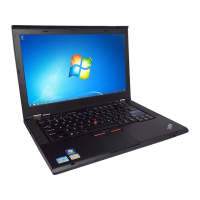
| Operating System | Windows 7 Professional |
|---|---|
| Webcam | 720p HD |
| Processor | Intel Core i5-2520M |
| RAM | Up to 8GB DDR3 |
| Storage | 320GB HDD |
| Display | 14 inch, 1366 x 768 |
| Graphics | Intel HD Graphics 3000 |
| Battery | 6-cell Lithium-Ion |
| Optical Drive | DVD Recordable |
| Ports | VGA, Ethernet |
| Wireless | Bluetooth 3.0 |
| Security | Fingerprint reader, TPM |
| Dimensions | 13.4 x 9.05 x 1.2 inches (340.5 x 230 x 30.5 mm) |







 To Next Page