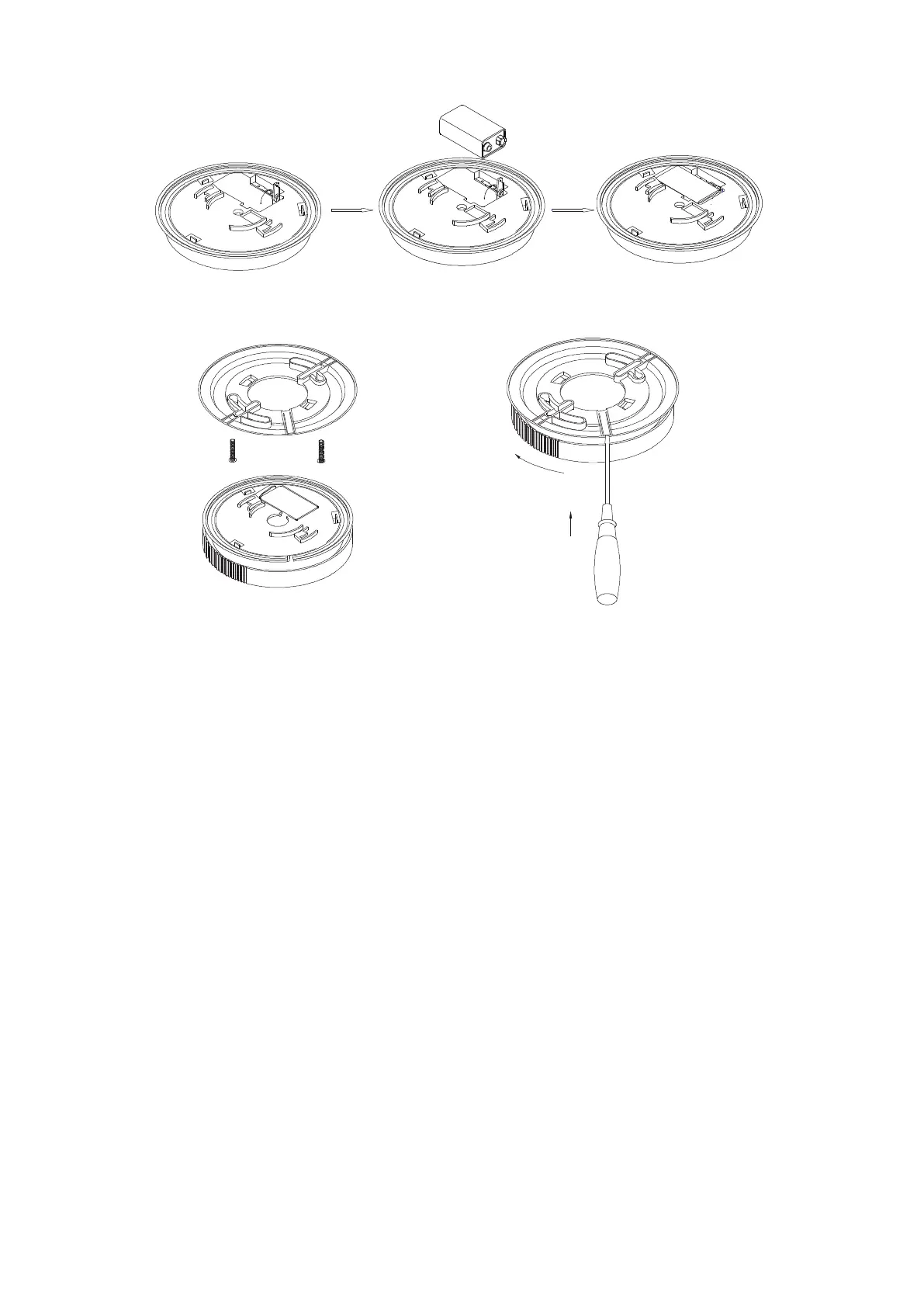
DIAGRAM 3
9
V
b
a
t
t
e
r
y
9
V
b
a
t
t
e
r
y
+
-
+
-
DIAGRAM 4
PUSH
It is important to test this unit weekly to make sure it is working properly. Don’t open the alarms by
yourself, return them to the seller if improperly, and don’t use fire to test your alarms.
Test
1. Press and hold the test button on the cover of the unit until the alarm sounds. If it does not alarm,
make sure that the unit is receiving power and test it again. If it still does not alarm, replace it
immediately or check your battery.
2. The signal flashes once 30 seconds and while it alarms the signal will flash once 0.5 second.
3. If the alarm makes low “chirp” sounds every about 30seconds,it tells you to exchange your battery.
4. Little smoke will not cause alarms, so misinformation occurs only when you blow smoke to the
alarms directly or you forget to turn on your ventilated facility while your cooking.
5. Sometimes when you smoke the unit will alarm, so you can just blow air to it to stop alarming.
Regular maintenance
1. Never use water, cleaners or solvents to clean your smoke alarm since they may damage the unit.
2. Test it at least once a week.
3. Clean the smoke alarm at least once a month. Gently vacuum off any dust using your household
vacuum’s soft brush attachment. Open the cover and disconnect the battery, gently vacuum the
inside of the cover and the sensor chamber, reconnect the battery.close the smoke alarm and
vacuum the outside of the cover, test the smoke alarm.
4. Use these batteries to replace the old one.
Carbon zinc:EVEREADY 216 OR 2122;GOLDPEAK 1604P OR 1604S
Alkaline:EVEREADY 522 DURACELL MN1604 MS1604;GOLDPEAK 1604A
Lithium: ULTRALIFE U9VL
5. You’d better use good battery to make the alarm work long, some batteries can usemore than 1
year.


 To Next Page
 Loading...