Need help?
Do you have a question about the LG Harmony and is the answer not in the manual?
Identifies key external hardware components and sensors of the LG Harmony phone.
Step-by-step guide for installing the battery, nano-SIM card, and optional microSD card.
Explains how to interact with the touch screen using taps, swipes, and gestures.
Steps for initiating calls, handling call waiting, and managing conversations.
Guide to configuring email accounts on the device.
How to access the Google Play Store and find apps, games, and movies.
Guide on capturing pictures, using camera settings, and zooming.
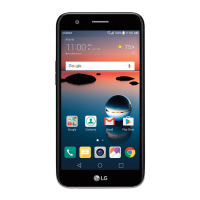
The LG Harmony is a smartphone designed for clear and simple usage, offering a range of features for communication, entertainment, and personal organization. It operates on the Cricket network and includes various functionalities to enhance the user experience.
The LG Harmony serves as a comprehensive mobile communication device, allowing users to make calls, send text and picture messages, and manage emails. It supports HD Voice Capable calls for crystal clear conversations, provided both callers have compatible smartphones and are on Cricket's LTE Network. The device also offers internet access, enabling users to browse the web, download apps from Google Play, and access various online services. For entertainment, it includes features like a camera for taking photos and videos, a gallery for viewing media, and QuickMemo+ for creating notes and reminders. The phone's design emphasizes ease of use, with a touch screen interface and intuitive navigation.
To begin using the LG Harmony, users first need to set up the phone by inserting the battery, nano-SIM card, and an optional microSD card. The back cover is carefully removed, the battery is taken out, and then the nano-SIM and microSD cards are inserted into their respective slots with the gold-colored contacts facing down. After inserting the cards, the battery is replaced, the back cover is secured, and the phone is charged.
The LG Harmony features a responsive touch screen that allows users to interact with the device using their fingertips. A light touch selects items, while tapping, dragging, or sliding a finger performs various functions like scrolling or moving icons. The navigation bar at the bottom of the screen includes a Back key to return to the previous screen, a Home key to go back to the main home screen, and a Recent apps key to view and access recently used applications.
The Notifications panel provides a quick summary of alerts, including new messages, emails, calls, and software updates. Users can access this panel by swiping down from the top of any home screen. Individual notifications can be cleared by swiping left or right on the alert, or all notifications can be removed by tapping "CLEAR."
Users can personalize their home screens by adding apps, widgets, and wallpapers. Tapping and holding a blank part of the home screen brings up customization options, allowing users to select Widgets, Wallpapers, Home screen settings, or Uninstalled Apps. Items can be added to the home screen by tapping or dragging them.
Widgets, shortcuts, and folders can be moved by tapping and holding them, then dragging them to a new location. To uninstall an item, users tap and hold it, then drag it to "Uninstall." Folders can be created by dragging one icon on top of another. To rename a folder, users tap it, then tap the folder name field to bring up the keyboard.
Making a call involves tapping the "Phone" icon from the home screen and selecting an option. The phone supports call waiting, allowing users to take two calls at once. When a call comes in while another is active, a tone will sound, and users can tap "Answer" and swipe in any direction to receive the call. The current call will be placed on hold, and both calls will be listed on the screen. To check voicemail, users tap the "Phone" icon from the home screen, then tap the "Dial" tab, and finally tap "Voicemail."
To send a text message, users tap "Messaging" from the home screen, then "Compose" to start a new message. The recipient's number or contact name is entered in the "To" field, or a contact can be selected from the address book. The message is typed in the "Enter message" field, and then "Send" is tapped. Sending a picture message follows a similar process, with the addition of tapping "Attach" and then "Image" to select a picture or another file to attach before sending.
Email setup involves tapping "Email" from the home screen, selecting an email provider, and entering the email address and password. Once synced, users can read and send emails. To create and send an email message, users tap "Email," then "Compose." The recipient's email address or name is entered in the "To" field, or a contact is selected. A subject and message are entered, and files can be attached by tapping "ATTACH." Finally, "SEND" is tapped. For corporate email setup, users are advised to contact their IT administrator.
The LG Harmony provides access to several Cricket services. "My Cricket" allows users to access billing, make payments, view usage, and get support. "Visual Voicemail" offers a quick way to view, access, and play back voicemail messages, with options to save important numbers, respond by calling back, or texting. "Deezer" provides ad-free streaming music, allowing users to download music, save favorites, and create customized playlists.
Users can access Google Play from the home screen by tapping "Play Store." Existing Google account holders can log in, or new accounts can be created. Google Play allows users to find and download apps, games, movies, and music. Content is organized by popularity or category, and a search bar is available to find specific apps. To install an app, users tap it and follow the on-screen instructions. An alert will appear in the Notifications panel once the app is installed, and it can be opened from there or the home screen. A payment method needs to be set up in the "My account" folder in Play Store settings to purchase apps.
To take a picture, users tap "Camera" from the home screen. Settings can be adjusted for timer, grid, or resolution. Zooming is done by pinching or spreading two fingers on the screen. The "Shutter" button or the Volume up/down key can be used to take a photo. Pictures are viewed in the "Gallery." To record a video, users tap "Camcorder" in camera mode. Recording starts automatically, and "Stop recording" ends it. Recording can be paused and continued later. Photos can also be captured while recording. After taking a picture or video, users can share it via messaging, email, Bluetooth, and more by tapping the Gallery thumbnail, then the screen, and finally "Share."
QuickMemo+ allows users to create memos. From the home screen, users tap "Tools" then "QuickMemo+." A new memo can be added by tapping "+," or a photo can be taken to add text or draw on it. Memos are saved by tapping "Done." Time or location reminders can be added to a memo by tapping the memo and then "Add reminder."
Knock Code provides a secure way to unlock the phone using a simple tap pattern. To set it up, users go to "Tools," "Settings," "Display," and then "Lock screen," selecting "Knock Code." After tapping "NEXT," users tap the quadrants on the screen to set their unlock pattern, confirm it, and then set a backup PIN. They also select the type of notifications to be shown on the Lock screen. "Knock On" allows users to wake up the screen by tapping it twice with a finger while the phone is in sleep mode. Once awake, users can view notifications, access apps on the lock screen, or unlock the phone.
The manual does not explicitly detail maintenance features in the traditional sense (e.g., cleaning instructions, battery replacement guidelines beyond initial setup). However, implicit maintenance is suggested through software updates and general care. Keeping the device updated with the latest software, as indicated by notifications in the Notifications panel, is a form of maintenance that ensures optimal performance and security. The mention of "Device color may vary" suggests that the physical appearance is subject to manufacturing variations, but no specific care instructions for the device's exterior are provided. The general advice for handling a smartphone, such as protecting it from physical damage and extreme conditions, would apply to the LG Harmony to ensure its longevity. The phone's design, with a removable back cover for battery and SIM/microSD card access, implies a degree of user serviceability for these components, though specific replacement procedures are not detailed.
 General
| RAM | 2GB |
|---|---|
| Internal Storage | 16GB |
| Expandable Storage | microSD, up to 2TB |
| Front Camera | 5 MP |
| Battery | 2800 mAh |
| Operating System | Android 7.0 (Nougat) |
| Display Size | 5.3 inches |

 To Next Page