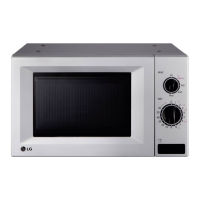
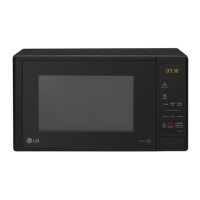
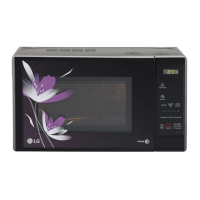
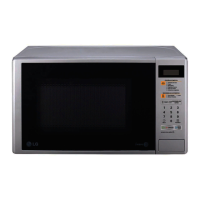
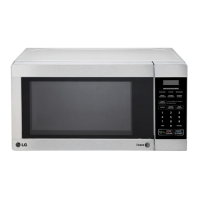
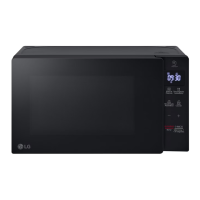
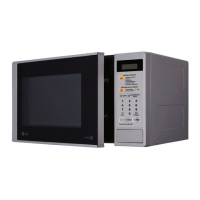
This document is an owner's manual for an LG Microwave Oven, covering models MS2021C, MS2021CS, MS2021F, MS2021FB, MS2022DW, MS2022DS, MS2022D, and MS2022DB.
The microwave oven is designed for heating food and beverages. It features a control panel with two main selectors: a Power selector and a Timer. The Power selector allows users to choose the desired power level for cooking, with options ranging from 70 Watts to a maximum setting, including a specific "Defrost" mode. The Timer permits the selection of the desired cooking time, with markings indicating minutes. For defrosting by weight, the timer knob is used to set the weight of the food in kilograms. The oven starts operating as soon as the timer knob is turned.
Usage Features:
- Microwave Cooking: To operate, users open the oven door, place food on the turntable, and close the door. The power selector is then set to the desired power level (70 Watts, 350 Watts, 500 Watts, Defrost, or Max). Finally, the timer is set to the desired cooking time. The turntable will rotate, and cooking will begin. A bell will ring at the end of the cooking time, and the lamp will turn off. For accurate timing, it is advisable to turn the timer knob slightly past the desired time and then back to the proposed setting. The cooking process can be paused by opening the door, which automatically turns off the oven and stops the timer. Closing the door resumes cooking and timer counting. The turntable may rotate in either direction.
- Weight Defrost Cooking: This feature is beneficial for thawing frozen food more quickly and safely than at room temperature, preventing harmful bacteria growth. To use, the power select knob is turned to the "Defrost" mode, and then the timer knob is turned clockwise to set the weight of the food in kilograms. It's important to note that defrosting takes longer than normal cooking, and food should be checked and turned over at least once during the process.
- Safety Precautions: The oven incorporates safety interlocks that prevent operation when the door is open, crucial for avoiding exposure to microwave energy. Users are warned against tampering with the door mechanism, placing objects between the door and the oven front face, or operating a damaged oven. Liquids, such as soups and beverages, should be heated carefully to prevent delayed eruptive boiling; this includes avoiding straight-sided containers with narrow necks, not overheating, stirring liquids before and halfway through heating, and allowing them to stand after heating. Feeding bottles and baby food jars should be stirred or shaken, and their temperature checked before consumption.
- Utensil Compatibility: The manual provides a chart detailing suitable utensils for microwave use. Heat-resistant glass, glass ceramic, ceramic, and china (without gold or silver trim) are generally safe. Microwave plastic, plastic wrap, and paper products (cups, plates, towels) are also suitable. Metal cookware, non-heat resistant glass, and china with metallic trim should not be used. Straw, wicker, and wood are also not recommended. When using aluminum foil, skewers, or utensils containing metal as specified in a recipe, a minimum 2.5cm clearance between the metal object and the interior oven wall should be maintained to prevent arcing (sparks).
- Food Preparation Tips: For best results, users should start with minimum cooking times and check food condition occasionally, as microwaves cook quickly. Small quantities of food or those with low water content may dry out if overcooked. For defrosting, metallic ties or wraps should be removed from frozen foods. Covering faster-thawing areas with small pieces of aluminum foil can help slow down the process. Some foods, like fish, may be cooked while still slightly frozen. The manual also notes that cooking times may vary based on the food's starting temperature. Browning agents like paprika or Worcestershire sauce can be used for foods that don't brown sufficiently in the microwave.
- Important Warnings: The appliance is not intended for commercial catering. It should not be used for dehumidification (e.g., drying wet newspapers, clothes, toys, or pets) as this can cause serious damage, fire, burns, or electric shock. Children aged 8 and above, and persons with reduced capabilities, can use the appliance if supervised and instructed on safe use. Accessible parts may become hot during use, so young children should be kept away. Sealed containers must not be heated. Proper accessories should be used for each operation mode to prevent damage or fire. Children should not play with accessories or hang from the door handle. Damaged doors or door seals require professional repair. Only a competent person should perform service or repair operations involving the removal of covers protecting against microwave energy exposure. When operating in combination mode, children should only use the oven under adult supervision due to high temperatures. Potatoes, apples, and other fruits/vegetables should have their skin pierced before cooking to prevent bursting. Eggs in their shell or whole hardboiled eggs should not be heated in the microwave as they may explode. Deep fat frying is not recommended. If smoke is observed, the appliance should be switched off or unplugged, and the door kept closed to stifle any flame. When heating food in disposable containers, the oven should be monitored frequently. The temperature of accessible surfaces can be high during operation, especially in grill, convection, or auto cook modes; thick culinary gloves should be worn. The oven should not be left unattended while popping corn, and brown paper bags or leftover kernels should not be used for popping.
Maintenance Features:
- Cleaning: The oven should be cleaned regularly, and food deposits removed to prevent deterioration of surfaces and potential hazards. The oven interior surfaces should be kept clean and dry, ideally cleaned after each use. Crumbs and food remains between the door and oven should be removed with a damp cloth, ensuring the door closes properly. Grease splashes should be cleaned with a soapy cloth, rinsed, and dried. Abrasives that could scratch painted surfaces should not be used. Water should never be poured into the oven.
- Roller Rest: The roller rest should be removed and cleaned in hot soapy water at least once a week to prevent grease from restricting wheel rotation.
- Door: The door and door seals should be kept clean using warm, soapy water, then rinsed and dried thoroughly. Abrasive materials, cleaning powders, or steel/plastic pads should not be used. Metal parts can be maintained by frequent wiping with a damp cloth.
- Exterior: The exterior should be cleaned with mild soap and warm water, rinsed, and dried with a soft cloth. Abrasive materials should not be used. Water should not be spilled into the vents. If the power lead is soiled, it should be wiped with a damp cloth. Steam cleaners are not to be used.
- Ventilation: The oven should be placed on a level surface at least 85cm above the floor, with a minimum of 30cm above and 10cm rear space for adequate ventilation. The sides should be clear for airflow. The front of the oven should be at least 8cm from the edge of the surface to prevent tipping. Exhaust outlets (located on the top or side) should not be blocked, as this can damage the oven and affect cooking results.
- Electrical Safety: The appliance must be earthed. The wires in the mains lead are colored according to standard codes: Blue for Neutral, Brown for Live, and Green & Yellow for Earth. If the supply cord is damaged, it must be replaced by the manufacturer, a service agent, or a similarly qualified person to avoid hazards. The connection should allow for an accessible plug or incorporate a switch in the fixed wiring in accordance with wiring rules.
- Empty Operation: The oven should never be operated when empty. It is recommended to leave a glass of water inside when not in use, as the water will safely absorb microwave energy if the oven is accidentally started.

 Need help?
 General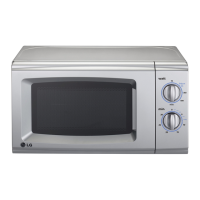

 To Next Page