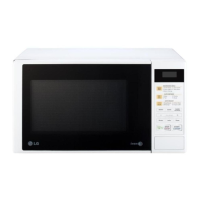
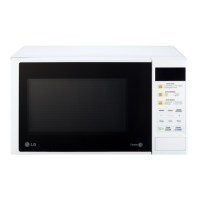
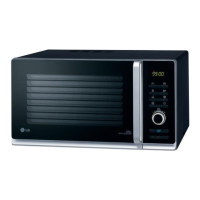
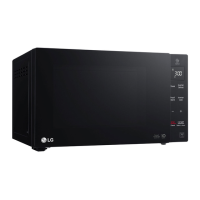
This document is an owner's manual for an LG Microwave Oven, model MS2322D, designed to guide users through its operation and maintenance. The manual emphasizes safety precautions, proper utensil usage, and general cooking and cleaning instructions to ensure safe and effective use of the appliance.
Function Description
The LG Microwave Oven MS2322D is a kitchen appliance primarily designed for heating, cooking, and defrosting food using microwave energy. Its core function revolves around a magnetron that generates microwaves, which then interact with food molecules to heat them. The oven features a control panel with a power selector and a timer, allowing users to choose desired power levels and cooking durations.
The microwave offers various power settings, including "Keep Warm," "Med Low," "Med," "Med High," and "High," providing flexibility for different cooking needs. The "Med" setting is specifically designated for defrosting, indicating a specialized function for thawing frozen foods efficiently and safely. The turntable inside the oven ensures even heating by rotating the food during operation.
Usage Features
Cooking Operation:
To operate the oven, users first open the door, place food on the glass tray (which rests on a roller rest for rotation), and then close the door. The power selector knob (1) is used to choose one of the five available power levels, ranging from "Keep Warm" to "High," depending on the cooking requirement. Once the power level is set, the timer knob (2) is turned to select the desired cooking time. The turntable immediately begins to rotate, and the cooking process starts. At the end of the set time, a bell rings, and the oven lamp turns off, signaling completion.
Defrosting Function:
The microwave includes a dedicated "Weight Defrost Cooking" feature. To use this, the power select knob (1) is turned to the defrosting mode (indicated by a specific symbol). Subsequently, the timer knob (2) is turned clockwise to set the weight of the food in kilograms. The oven starts working as soon as the timer knob is turned, with each number on the scale representing one kilogram. This feature is highlighted as a faster and safer alternative to refrigerator or room temperature defrosting, as it helps prevent the growth of harmful bacteria. Users are advised to check and turn the food over at least once during defrosting to ensure even thawing.
Safety Interlocks:
The oven is equipped with safety interlocks in the door mechanism that switch off cooking functions when the door is open. This prevents exposure to microwave energy during operation. The manual explicitly warns against tampering with this mechanism.
Operational Notes:
- For accurate timing, it's recommended to turn the timer knob slightly past the desired time and then back to the exact setting.
- The cooking condition can be checked by opening the door during operation; this automatically pauses the oven and stops the timer. Closing the door resumes cooking and timer countdown.
- The turntable can rotate in either direction.
- The manual cautions against operating the oven when empty, suggesting leaving a glass of water inside to absorb accidental microwave energy.
- It advises against cooking eggs in their shell due to pressure buildup and potential bursting, recommending piercing the yolk for baking or poaching.
- Standing time after cooking is recommended for many foods to allow internal heat to continue the cooking process, ensuring thorough cooking without overcooking the exterior.
- Users are advised to remove plastic wrapping before cooking or defrosting, unless specified otherwise in recipes.
- If smoke is observed, the oven should be switched off or disconnected, and the door kept closed to stifle flames.
- When heating liquids, users should avoid straight-sided containers with narrow necks, prevent overheating, stir liquids before and halfway through heating, and allow them to stand briefly after heating to prevent delayed eruptive boiling.
Utensil Compatibility:
The manual provides a detailed chart for suitable cooking utensils:
- Microwave-safe: Heat-resistant glass, glass ceramic, ceramic/china (without gold/silver trim), microwave plastic, plastic wrap, paper products (cups, plates, towels), straw, wicker, and wood.
- Grill-safe: Heat-resistant glass, glass ceramic, ceramic/china.
- Not microwave-safe: Metal cookware, non-heat resistant glass, china with gold/silver trim.
- Not grill-safe: Microwave plastic, plastic wrap, paper products, straw, wicker, and wood.
It also notes that metal utensils or those with metallic trim should not be used in the microwave oven, and if aluminum foil or skewers are used as per a recipe, a minimum 2.5cm clearance from the oven wall is necessary to prevent arcing (sparks). Recycled paper products are discouraged due to potential impurities causing sparks or fires.
Maintenance Features
Cleaning:
Regular cleaning is crucial for the oven's performance and longevity. The manual advises turning off the oven before cleaning and cleaning interior surfaces after each use.
- Interior Walls: Crumbs and food remains between the door and oven should be removed with a damp cloth. Grease splashes should be cleaned with soapy water, rinsed, and dried. Abrasive materials that could scratch or damage the painted surface should be avoided. Water should never be poured directly into the oven.
- Roller Rest: The roller rest should be removed and cleaned in hot soapy water at least once a week to prevent grease from hindering wheel rotation.
- Door and Door Seals: These parts should be kept clean using warm, soapy water, rinsed, and dried thoroughly. Abrasive materials, cleaning powders, or steel/plastic pads should not be used. Metal parts are easier to maintain if wiped frequently with a damp cloth.
- Exterior: The exterior can be cleaned with mild soap and warm water, then rinsed and dried with a soft cloth. Abrasive materials should not be used, and water should not be spilled into the vents. The power lead should be wiped with a damp cloth if soiled.
General Maintenance Advice:
- The oven should not be adjusted or repaired by anyone except qualified service personnel, especially concerning the door, control panel, safety interlock switches, or any part that provides protection against microwave energy exposure.
- If the power cord is damaged, it must be replaced by the manufacturer, its service agent, or a similarly qualified person to avoid hazards.
- The appliance must be earthed, and the wiring in the mains lead follows a specific color code (Blue for Neutral, Brown for Live, Green and Yellow for Earth).
Installation:
Proper installation is key for safe operation.
- All packing materials and accessories must be removed.
- The oven should be placed on a level surface at least 85cm above the floor, with a minimum of 30cm clear space above and 10cm at the rear for adequate ventilation. The sides should also be kept clear. The front of the oven should be at least 8cm from the edge of the surface to prevent tipping.
- The exhaust outlet (located on top or side) must not be blocked, as this can damage the oven.
- The oven should be plugged into a standard voltage household outlet.
The manual also specifies that this appliance is not intended for commercial catering purposes.

 Need help?
 General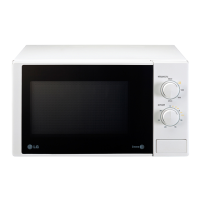

 To Next Page