The Truss Rod
The truss rod is located on the heel of the neck (visible by looking through the sound hole
or via the guitar headstock). Using an Allen key of the appropriate size (always worth
having a set of these as a guitarist) you can turn this clockwise (to tighten) or anti
clockwise (to loosen), depending on the curve you are trying to achieve.
Because guitars are mostly made from wood, they tend to flex and change shape over
time which can cause problems with fret buzz, intonation and high action. The truss rod
adds strength and provides adjustability, if required, to correct the aforementioned issues.
Ideally the neck should be relatively straight with a small amount of natural relief (bow)
which establishes the ideal distance between the strings and frets (action). However, this
is a personal preference depending on what is comfortable for you and the music you
play!
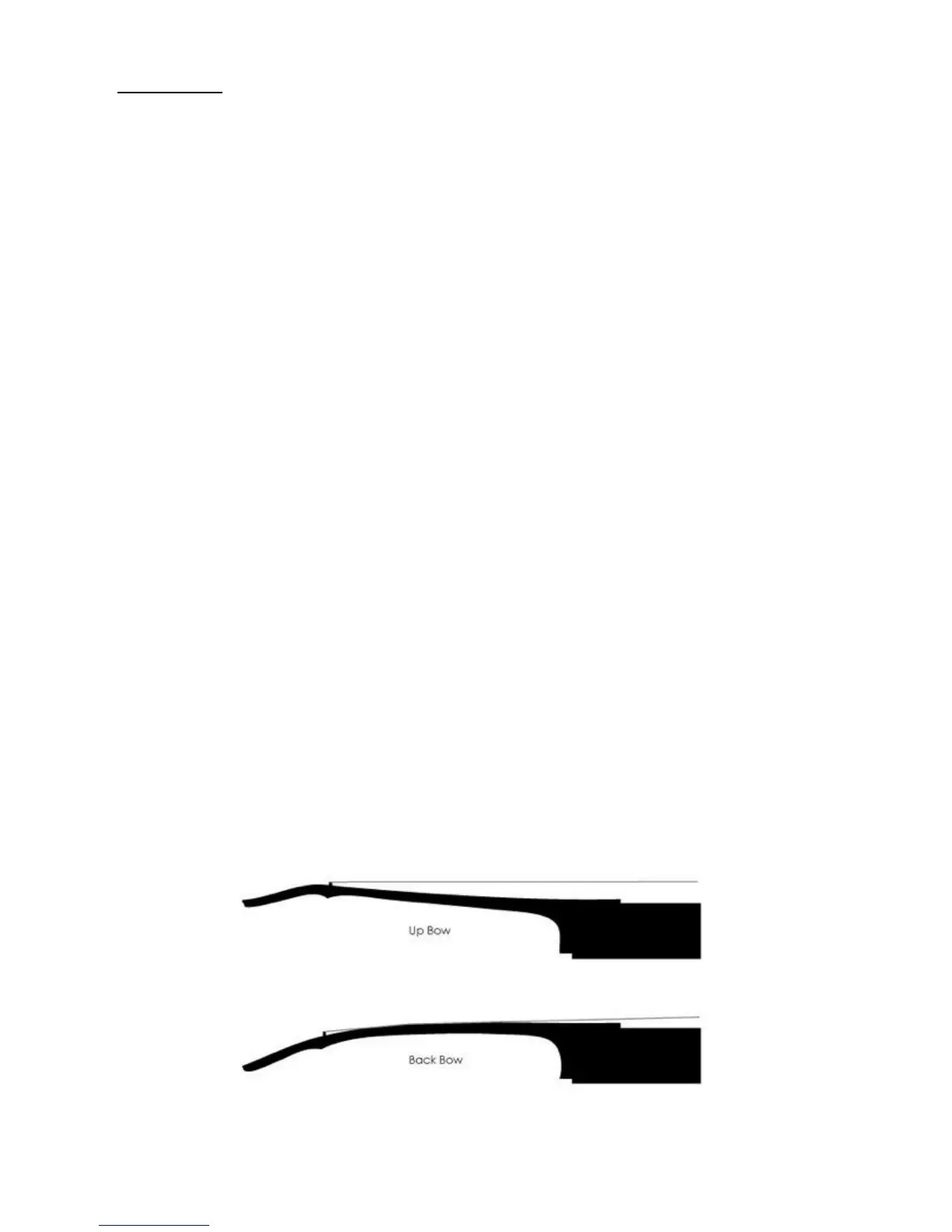
Generally there are two conditions the neck of the guitar can suffer from:
Bowed: When there is too much relief in the neck it can increase the distance between
the strings and fingerboard (action). When the tension on the truss rod does not
counteract the string tension, it will cause the head to pull up (hindering playability). This
can also affect how the strings intonate up and down the neck. You can correct this by
tightening the truss rod (clockwise).
Note: Quarter turns at a time are recommended and it is a good idea to loosen the strings
first.
Back bow: A back-bowed neck is where the truss rod is pulling the neck backwards and
causing the strings to touch the frets. This will cause fret buzz, making the guitar
unplayable. You can correct this by loosening the tension on the truss rod (anti-
clockwise).
Exaggerated view:


 To Next Page