l
3
Infrared Technology Overview
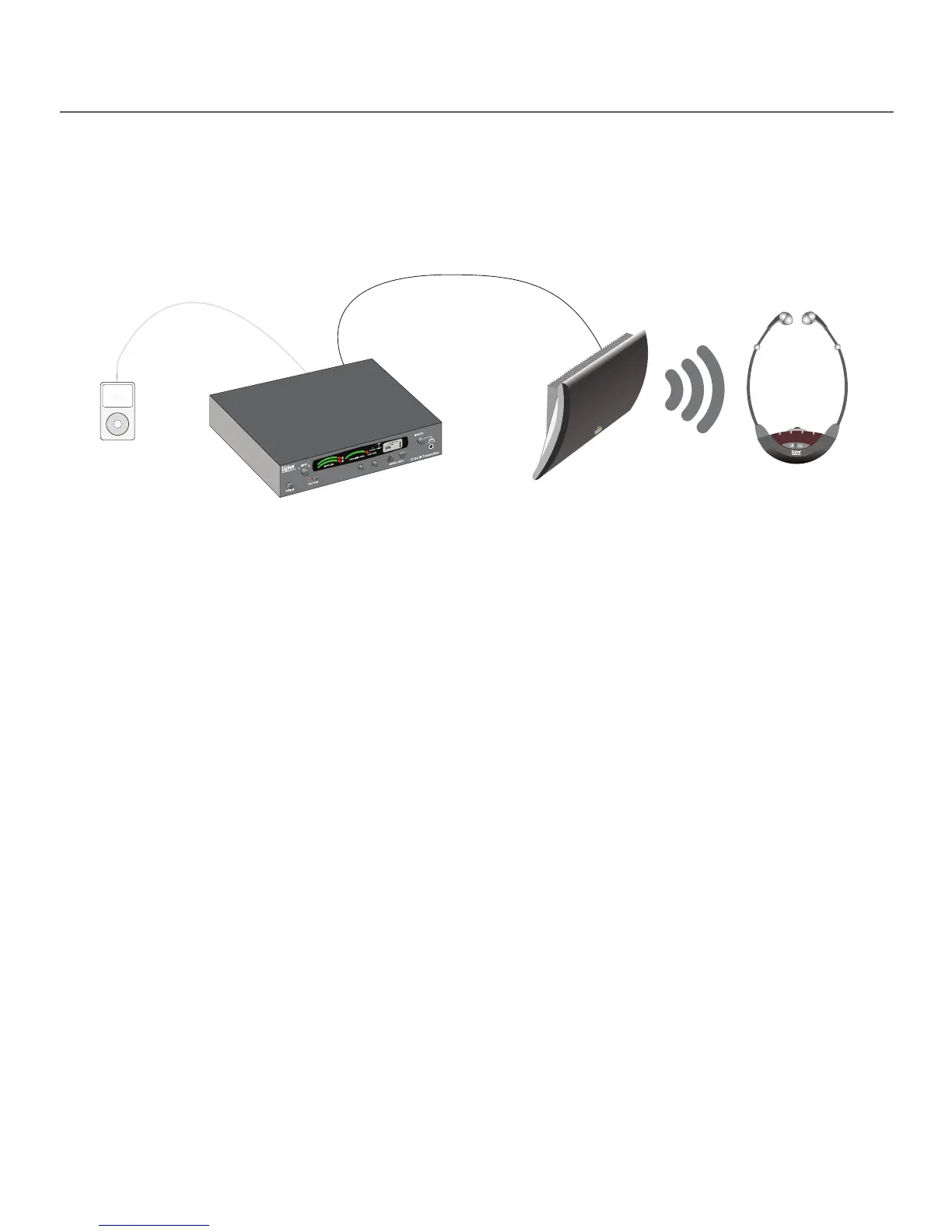
Infrared or “IR” technology uses infrared light to transmit audio without wires. This type of transmission is
advantageous to RF transmission because it is secure, it is not susceptible to RF interference, and one receiver
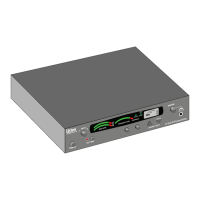
can be used for multiple rooms within a facility. The transmitter accepts an audio signal and then frequency
modulates an RF carrier at 2.3, 2.8, 3.3, and/or 3.8MHz. This carrier along with DC power (to power the
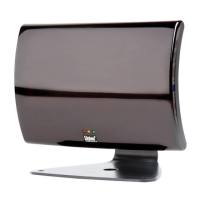
radiator) is supplied to the radiator via cables. The carriers are then radiated into the room using IR emitter
diodes. This is the same technology used by the remote control of your TV set. A receiver then receives the
IR light and demodulates the carrier.
1
2 3
4
Audio Source
IR Transmitter
Radiator
Receiver
When designing an IR system it is important to keep the following in mind:
• In open space (when there are no reective surfaces) IR is line of sight. If the receiver cannot “see” light
from the radiator, it will not receive the audio signal. It is important to provide sucient IR coverage
within a facility, so users will not have drop outs of the IR signal. This design guide will help you do this.
• In facilities that have reective and lighter colored surfaces, the IR light will be reected and you can
achieve greater coverage. For example, when emitting in a very large room (like an exhibit hall) you will
notice that you need to point the receiver directly at the radiator to pick up the signal. However, when
the radiator is placed in a smaller room (for example 50 ft
2
/14.6 m
2
square) with white walls you will
experience much better coverage. This is because the IR signal is being reected in many dierent
directions, increasing coverage.
• Listen Technologies systems use higher modulation frequencies that make the system less susceptible
to light interference from uorescent lights and other sources. However, the system is not immune from
interference from sources that create IR light such as sunlight and plasma displays.
• Listen Technologies products are compatible with other manufacturers who use the same modulation
frequencies (2.3, 2.8, 3.3, 3.8 MHz).


 To Next Page