This document is a user manual for the LodgingStar Microwave Oven, Model: 320008. It provides essential information regarding the safe operation, technical specifications, usage, and maintenance of the appliance.
Function Description
The LodgingStar Microwave Oven is designed for heating, cooking, or drying food using microwave energy. It features a power selector knob to choose from various power levels and a timer knob to set the cooking duration, up to 30 minutes per cooking session. The oven is not intended for industrial or laboratory use.
Important Technical Specifications
- Power Consumption: 120V~60Hz, 1100W
- Output: 700W
- Operation Frequency: 2450MHz
- Outside Dimensions (H×W×D): 10 5/16 × 17 13/16 × 12 9/16 inches
- Oven Cavity Dimensions (H×W×D): 8 11/16 × 12 3/8 × 11 9/16 inches
- Oven Capacity: 0.7 cu.ft.
- Cooking Uniformity: Turntable System
- Net Weight: Approx. 23.1 lbs.
The control panel includes a Power/Action Selector knob and a Timer Knob. The power levels available are:
- 100% (HIGH)
- 85% (M.HIGH)
- 66% (MED)
- 48% (M.LOW)
- 40% (DEFROST)
- 17% (LOW)
The oven is equipped with a Door Safety Lock System, Oven Window, Roller Ring, Door Release Button, Control Panel, Wave Guide (with a mica plate that should not be removed), and a Glass Tray.
Usage Features
To operate the oven:
- Place food in the oven and close the door securely.
- Turn the Power Selector knob to the desired power level.
- Turn the Timer knob to set the cooking time. The oven starts cooking as soon as the timer is turned.
- For cooking times less than 2 minutes, turn the timer past 2 minutes and then back to the correct time for accuracy.
- Always return the timer to the ZERO POSITION if food is removed before the set cooking time is complete or if the oven is not in use.
- To stop cooking, push the door release button or open the door by the handle.
Cooking Techniques:
- Stirring: Stir foods like casseroles and vegetables midway through cooking to distribute heat evenly, moving food from the outside to the center. The oven will pause when the door is opened.
- Arrangement: Arrange unevenly shaped foods, such as chicken pieces, with thicker parts towards the outside of the turntable for more microwave energy exposure. Delicate areas, like asparagus tips, should be placed towards the center.
- Shielding: Use narrow strips of aluminum foil to prevent overcooking of delicate areas (e.g., poultry wing-tips, leg ends, corners of baking dishes). Use small amounts of foil, as larger amounts can damage the oven.
- Turning: Turn large foods (e.g., roasts) over midway through cooking to ensure even exposure to microwave energy.
- Standing: Allow foods to stand for a few minutes after heating to complete cooking, especially for cakes, whole vegetables, and roasts. Liquids should be shaken or stirred after cooking.
- Adding Moisture: Microwave energy is attracted to water molecules. For foods with uneven moisture content, cover them or allow them to stand. Adding a small amount of water to dry food can aid cooking.
Utensils Guide:
- Recommended: Microwave browning dish (for browning small items), microwaveable plastic wrap (to retain steam), paper towels and napkins (for short-term heating and covering), glass and glass-ceramic bowls and dishes (for heating or cooking), paper plates and cups (for short-term heating at low temperatures), wax paper (as a cover to prevent spattering), and thermometers labeled "Microwave Safe."
- Limited Use: Aluminum foil (narrow strips to prevent overcooking), ceramic, porcelain, and stoneware (if labeled "Microwave Safe"), plastic (if labeled "Microwave Safe"), straw, wicker, and wood (for short-term heating).
- Not Recommended: Glass jars and bottles (can shatter), paper bags (fire hazard, except popcorn bags designed for microwave use), Styrofoam plates and cups (can melt and leave residue), plastic storage and food containers (can melt), and metal utensils (can damage the oven).
- To check if a dish is microwave safe, place the empty dish in the oven and microwave on HIGH for 30 seconds. If it becomes very hot, it should not be used.
Safety Precautions:
- Read all instructions before use.
- Follow specific "PRECAUTIONS TO AVOID POSSIBLE EXPOSURE TO EXCESSIVE MICROWAVE ENERGY" (detailed on page 1 of the manual).
- The appliance must be grounded and connected to a properly grounded outlet.
- Install or locate the appliance only according to the provided instructions.
- Do not heat whole eggs or sealed containers (e.g., closed glass jars) as they can explode.
- Do not use corrosive chemicals or vapors in the oven.
- Close supervision is necessary when used by children.
- To reduce the risk of fire in the oven cavity:
- Do not overcook food.
- Remove wire twist-ties from paper or plastic bags before placing them in the oven.
- If materials inside the oven ignite, keep the door closed, turn off the oven, and disconnect the power cord or shut off power at the fuse/circuit breaker panel.
- Do not use the cavity for storage purposes; do not leave paper products, cooking utensils, or food inside when not in use.
- Liquids (water, coffee, tea) can overheat beyond their boiling point without visible bubbling. To reduce the risk of injury from sudden boiling over:
- Do not overheat liquids.
- Stir liquids both before and halfway through heating.
- Do not use straight-sided containers with narrow necks.
- Do not attempt to operate the oven with the door open or if the door seals or safety interlocks are damaged.
- Do not place any object between the oven front face and the door or allow soil or cleaner residue to accumulate on sealing surfaces.
- Do not operate the oven if it is damaged, especially the door, hinges, latches, or door seals.
- Do not operate the oven if there is damage to the door, hinges, latches, or door seals/sealing surfaces.
- The oven should not be adjusted or repaired by anyone except properly qualified service personnel.
- Do not heat oil or fat for deep-frying in the microwave, as it is difficult to control the temperature.
- Pierce foods with heavy skins such as potatoes, whole squash, apples, and chestnuts before cooking.
- The contents of feeding bottles and baby jars should be stirred or shaken, and the temperature checked before serving to avoid burns.
- Cooking utensils may become hot due to heat transferred from the heated food. Potholders may be needed to handle utensils.
- Do not cover or block any openings on the appliance.
- Do not store or use this appliance outdoors.
- Do not use this product near water, for example, near a kitchen sink, in a wet basement, near a swimming pool, or similar locations.
- Do not operate this appliance if it has a damaged cord or plug, if it is not working properly, or if it has been damaged or dropped.
- Do not let the cord hang over the edge of a table or counter.
- Use only thermometers specifically designed for use in microwave ovens.
- Do not operate any heating or cooking appliance beneath this appliance.
- Be certain the glass tray and roller rings are in place when you operate the oven.
- This appliance should be serviced only by qualified service personnel.
- When cleaning surfaces of door and oven that come together on closing the door, use only mild, nonabrasive soaps, or detergents applied with a sponge or soft cloth.
Maintenance Features
- Cleaning:
- Turn off the oven and unplug it before cleaning.
- Keep the inside of the oven clean. Wipe food splatters or spilled liquids with a damp cloth. Mild detergent can be used for very dirty areas. Avoid harsh cleaners that may stain or dull the door surface.
- Clean outside surfaces with a damp cloth. Prevent water from seeping into ventilation openings.
- Wipe the window on both sides with a damp cloth.
- Do not allow the control panel to become wet. Clean with a soft, damp cloth. Keep the oven door open while cleaning the control panel to prevent accidental turn-on.
- Wipe away steam accumulation inside or around the oven door with a soft cloth. This is normal in high humidity conditions.
- The glass tray can be removed for cleaning and washed in warm sudsy water or a dishwasher.
- Clean the roller ring and oven floor regularly to avoid excessive noise. Wipe the bottom surface with mild detergent. The roller ring can be washed in mild sudsy water or a dishwasher. Ensure the roller ring is replaced in the proper position.
- Odor Removal: Combine a cup of water with the juice and skin of one lemon in a deep microwaveable bowl, microwave for 5 minutes, then wipe thoroughly and dry with a soft cloth.
- Oven Light Replacement: Consult a dealer when the oven light needs replacement.
- General Maintenance: The oven should be cleaned regularly, and food deposits removed. Failure to maintain cleanliness can lead to deterioration of surfaces, affecting the appliance's life and potentially creating a hazardous situation.
- Disposal: Do not dispose of the appliance in domestic rubbish. It should be disposed of at a designated disposal center provided by municipalities.
- Address: 1016 Montana Drive, Charlotte, NC 28216
- Tel: 888-259-6777

 Need help?
 General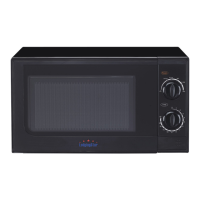

 To Next Page