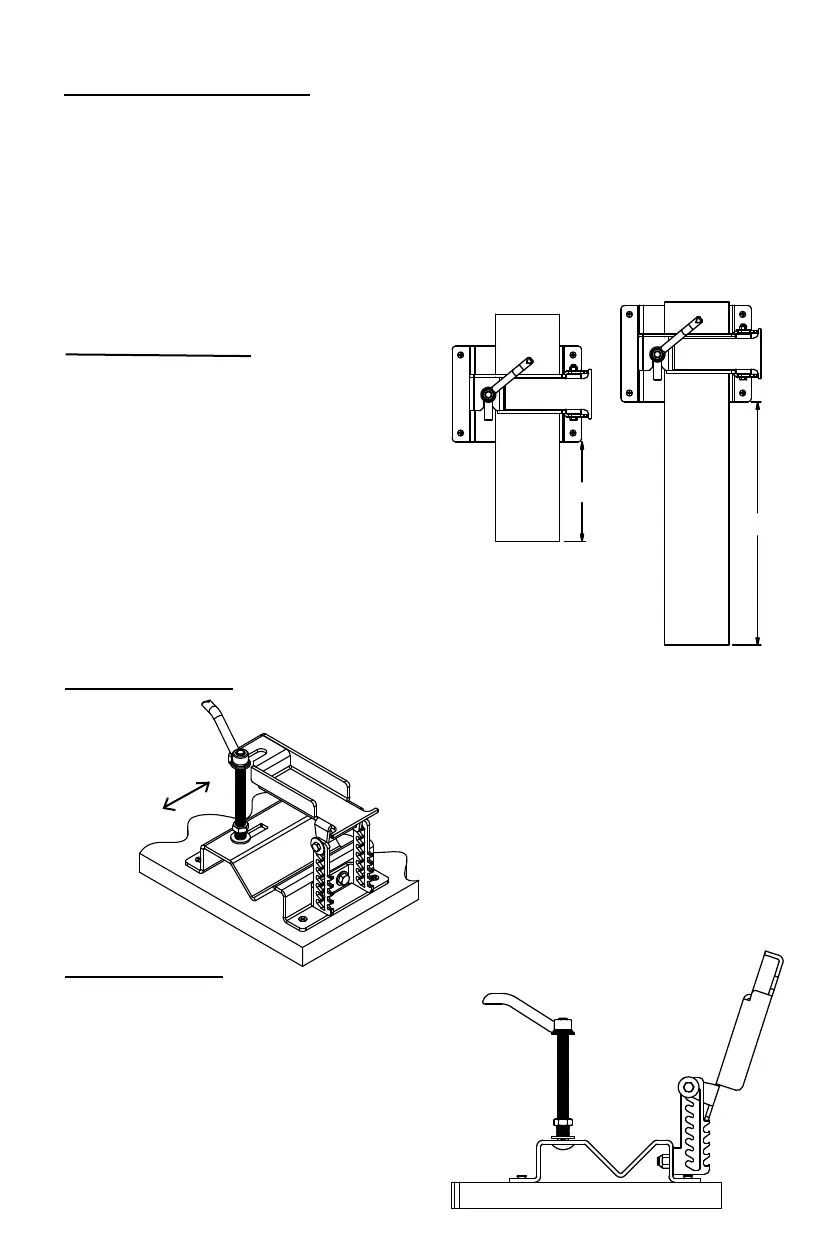
● It is important to clamp logs so
there is enough log sticking out to
cut a tenon or perform another
task. The key is to not have too
much sticking out to where the log
and clamp are unstable, but also
not to have too little sticking out to
where a full cut cannot be made.
- 7”-10” is standard overhang
Clamping Pressure
Log Overhang
Ladder Rest
● Having the proper clamping pressure is very important when doing any
type of woodworking project. If the clamp is too tight, there is a risk of
damaging the clamp and the wood. If the clamp is too loose, the wood
will not be secure and will spin.
- When contact is first felt on the wood tighten the handle with one
full turn. If the log can still be spun by hand, continue tightening the handle
in half-turn increments until the wood is secured.
Handle Slide
Correct
Overhang
Incorrect
Overhang
● The handle slide allows for less
time to tighten and loosen in the
clamp.
● Simply slide the handle in the
slot without having to fully
unscrew the handle to lift the
top.
● The ladder rest allows you to set
the top back without having it fall
to the bottom.
● Leave the bolt locked into the
ladder and tilt the top back until it
comes to rest on the ladder rest.
Slide
Direction
9
7”-10”
>10”



 To Next Page