This document outlines the features, installation, operation, safety precautions, troubleshooting, and maintenance of the NBC-250 MIG/MMA/TIG Welding Machine.
Function Description
The NBC-250 is an advanced inverter-based welding machine designed for MIG, MMA (Manual Metal Arc), and TIG (Tungsten Inert Gas) welding processes. It incorporates a special reactor internally to control the short circuit during welding, offering improved performance compared to traditional silicon control welding machines. This multi-process capability makes it versatile for various welding applications.
Usage Features
The machine boasts several key usage features that enhance its performance and user experience:
- Stable Feeder Speed: Ensures consistent wire feeding for smoother welding operations, particularly beneficial for MIG welding.
- Lightweight and Energy-Saving: Designed to be less cumbersome and more energy-efficient, contributing to reduced operational costs and easier portability.
- Low Noise Operation: Operates with minimal noise, creating a more comfortable working environment.
- Excellent Performance on Thin Workpieces: Highly suitable for welding thin workpieces made of low carbon steel, alloy, and stainless steel, providing stable results even with low current settings.
- Voltage Compensation System: Equipped with a system that allows the machine to operate normally even when the actual voltage fluctuates by ±15% from the rated voltage, ensuring stable performance in varying power supply conditions.
- Reduced Spatter and Deep Penetration: Delivers welds with less spatter and deeper penetration, leading to higher quality and stronger joints.
- High Duty Cycle: Capable of sustained operation due to its high duty cycle, making it suitable for demanding tasks.
- Arc Starting: Supports TOUCH arc starting for MMA and MIG, and HF (High Frequency) arc starting for TIG, offering flexibility depending on the welding process.
For optimal performance and to prevent voltage reduction, it is recommended to use larger dimension cables for longer connections. The length of the connecting cable should be carefully considered as excessive length can affect arc striking and overall performance. Proper ventilation is crucial during operation; users must ensure that the ventilate parts are not blocked to prevent the cooling system from failing.
Installation and Operation:
The installation process involves several steps to ensure proper setup:
- Gas Cylinder Connection: Connect the CO2 gas cylinder to the machine's input part using a gas hose. A CO2 gas pressure reducer must be used.
- Earth Clamp Connection: Attach the earth clamp to the designated connector on the control panel.
- Welding Wire Installation: Install the welding wire onto the bracket.
- Gloove Selection: Choose the appropriate gloove based on the wire diameter.
- Wire Feeding: Insert the wire into the feeder through the gose, taking care to avoid bending the wire.
- Wire Fixation: Ensure the wire is installed deasil and secured with a screw. Any bent parts of the wire should be cut off.
- Torch Connection: Connect the welding torch to the socket on the panel and then connect the wire to the torch.
Once installed, the operation involves:
- Power On: Locate and switch "ON" the air switch.
- Gas Adjustment: Adjust the gas bottle switch and the flowmeter to the desired settings.
- Feeder Diameter Selection: Choose the appropriate feeder diameter according to the welding wire being used.
- Contact Tip Selection: Select the suitable contact tip for the welding process.
- Parameter Adjustment: Adjust the voltage and current settings based on the workpiece requirements.
- Initiate Welding: Press the torch switch to feed the wire and begin welding.
Safety Notice:
The machine is equipped with over-voltage, over-current, and over-heat protection, which will automatically stop the machine if these parameters exceed standard settings. However, continuous operation under overloaded conditions (e.g., excessively high voltage) can damage the machine. Users must adhere to the following safety guidelines:
- Ventilation: Ensure the workplace is well-ventilated. Due to the machine's compact size, strong ventilation is required when high currents are used. Ventilate parts must not be blocked, and the machine should be kept at least 0.3 meters away from other objects to ensure optimal performance and longevity.
- Load Management: Avoid overloading the machine. Users should check the maximum load current (according to the rated duty cycle) and keep the welding current below this limit. Overloading reduces the machine's lifespan and can cause burnout.
- Voltage Control: While the voltage compensation circuit helps maintain stable welding current, users should avoid operating under excessive voltage, as this can damage the machine.
- Duty Cycle Protection: If the duty cycle is exceeded, the machine's self-protection mechanism will activate, stopping operation and illuminating a red light on the panel. In such cases, do not cut off the power; allow the fan to cool the machine for a few minutes. The machine will resume operation once the red light turns off.
Working Conditions:
For optimal performance and safety, the following working conditions should be met:
- Humidity: The working environment should be dry, with air humidity less than 90%.
- Temperature: The ambient temperature should be between -10°C and 40°C.
- Environmental Protection: Avoid working in direct sunlight or rain. Water must not enter the machine.
- Air Quality: Avoid working in dusty or caustic air.
- Airflow: Avoid working in areas with strong air currents that could interfere with the welding process or cooling.
Troubleshooting Common Welding Problems:
Welding problems can arise from accessories, the workpiece, environmental conditions, or the power supply. Maintaining good working conditions is essential to prevent issues.
- Difficulty Striking Arc and Unstable Arc:
- Ensure the earth clamp and the workpiece are well connected.
- Check all connections for proper contact.
- Output Current Not Reaching Rated Current:
- If the input voltage differs from the rated voltage, the output current will not match the setting.
- Unstable Current During Welding:
- The maximum output current being less than rated can be caused by changes in input voltage or influences from the electricity grid and other equipment.
- Welding Slot with Gas Bubbles:
- Check the gas supply to ensure there are no leaks.
- Inspect the workpiece for oil or dust, which can cause gas bubbles.
Maintenance Features
Regular maintenance is crucial for the longevity and reliable operation of the NBC-250 welding machine.
- Dust Cleaning: The machine should be cleaned of dust regularly, especially when operating in polluted environments. Cleaning should occur at least once a day using an air compressor. The compressed air should be well-adjusted to avoid damaging small internal parts.
- Connection Inspection: Periodically check the electricity and gas connections to ensure they are well-fixed. If any parts are oxidized, they should be ground and reconnected.
- Moisture Prevention: Prevent moisture from entering the machine. If water does get inside, the insulation should be tested with a megameter. The machine should only be used again if the insulation is acceptable.
- Storage: If the machine will not be used for an extended period, it should be packed and stored in a dry environment.
- Feeder Motor and Roller Cleaning: Workers should clean the dust from the feeder motor and apply oil to the feeder roller every 300 hours of operation.
CAUTION: Before performing any maintenance or opening the machine's shell, ensure the electricity is cut off and the power plug is pulled out to prevent electrical hazards.

 Need help?
 General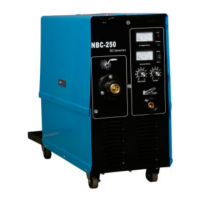

 To Next Page