45
Starter Motor Current Test
If you have successfully completed the battery tests and the voltage drops tests, you have veried that there is
adequate battery voltage to the starter. Next, investigate how much current the starter is drawing by using a DC
clamp-on current probe. Under normal operating conditions, with an outside air temperature of 70°F, a good
rule of thumb for calculating cranking current is 1A per CID (Cubic Inch Displacement) or 60A per liter ± about
25%. Under no-load conditions, it’s 0.5A per CID ± about 10%. Check the manufacturer’s specications for
the correct starter cranking current.
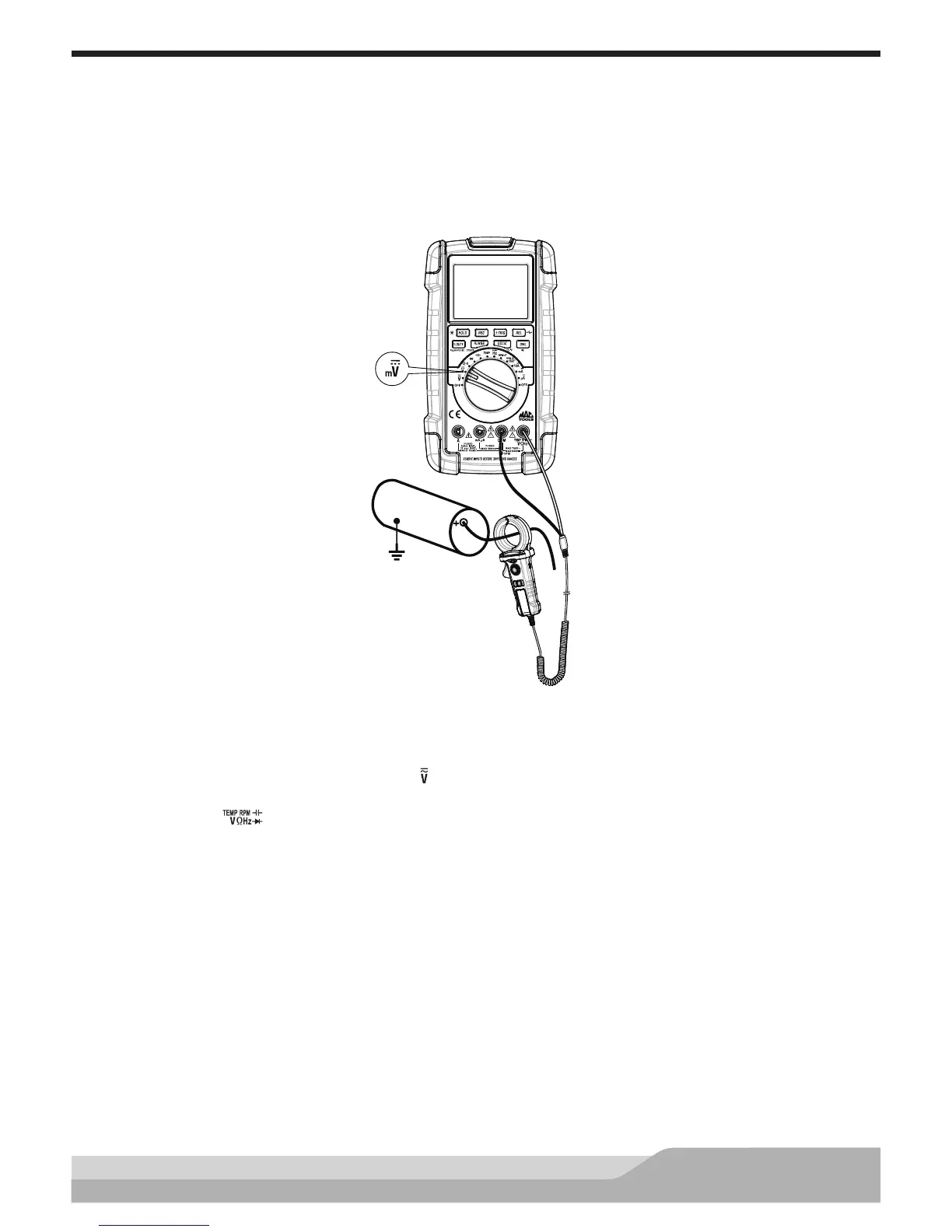
Starter Motor
Red
Black
Meter setup to measure starter current:
• Set the rotary switch to the millivolts DC (m ) setting.
• Connect a DC clamp-on current probe (optional accessory) to the meter. Black lead to the “COM” jack and
red lead to the “ ” jack.
Clamp the clamp-on current probe around the cable connected to the positive (+) terminal of the starter motor.
Be sure that the arrow on the clamp is pointed in the direction of the current ow in the cable.
Press the “REC” button (selects the MAX.MIN.AVG function).
The minimum reading is the negative current draw.
Disable the ignition so the engine can’t start and crank the engine for four to ve seconds.
If the current draw is not high and the battery has tested good in the previous tests but the starter turns the
engine slowly, check the resistance (or voltage drop) in the starter circuit again.


 To Next Page