5
English
Electrical safety
1.
reduce risk of electric shock.
2.
There is an increased risk of electric
3. Do not expose power tools to rain or wet condi-
Water entering a power tool will increase the
risk of electric shock.
4.
Damaged or entangled cords
increase the risk of electric shock.
5.
Use of
electric shock.
6. If operating a power tool in a damp location
is unavoidable, use a residual current device
Use of an RCD reduces
the risk of electric shock.
7.
However,
users of pacemakers and other similar medical
devices should contact the maker of their device
tool.
Personal safety
1.
A
moment of inattention while operating power tools
2.
Protective equipment such
as a dust mask, non-skid safety shoes, hard hat or
hearing protection used for appropriate conditions
3.
to power source and/or battery pack, picking up
Carrying power tools with your
have the switch on invites accidents.
4.
A wrench or a key left
attached to a rotating part of the power tool may
5. -
power tool in unexpected situations.
6.
7.
dust extraction and collection facilities, ensure
Use of
dust collection can reduce dust-related hazards.
8. Do not let familiarity gained from frequent use
of tools allow you to become complacent and
A careless action
second.
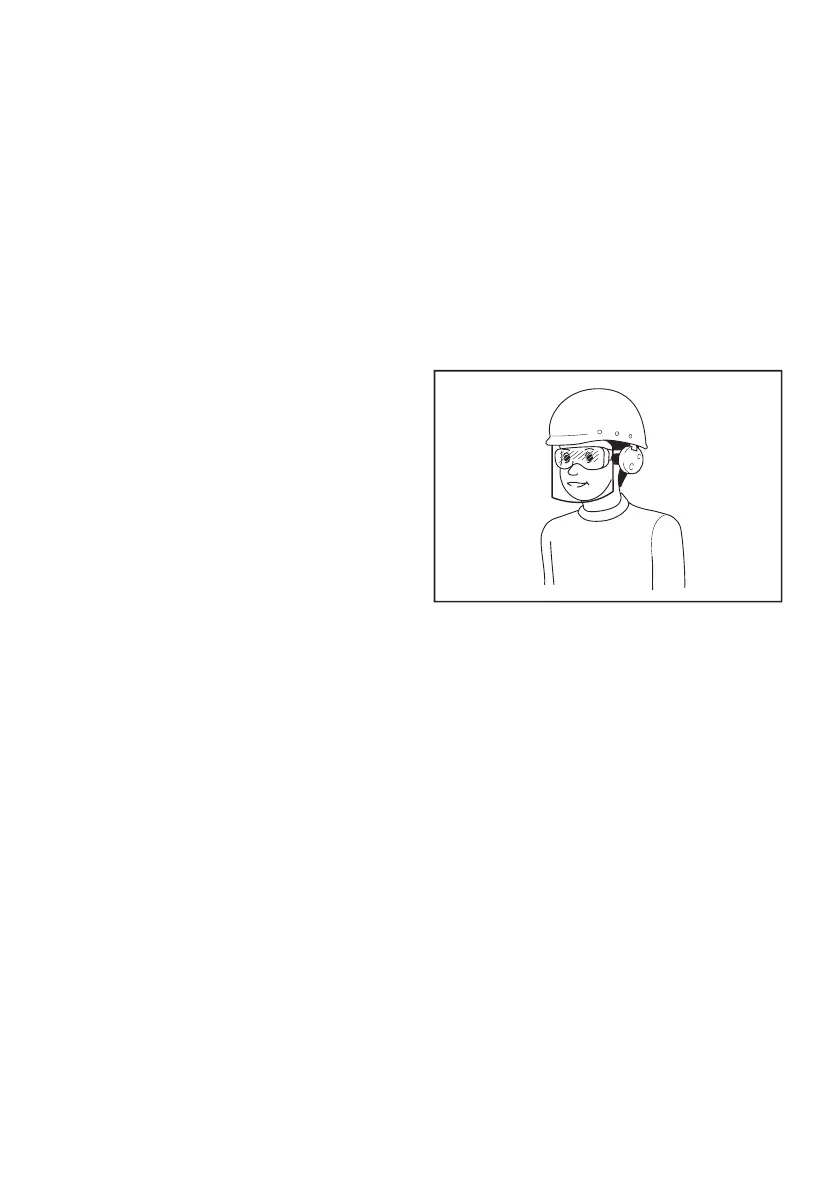
9. Always wear protective goggles to protect
Zealand, it is legally required to wear a face
It is an employer’s responsibility to enforce
-
-
Power tool use and care
1.
The correct
for which it was designed.
2.
repaired.
3.
Such preventive safety measures reduce the risk of
starting the power tool accidentally.
4. -
Power tools are dangerous in the
hands of untrained users.


 To Next Page