
 Need help?
Do you have a question about the Mangosteen M2 and is the answer not in the manual?
Important precautions and checks before using the battery for the first time.
Guidelines for optimal ambient temperature and conditions for charging.
Safety precautions and usage instructions for the charger.
Analysis and solutions for common issues encountered with lithium batteries.
Comprehensive list of inspection points for regular vehicle maintenance.
Guidelines for storing the vehicle properly to prevent damage or aging.
This document serves as the Product Operation Manual for the M2 electric two-wheeled motorcycle, providing essential information for its safe and effective use, maintenance, and troubleshooting. It emphasizes the importance of understanding the vehicle's performance and adhering to safety precautions before operation.
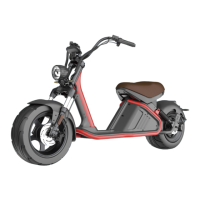
The M2 is an electric two-wheeled motorcycle designed for personal transportation. Its primary function is to provide a convenient and environmentally friendly mode of travel. The vehicle is equipped with a comprehensive display system that provides real-time information to the rider, including speed, driving mode (Standard, Economic, Sport), battery status, and mileage. Indicator lights for directionals, driving beam, and various warnings (battery undervoltage, handle, electric motor control unit, electric motor) ensure the rider is constantly aware of the vehicle's operational status.
Usage features of the M2 are designed for ease and safety. The vehicle can be started using a key or a remote control. The remote control offers several functions: an indicator light to confirm operation, a lock key to deploy the vehicle, an unlock key to release the alert mode, an electric start key to power on and enable riding, and a search key to locate the vehicle by sounding a warning tone. For optimal remote control functionality, the battery must be properly installed, and the distance between the remote and the vehicle should be less than 50 meters.
Battery management is a critical aspect of the M2's usage. The manual outlines two charging methods: external charging, where the battery is removed and connected to the charger, and vehicle charging, where the battery remains in the vehicle and is charged via a port in the seat cask. The battery's electric quantity indicator light displays the charge level, blinking when below 20% to prompt charging, and remaining solid green when fully charged. It is crucial to use only the original battery and charger to prevent damage and ensure safety. The battery's performance is affected by temperature, with reduced capacity at lower temperatures. Users are advised to operate the battery within a temperature range of -10°C to 45°C and to protect it from water, corrosive liquids, heat sources, and foreign objects. Unauthorized disassembly of the battery is strictly prohibited as it voids the warranty and poses significant safety risks, including overheating, smoke, fire, or explosion.
The manual provides detailed instructions for charging, emphasizing the importance of charging in a well-ventilated area, away from direct sunlight or high temperatures. It advises against charging for more than 12 hours to preserve battery life. During charging, the electric quantity rises quickly initially and then slows down, which is a normal safety feature. If the outdoor temperature is too low, charging may temporarily stop, requiring the battery to be moved to an appropriate ambient temperature. Users should be cautious of the charger's surface temperature during operation, as some aluminum case chargers may heat up.
For long-term storage, the battery should be removed and stored separately, maintained, and charged regularly to prevent depletion and irreversible damage. The ideal storage capacity is 50%; storing below 10% or above 90% for extended periods can lead to irreversible capacity attenuation. If the vehicle is stored with the battery connected, the intelligent system and alarm will consume power, leading to a gradual decrease in electric quantity. The maximum safe storage period for a connected battery is one month; for a disconnected battery, it is three months, provided the electricity quantity is at least 50%. Storing the battery in a place where it might fall is dangerous and can cause damage, leakage, heating, smoking, fire, or explosion.
Maintenance and servicing are essential for prolonging the M2's service life and ensuring safe operation. Regular maintenance is recommended, with specific intervals for initial adjustments and subsequent maintenance. The first adjustment period is after one month or 500 km, followed by the first maintenance at four months or 1,500 km, and the second maintenance at ten months or 3,000 km. Maintenance items include inspecting structural members (nut and bolt fasteners), brake system (tire, brake fluid, abnormal sound, braking effect, brake disc), electrical components (power lock, alarm, lights, dashboard, combined switch), and the battery (charger voltage, APP function, appearance, waterproofness, detection, charging test). Vehicle riding inspections cover operation, abnormal sound, and parking.
Troubleshooting guidance is provided for common issues such as no power output, motor not starting, insufficient endurance mileage, and inability to charge. For instance, if the vehicle has no power output, checking the power plug and battery charge is recommended. If the motor doesn't start, checking the brake handle, side brace, and start switch is advised. Insufficient endurance mileage can be due to low battery, tire pressure, driving habits, battery aging, or ambient temperature. The manual also addresses issues related to lithium battery performance, such as the battery running out, light bars flashing, or dramatic changes in displayed capacity after parking.
Cleaning the vehicle involves scrubbing with tap water and a neutral detergent, then wiping with a soft cloth. High-pressure water guns should not be used directly on the battery box, charger, controller, or other electronic parts to avoid water damage. For storage, the vehicle should be kept in a stable, well-ventilated, and dry place, away from direct sun and rain. Before reusing after long-term storage, the battery should be fully charged, and all parts confirmed to be normal.
Battery extraction requires using the key to unlock and lift the car seat, then pulling out the power plug and the battery. It is important not to force the car seat open without unlocking to prevent deformation or damage.
 General
| Climbing Angle | 15 degrees |
|---|---|
| Category | Scooter |
| Motor | 350W |
| Max Speed | 25 km/h |
| Brakes | Disc Brake |
| Tires | 8.5 Inch |
| Lights | LED |
| Water Resistance | IPX4 |

 To Next Page