This document is an instruction manual for BLA Marine Performance Lithium Batteries, specifically the LiFePO4 series, designed for boating lifestyle adventures. The manual provides essential information for the safe and effective use, charging, and configuration of these batteries.
Function Description
The BLA Marine Performance Lithium Batteries are advanced power sources utilizing Lithium Iron Phosphate (LiFePO4) technology. These batteries are designed to provide reliable and efficient power for marine applications. They are part of the BLA Marine Performance series, indicating their suitability for demanding marine environments. The batteries are packaged by Sealed Performance Batteries, suggesting a robust and maintenance-friendly design.
Usage Features
The manual emphasizes several key aspects for the proper use of these lithium batteries:
- Safety Warnings: Users are cautioned to keep the battery away from heat, high voltage, and direct sunlight. Short-circuiting the positive and negative terminals is strictly prohibited. The battery should never be shipped or stored with metal objects, disassembled, knocked, thrown, or impacted. Immersion in water is also forbidden. The batteries are not suitable for under-bonnet or starting applications.
- Charging: A critical aspect of usage is the charging process. Users must always use a charger with a Lithium profile that adheres to the battery's charging specifications. Chargers with Sulphation/Equalisation settings must have these features turned off. The manual provides a detailed charging table for different battery voltages (12V, 24V, 36V, 48V), specifying both Max Charge Voltage and Float Charge Voltage. It is advised not to leave batteries on float charge for extended periods. The charger's current rating should match the battery's current rating, typically half of the battery's rated capacity (e.g., 50A for a SNL12V100S battery). The warranty is contingent on the use of a Lithium (LiFePO4) profile charger.
- Low Voltage Cut-off: The manual recommends a low voltage cut-off device at 9.5V to prevent over-discharge. If the battery cuts out due to low voltage, the load should be immediately disconnected.
- Storage: For optimal battery life, the ideal storage temperature is between -20°C and 35°C. Batteries should be charged every 6 months and should not be left in a low state of charge for long periods. Keeping the battery away from high temperatures is also important.
- Over-discharge Protection (Waking Up Battery): If a battery is over-discharged, it will drop below its operational voltage, and the Battery Management System (BMS) will activate, putting it into protection mode. Users can check the voltage with a multimeter; if it's below 5V, the BMS is in protection mode. Bluetooth models allow checking via a mobile application. BLA Marine Performance Lithium Chargers have a "wake up" function for such scenarios. The manual lists BMS Over-discharge Protection Voltages for different battery configurations (10V for 12V, 20V for 24V, 30V for 36V, 40V for 48V).
- Series and Parallel Configuration: The manual outlines strict conditions for configuring BLA Marine Performance Lithium Batteries into Series or Parallel systems.
- Parallel Configuration: All batteries must be fully charged individually by matched chargers, and their Open Circuit Voltage (OCV) must be less than 0.2V of each other. After charging, they should rest for 8 hours. Wires of sufficient circumference (carrying >100A) and equal length must be used for connections. Reversing positive and negative connections is prohibited. Correct charge voltage and current must be used. A paralleled configuration must never be put in series. Once in parallel, a full charge should be completed at least every 3 months, and the system must be charged and discharged as a whole. If one battery needs replacement, the entire system requires replacement.
- Series Configuration: Not all SNL batteries can be configured in series or parallel. Specifically, Bluetooth batteries can be paralleled (though the BT function will cease to work) but cannot be configured in series (e.g., two 12V batteries for 24V). Series configuration is strictly prohibited for Bluetooth batteries. For compatible batteries, similar conditions to parallel configuration apply: individual full charging, OCV difference less than 0.2V, 8-hour rest, and use of appropriate, equal-length wiring. Correct charge voltage and current must be used for series configurations (29.2V for two batteries, 43.8V for three, 58.4V for four). A series configuration must never be paralleled. A full charge is required every 3 months, and the system must be charged and discharged as a whole. If one battery needs replacement, the entire system requires replacement.
- Mobile Application: For Bluetooth-enabled models, a mobile application is available for download via Apple Store or Google Android. This app allows users to monitor the health and state of their battery from their phone, providing information such as voltage, capacity, temperature, and status (e.g., standby, overcharge, over-discharge, short circuit, over current). The app also provides access to manuals and safety data sheets.
Maintenance Features
The manual highlights several maintenance-related points to ensure the longevity and performance of the batteries:
- Regular Charging: Batteries should be charged every 6 months, even during storage, to prevent them from remaining in a low state of charge for extended periods.
- Visual Inspection: Users should immediately discontinue use if the battery shows signs of deformation, heat, or emits a smell.
- Warranty Registration: To ensure warranty coverage, users are advised to visit bla.com.au and register their battery, confirming it is installed in an approved application. The warranty is for 7 years when installed correctly.
- System Replacement: In both parallel and series configurations, if one battery in the system needs to be replaced, the entire system must be replaced to maintain balance and optimal performance.
- Technical Support: For any support requirements, users can contact BLA's Technical Services Teams via email in Australia (service@bla.com.au) or New Zealand (service@bla.nz.co).

 Need help?
 General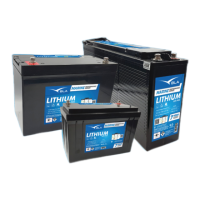

 To Next Page