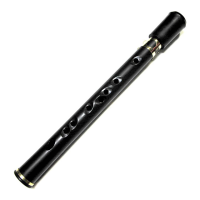
The Xaphoon, affectionately known as "The Pocket Sax," is a unique and portable reed instrument designed to produce the deep, rich sounds of a saxophone or clarinet. It's suitable for both beginners and experienced players, offering a versatile and expressive musical experience that can be enjoyed anywhere.
Function Description
The Xaphoon operates on the principle of reed vibration, similar to a saxophone or clarinet. It uses a standard tenor sax reed, which vibrates when air is blown through the mouthpiece, creating sound. The instrument boasts a fully chromatic, 2-octave range, providing a wide array of notes for musical expression. Its design allows for subtle shadings and vibrant power, making it capable of producing a sound comparable to a saxophone. The Xaphoon is not merely a simplified version of existing instruments; it is a brand new instrument with its own unique characteristics, encouraging experimentation and a "no rules" approach to playing.
Usage Features
Instrument Components: The Xaphoon is comprised of four main pieces: the main body, a tenor sax reed, a brass ligature to hold the reed in place, and a plastic cap to protect the delicate reed when not being played. The mouthpiece is built directly into the instrument, eliminating the need for adjustments or replacements.
Finger Placement: The instrument has a total of 9 holes. The left hand is placed on top, with all five fingers used, and the left thumb closes a hole in the back. The right hand uses four fingers at the bottom, with the right thumb not being used. Special attention should be paid to sealing the holes completely, which does not require excessive finger pressure but rather mindfulness of the edges of the holes.
Mouthpiece and Embouchure: To play properly, the lower lip should be curled over the lower teeth, providing a cushion for the reed. The upper teeth should rest directly on top of the plastic mouthpiece. The mouthpiece should be placed far enough into the mouth to allow the reed to vibrate freely without touching the lips, teeth, or tongue. The tongue should also be out of the way. The lower lip should contact the reed approximately halfway down its length, ensuring that everything above this line is free of obstruction. As players gain experience, moving the lower lip above and below this line can facilitate easier playing of lower and higher registers, respectively.
Producing Sound (Instant Gratification): For beginners, the easiest way to produce a sound is to keep all holes open, place the mouthpiece in the mouth with the lower lip resting halfway down the reed's length, seal the lips tightly around the mouthpiece, and blow as hard as possible. This should produce a loud, high-pitched squeal, which, with practice, can be refined into a pure high "F" on the 2-octave scale. If no sound is produced, try moving the mouthpiece further into the mouth or adjusting lip pressure.
Descending Scale: Once a sound is achieved, practice a descending scale. Start with all holes open, playing the high note. While continuously blowing, close the holes one by one from the top, listening to the descending scale. Remember to close the left thumb hole as the third note in the descending scale. Continue closing holes until all are covered, reaching the instrument's lowest note, a low "C." If notes sound fuzzy, ensure all holes are sealed tightly with the fingers. Less lip pressure on the reed can help achieve lower notes more freely.
Breath Control: Beginners accustomed to recorders may find the Xaphoon requires more wind pressure due to its reed mechanism. With practice, the required breath amount will feel reduced, allowing for a natural flow of music.
The Upper Register: The Xaphoon's 2-octave range includes a lower register (C to F) and a high register (High G to High C). The high register is often the sound beginners make unintentionally. To intentionally reach the upper register, reposition the lip slightly further below the green line (as depicted in earlier instructions) and apply a little more lip pressure. An F# can be achieved by playing a high F and applying greater lip pressure, or by playing a high G with lower lip pressure. With practice, players can seamlessly transition between registers and play a complete 2-octave "C" scale.
Vibrato, Lip Control, and Fine Tuning: Vibrato is a common technique for reed instrument players and is learned through a slight, regular "chewing" motion with the lower jaw while holding a long note. This motion causes the pitch to go up and down with varying lower lip pressure on the reed. Practicing vibrato helps with fine-tuning the pitch. To practice, establish the exact pitch, apply a subtle vibrato with a steady rhythm towards the end of the note, and then finish with the exact pitch. Exaggerated lip motion can create expressive pitch bends. Lip tuning is crucial for maintaining in-tune playing, requiring constant attention and adjustments, similar to steering a car.
Reed Strength and Placement: The Xaphoon uses a standard Tenor Sax reed. The instrument typically comes with a #2½ strength reed, which is a good general-purpose strength. Experienced jazz sax musicians might prefer harder reeds (#3 or #4) for a stronger, more powerful sound, while those used to recorders might find softer reeds (#1½ or #2) easier to play. Proper reed placement is critical for sound quality. The edges of the reed should be even with the edges of the mouthpiece opening. If the reed is placed too low, a "fuzzy" sound results. If placed too high, more breath may be required to start vibration, and the reed could break more easily.
Troubleshooting Tips:
- No Sound: Ensure the reed is free to vibrate. Try inserting the instrument an additional inch or two into the mouth, leave holes open, and blow hard. Check for proper reed placement, ensuring its edges align with the mouthpiece opening.
- High Notes Only, No Lower Notes: Practice the descending scale exercise. Reduce lip pressure as you approach lower notes to allow the reed to vibrate more freely.
- No Higher Register Sounds: Reposition the mouthpiece further into the mouth and apply slightly more lip pressure.
- Fuzzy/Impure Notes: This usually indicates that one or more holes are not fully closed. Check all closed holes for inadvertent leaks.
- Flat/Sharp Notes: Variable lip pressure can cause notes to be played sharp or flat. Adjust lip pressure (more for sharper, less for flatter) to correct this. Practice helps in understanding the required pressure for in-tune playing. Reed strength can also affect tuning; a stiffer reed may help if playing flat, while a softer reed may help if playing sharp.
Maintenance Features
Reed Care: For best results, the reed should be moist, which happens naturally during play. Many musicians moisten the reed in their mouths before playing. Reeds can last for thousands of hours, but in reality, they often chip, break, or warp before reaching their natural lifespan. Replacing a damaged reed will restore a fresh and bright sound.
Instrument Cleaning: The Xaphoon is made of high-quality materials, similar to clarinets and oboes, and is remarkably maintenance-free. To keep it looking new, an Armor-All treatment once a year is recommended. Some players also prefer to wipe the inside clean after each playing session.
Durability and Versatility: If appearance is not a primary concern, the Xaphoon is robust enough to double as a percussive tool (like a drumstick). For a more subtle washboard-like sound, the cap can be slid over the fingering holes. As a new instrument, there are no strict rules for its use or care, encouraging creative exploration.


 To Next Page
 General