//
7
Cocoon Training Manual
Basic X-ray Safety
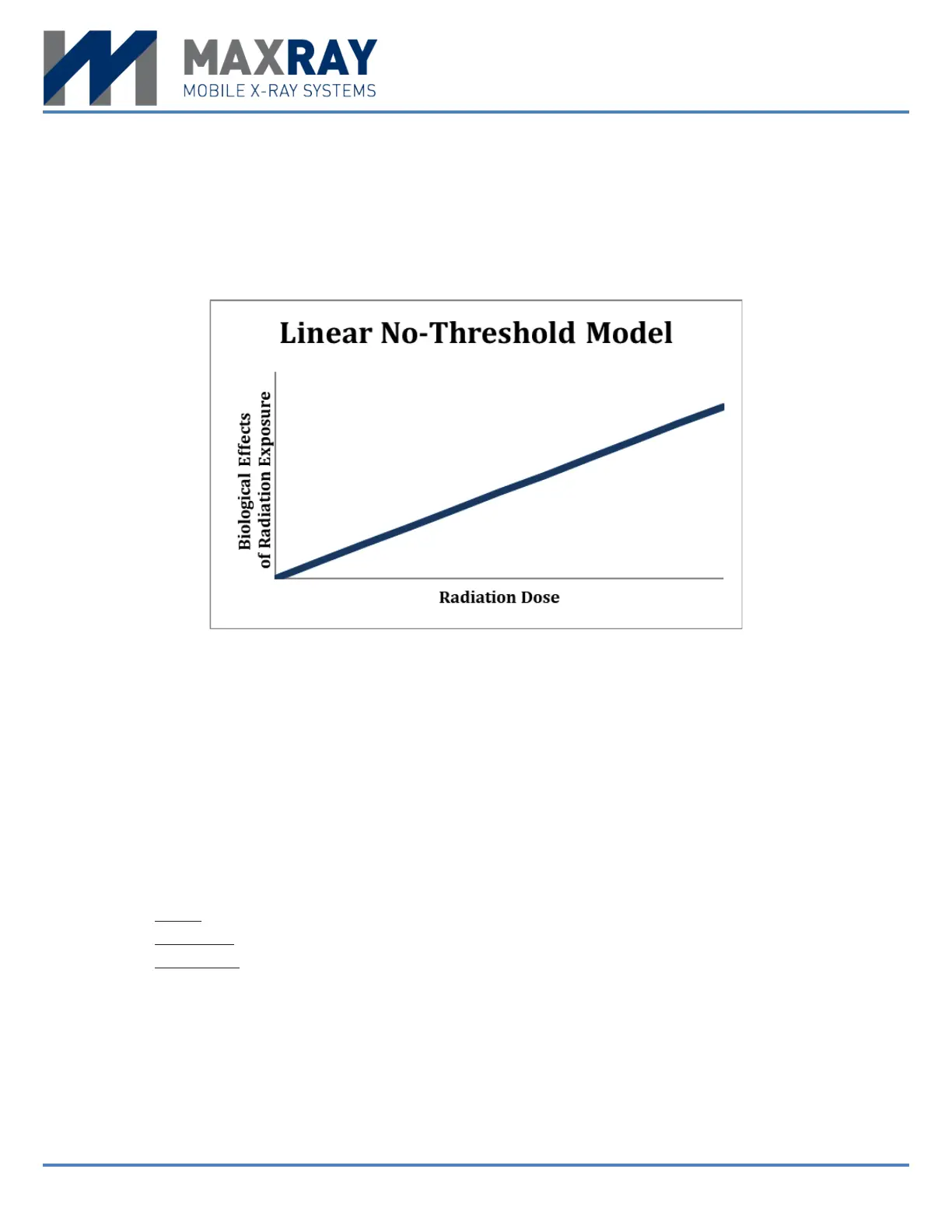
Linear No-Threshold Risk Model
Because the random chance of cancer is so small, science must use a small set of existing data to
predict cancer probability. Currently, the prediction is based on what’s called a “linear, no-threshold
model” and is intended to convey that cancer risk is thought to be proportional (linear) to dose, with
zero dose resulting in zero risk (no-threshold). This model is conservative and follows the philosophy
that it is better that risk be overestimated rather than underestimated.
Basic X-ray Safety
Safety Rules to Minimize Radiation Dose
ALARA. ALARA (As Low As Reasonably Achievable) is a safety principle that ensures radiation expo-
sure levels are kept as low as practical, far below the exposure limits set by the regulatory agencies.
It is a regulatory requirement and it is mandated that all radiation safety programs follow the ALARA
principle.
In order to maintain ALARA, it is important to remember and practice the radiation protection triad
of time, distance, and shielding:
• Time: minimize exposure time;
• Distance: maximize distance (between you and the source); and,
• Shielding: use appropriate radiation shielding.
The most eective shielding for X rays is lead. Patients should be shielded to protect their thyroid
and reproductive organs, and the X-ray technician should wear a leaded apron. Some of the handheld
X-ray systems come equipped with a leaded-plastic backscatter shield which is very eective. With
this shield, leaded aprons may not be required by your regulator, but it’s always a safe bet to wear
the apron anyway.


 To Next Page