Keep all
flames
and sparks away from open lead-acid battery cells because
hydrogen gas is produced from open lead-acid battery cells while charging the
lead-acid battery or adding lead-acid battery
fluid:
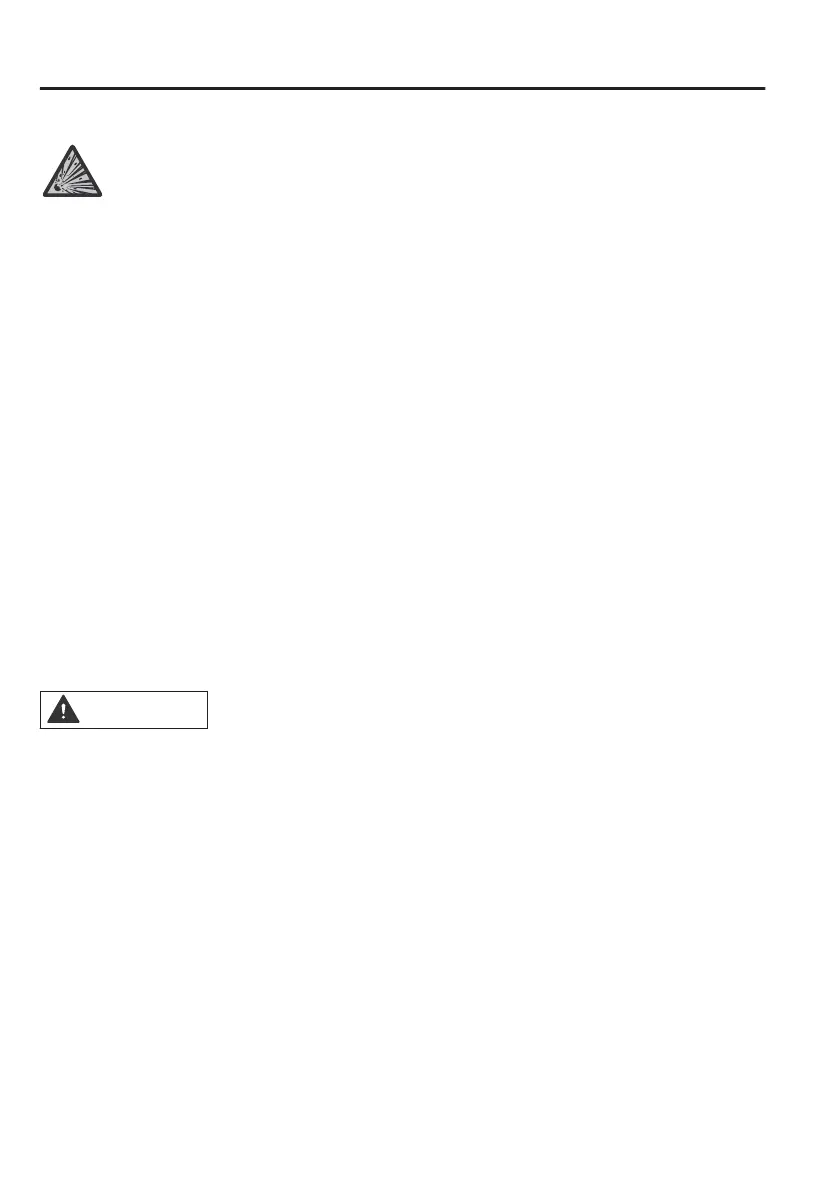
Flames and sparks near open lead-acid battery cells are dangerous. Hydrogen gas,
produced during normal lead-acid battery operation, could ignite and cause the
lead-acid battery to explode. An exploding lead-acid battery can cause serious burns
and injuries. Keep all flames including cigarettes and sparks away from open
lead-acid battery cells.
Do not jump-start a frozen lead-acid battery or one with a low fluid level:
Jump-starting a frozen lead-acid battery or one with a low fluid level is dangerous. It
may rupture or explode, causing serious injury.
Connect the negative lead to a good ground point away from the lead-acid
battery:
Connecting the end of the second jumper lead to the negative (–) terminal of the
depleted lead-acid battery is dangerous.
A spark could cause the gas around the lead-acid battery to explode and injure
someone.
Route the jumper leads away from parts that will be moving:
Connecting a jumper lead near or to moving part (cooling fans) is dangerous. The
lead could get caught when the EV system starts and cause serious injury.
CAUTION
¾Connect the booster leads with extreme care.
¾Do not jump-start the vehicle with the charging lead connected to your vehicle.
Otherwise, the vehicle could be damaged.
¾Do not use your vehicle as a booster vehicle.
NOTE
x
If your lead-acid battery is depleted, make sure that the booster vehicle's battery is
a lead-acid battery.
1. Move the booster vehicle so that its lead-acid battery is as close as possible to
your vehicle's lead-acid battery.
2. Make sure that the power switch is switched OFF.
If Trouble Arises
Depleted Lead-acid Battery
7-24



 To Next Page