9
OPERATING INSTRUCTIONS
To maximize the unit’s performance, it should be towed at speeds ranging from six to nine (6-9) mph.
This keeps the field debris moving through the harrow sections and avoids clogging. The best results
will be obtained after the paint has been scoured from the soil engaging components.
Transporting the unit
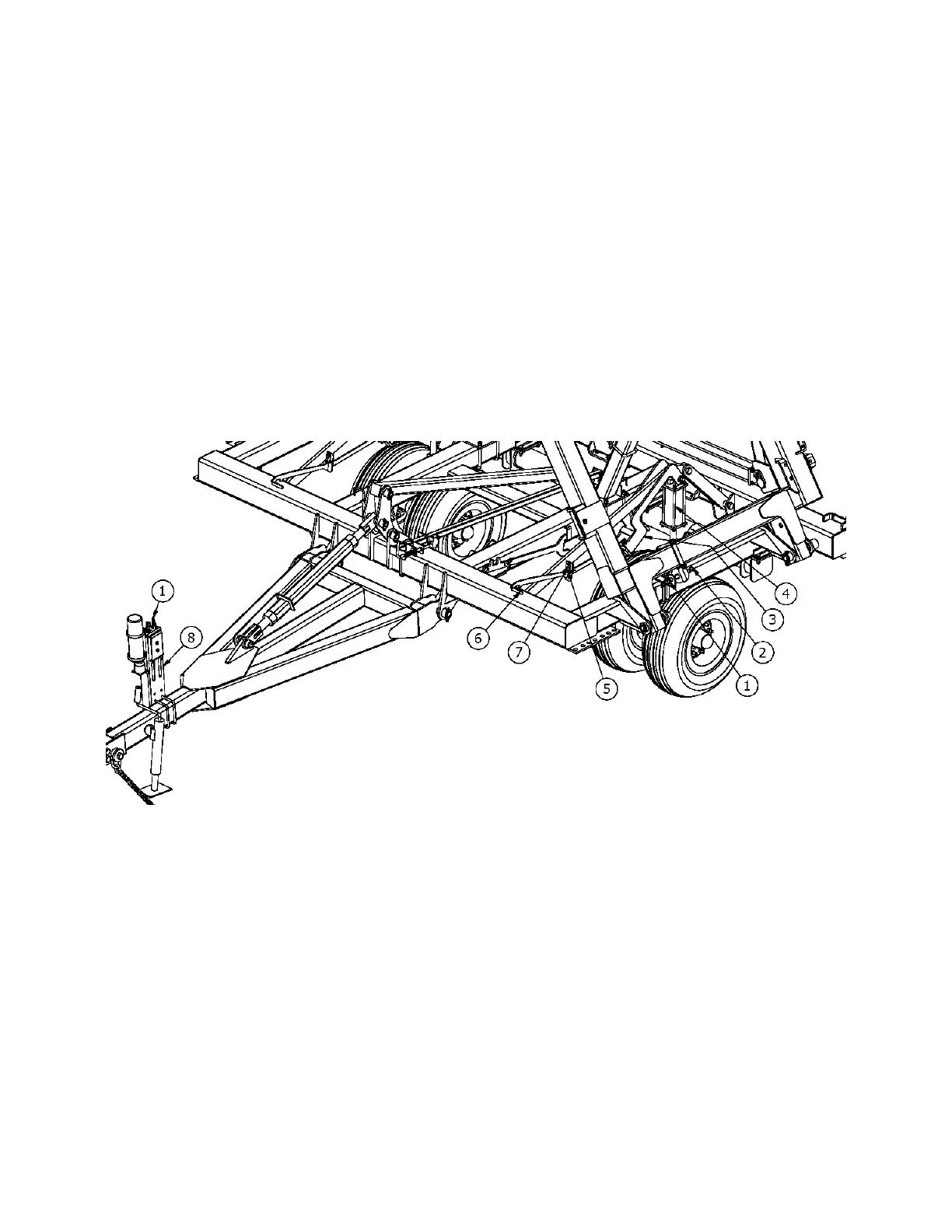
Getting the unit ready for transport (figure 1)
Lift the entire unit up and fold the wings into the wing rests.
Install the wing fold lock pins (1) and Bridge Pin (2). Refer to the diagram below.
Push the cylinder lock brackets (3) into place on the main frame lift cylinders (4) using the cylinder lock
handle (6). Rotate the handle lock (7) down and secure it with the bridge pin (5).
Getting the unit ready for field use: (figure 1)
Remove the cylinder lock brackets (3) from the main frame lift cylinders (4)by pulling on the cylinder
lock handle (6). Be sure to rotate the handle lock (7) down and secure it with the bridge pin (5).
Remove the wing fold lock pins (1) and Bridge Pins (2) and store them on the hitch storage bracket (8).
Unfold the wings and then lower the unit to the ground.
Figure 1
Setting the unit for field use
Leveling the wings (figure 2)
Adjust the turnbuckle (1) on the back side of the wing wheel mount brackets to level the wings from
side to side. This prevents the disk gangs from gouging and ridging. It also ensures a consistent
operating depth across the width of the unit.
* It is recommended that the unit be set level first. After making a pass through the field, disk gang
depth can be adjusted deeper or shallower for varying field conditions.




 To Next Page