Commercial in confidence 85-909
PLB service manual Issue 4 Page
1. INTRODUCTION
The Personal Location Beacon (PLB) is a device used to transmit an alert in the event of an
emergency. Power is supplied by a Lithium Battery.
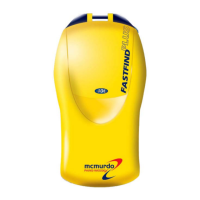
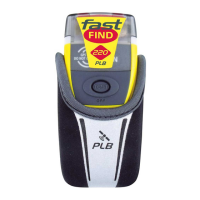
The Fastfind range of PLB contains these functions:
406 MHz transmitter A powerful (5 Watt) transmission encoded with
a unique serial number identifying the owner.
This signal is relayed via satellite to the
rescue centre.
The frequency of transmission is determined by the
product:
Max/G 406.037MHz
Fastfind/Plus 406.028MHz
121.5 MHz transmitter A low power transmission which acts as
a homing beacon.
Buzzer Audible alarm/indicator.
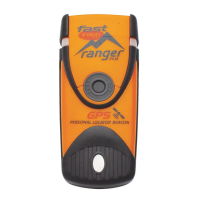
The Fastfind Plus and Max G PLBs also contain a GPS (Global Positioning System) receiver,
enabling it to determine its position and to include this information in the 406 MHz
transmission.
1.1. Scope
This manual provides the complete instructions issued to maintenance providers to enable
routine and emergency servicing of the PLB equipment listed below. This manual represents
the original equipment manufacturer’s (OEM) service documentation applicable to these
products.
1.2. Applicability
This manual applies to the following 406 MHz PLBs:
• McMurdo Fastfind – all variants
• McMurdo Fastfind Plus – all variants
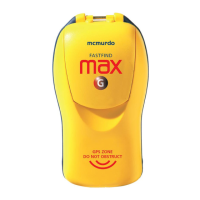
• McMurdo Max and Max G – all variants
NOTE: The method of distinguishing the various versions of PLB is by serial number. This is
located on the label underneath the battery pack and also in the User Manual supplied with
the unit.
Serial Number Type Battery class Notes
600-XXXXXX Fastfind 1 or 2
630-XXXXXX Fastfind Morse coding 1 or 2 USA only
500-XXXXXX Fastfind Plus 1 or 2 GPS
530-XXXXXX Fastfind Plus Morse coding 1 or 2 USA only GPS
800-XXXXXXX Fastfind Max G 2 GPS
810-XXXXXXX Fastfind Max 2
NOTE: There are 2 variants of battery;
Class1 (-40 to +55C) or Class 2 (-20 to +55C)
WARNING: The Morse-coded variants (530 and 630) cannot be converted to
standard coding, and vice versa. At this time, Morse-coded variants may only be
registered in the United States.


 To Next Page