EasyManua.ls Logo

McQuay ACZ 010A - User Manual

McQuay ACZ 010A
48 pages
Print Icon
To Next Page IconTo Next Page
Loading...
Installation, Operation and Maintenance Manual
IOMM ACZ1
Group:
Chiller
Part Number
: 330262002
Effective:
December 2001
Supersedes:
New
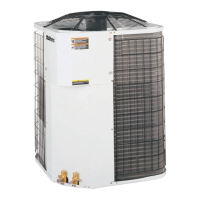
Air-Cooled Scroll Condensing Units
ACZ 010A – ACZ 039A
10 to 43 Tons, 35 to 150 kW
R-22, 60 Hertz

Questions and Answers

  • C
    Connor ValenzuelaAug 16, 2025
    What to do if the McQuay ACZ 010A Heat Pump compressor will not run?
    • M
      Mario JohnsonAug 16, 2025
      If the McQuay Heat Pump compressor will not run, first ensure the main switch is closed. Check for blown fuses or open breakers, inspecting electrical circuits and motor windings for shorts, overloads, and loose connections; replace the fuse or reset the breaker if necessary. Also, check if thermal overloads have tripped (they auto reset). Inspect the contactor or coil for defects and repair or replace if needed. Determine if a protection device has shut the system off and correct the cause. If no cooling is required, the compressor should start on a call for cooling. Check if the liquid line solenoid will not open and repair or replace the coil if needed. Inspect the motor for open or short circuits, or burnout. Finally, check all wire junctions and tighten all terminals.
  • C
    Chelsea StantonAug 19, 2025
    What to do if my McQuay Heat Pump has high discharge pressure?
    • R
      Rebecca FigueroaAug 19, 2025
      If your McQuay Heat Pump has high discharge pressure, it could be due to several reasons. First, there might be noncondensables in the system, which should be removed using authorized procedures. Another cause could be a refrigerant overcharge, so remove the excess. Check if the fan is running and inspect the electrical circuit. Dirty condenser coils can also cause this issue, so clean the coil. Lastly, the FanTrol might be out of adjustment, so adjust the FanTrol setting.
  • J
    jordanjohnAug 22, 2025
    Why is my McQuay ACZ 010A Heat Pump compressor noisy or vibrating?
    • O
      omar33Aug 22, 2025
      If your McQuay Heat Pump compressor is noisy or vibrating, it may be due to refrigerant flooding the compressor, so check the expansion valve setting. Another cause could be improper line support, in which case you should relocate or add supports. Finally, the compressor might be worn, requiring replacement.
  • T
    Tiffany DayAug 25, 2025
    What causes motor overload relays to open or blown fuses in McQuay ACZ 010A Heat Pump?
    • R
      Rick CarterAug 26, 2025
      Motor overload relays opening or blown fuses in your McQuay Heat Pump can be caused by several factors. These include: 1. Low voltage during high loads, in which case you should check the supply voltage. 2. Defective or grounded motor wiring, requiring you to replace the compressor. 3. Loose power wiring, so check all connections and tighten them. 4. High condensing temperature (see steps for high discharge pressure). 5. Unbalanced voltage, so check the voltage and contact the power company.
  • S
    sheri33Aug 27, 2025
    What to do if my McQuay ACZ 010A Heat Pump has low suction pressure?
    • C
      Christopher SmithAug 27, 2025
      If your McQuay Heat Pump has low suction pressure, it could be due to a lack of refrigerant, so check for leaks and repair and replace the refrigerant. Another cause could be a dirty evaporator, which needs to be cleaned chemically. A clogged filter-drier can also cause this, so replace it. Additionally, the expansion valve might be malfunctioning; check and adjust for proper superheat. Low condensing temperature can also be a factor; check discharge pressure control settings.
  • S
    shawmichelleAug 30, 2025
    Why is my McQuay ACZ 010A Heat Pump's compressor losing oil?
    • P
      Paul SimmonsAug 30, 2025
      If your McQuay Heat Pump's compressor is losing oil, it could be due to a lack of refrigerant, so check for leaks and repair them. Another cause could be suction superheat being too high, so adjust the superheat. Lastly, the crankcase heater might be burned out, requiring replacement.
  • R
    Ryan DixonSep 2, 2025
    What causes low discharge pressure in a McQuay ACZ 010A?
    • D
      Dennis CrawfordSep 2, 2025
      Low discharge pressure in a McQuay Heat Pump can be caused by a faulty condenser control, so check the condenser control operation. It can also be caused by a low refrigerant charge, so check for leaks and add refrigerant. Another possible cause is low suction pressure; see the low suction pressure steps.
  • C
    caseypayneSep 4, 2025
    What causes high suction pressure in a McQuay ACZ 010A Heat Pump?
    • B
      Bryan BaxterSep 4, 2025
      High suction pressure in a McQuay Heat Pump can be caused by an excessive load, so reduce the load or add capacity. It may also be caused by the expansion valve overfeeding, so check the remote bulb and regulate superheat.
  • C
    Christopher KingSep 7, 2025
    What causes a McQuay Heat Pump unit to not load or unload?
    • M
      Melissa GutierrezSep 7, 2025
      If a McQuay Heat Pump unit will not load or unload, it could be due to a faulty controller sensor or a broken wire, requiring replacement. Another cause could be stages not set for the application, so adjust the thermostat setting.
  • M
    martinaudreySep 9, 2025
    Why does my McQuay ACZ 010A have a short load/unload interval?
    • M
      Mark RussellSep 10, 2025
      If your McQuay Heat Pump has a load/unload interval that is too short, it could be due to an erratic thermostat, in which case you should replace it. Another cause could be insufficient water flow, so adjust the flow.

Summary

Introduction and Initial Setup

General Description of Condensing Units

Overview of McQuay air-cooled condensing units, factory assembled, wired, and tested.

Unit Inspection Procedures

Procedure for checking units upon arrival for damage and verifying nameplate information.

Installation Guidelines

Notes that installation must be performed by qualified personnel familiar with codes.

Safe Unit Handling

Guidelines for safely moving and lifting the unit to prevent damage.

Location and Service Access Requirements

Unit Placement Recommendations

Recommendations for mounting units on roofs or ground level on a solid, level foundation.

Service Access Requirements

Requirements for accessibility to components for periodic maintenance and servicing.

Clearances and Sound Isolation

Required Unit Clearances

Details minimum clearances required for air intake, discharge, and service access.

Sound Isolation Methods

Methods to reduce sound transmission, including flexible connections and isolation techniques.

Vibration Isolators and Chilled Water Piping

Recommended Vibration Isolators

Recommends isolators for roof-mounted installations and lists part numbers and types.

Chilled Water Piping Installation

Guidelines for installing water piping, including vibration eliminators and shutoff valves.

Chilled Water System Volume and Flow

Additional Water Piping Guidelines

Further recommendations for water piping, including vents, drains, pressure indicators, and strainers.

Importance of System Water Volume

Importance of adequate water volume for chiller stability and performance.

Flow Switch Installation and Settings

Flow Switch Functionality

Instructions for mounting and connecting a water flow switch for unit shutdown.

Flow Switch Settings Table

Table detailing minimum and maximum flow rates for various pipe sizes.

Refrigerant Piping Fundamentals

Refrigerant Piping Introduction

Importance of proper refrigerant piping for system reliability and performance.

Suction Line Sizing and Routing

Guidelines for sizing and routing suction lines, including noise considerations.

Advanced Refrigerant Piping Considerations

Suction Line Oil Return

Details on calculating suction line size and ensuring oil return.

Underground Refrigerant Lines

Recommendation against underground suction lines and required precautions.

Vertical Riser Installation

Recommendations for traps in long vertical refrigerant risers.

Liquid Line Management

Liquid Line Sizing and Operation

Guidelines for sizing liquid lines, ensuring liquid presence, and avoiding issues like migration.

Unit Component Location

Component Location Diagram

Diagram showing the location of key components like control panel, compressors, and evaporator.

Control Center and Start-Up Procedures

Control Center Description

Description of the control center enclosure and its layout of components.

Pre Start-up Checklist

Checklist of pre-start-up procedures including system flushing, electrical checks, and oil levels.

Unit Start-up Steps

Steps for starting the unit, checking oil, rotation, and superheat.

Unit Operation Sequences and Controls

Typical Sequence of Operation

Typical operational sequence for ACZ units, including start-up, shutdown, and compressor staging.

Equipment Protection Alarms

Conditions that cause unit shutdown and activate alarms.

Unit Enable and Mode Selection

How unit operation is enabled and modes selected via keypad, input, or BAS.

Condenser Fan Control Strategy

How the controller manages condenser fan speed based on discharge pressure.

Unit Shutdown Process

Process of unit shutdown, including compressor pump-down and crankcase heater activation.

Physical Data for ACZ 010 A-020 A Models

ACZ 010 A-020 A Specifications

Table detailing physical specs like dimensions, weight, and electrical data for specific models.

Physical Data for ACZ 025 A-039 A Models

ACZ 025 A-039 A Specifications

Table detailing physical specifications for larger ACZ models.

Electrical Data and Wiring Requirements

Field Wiring Guidelines

General requirements for field wiring, including codes, wire type, and disconnects.

Electrical Data Single Point Table

Table showing power supply, wire size, and fuse/breaker recommendations.

Compressor and Fan Motor Amp Draw Data

Amp Draw Table for ACZ Units

Table detailing rated and locked rotor amps for compressors and fan motors.

Field Wiring Data and Connections

Field Wiring Data Table

Table specifying wiring details for standard power block and optional disconnect switch.

Notes on Electrical Data and Wiring

Electrical Data Notes

Explanations for electrical data tables, including fuse sizing, wire ampacity, and voltage limitations.

Amp Draw Notes

Clarification on RLA values for wiring sizing purposes.

Field Wiring Data Notes

Notes on single point power supply, disconnect requirements, and wire types.

Typical Field Wiring Diagram

ACZ Unit Field Wiring Schematic

Schematic showing the typical field wiring connections for the unit.

Unit Dimensional Data

ACZ 010 A-020 A Dimensions

Dimensional drawings and connection sizes for smaller ACZ models.

ACZ 025 A-039 A Dimensions

Dimensional drawings and connection sizes for larger ACZ models.

System Maintenance Procedures

General Maintenance Checks

Routine service checks, including electric leg readings available on the MicroTech II display.

Lubrication Requirements

States no routine lubrication is required as fan motor bearings are permanently lubricated.

Electrical Terminal Maintenance

Warning about electric shock hazard and requirement to retighten terminals every six months.

Condenser Cleaning

Information on condenser construction and cleaning procedures, including warnings about chemicals.

Refrigerant Sightglass Observation

Monthly observation of the sightglass to check refrigerant charge and moisture conditions.

Standard MicroTech II Controller Overview

MicroTech II Controller Introduction

Introduction to the MicroTech II controller's features for efficiency and troubleshooting.

Operator-Friendly Controller Features

Description of the controller's menu structure, security, and diagnostic capabilities.

Compressor Staging Logic

How compressors are staged on/off via thermostat and lead/lag logic.

Compressor Motor Protection Details

Details on solid-state motor protection and internal line breakage for compressors.

FanTrol Head Pressure Control

Explanation of FanTrol's automatic head pressure control using condenser fan staging.

MicroTech II Controller Inputs, Outputs, and Setpoints

Controller Inputs and Outputs

Tables detailing analog and digital inputs and outputs for the controller.

Setpoint Configuration

Explanation of setpoints stored in memory and password levels for access.

MicroTech II Setpoints and Alarm Management

Unit Setpoints Table

Table listing default and range values for various unit setpoints.

Equipment Protection Alarms

Description of alarms that cause rapid compressor shutdown.

MicroTech II Alarm and Unit Enable Settings

Shutdown Alarms Table

Table detailing conditions, actions, and reset methods for shutdown alarms.

Limit Alarms Table

Table detailing conditions, actions, and reset methods for limit alarms.

Unit Enable Configuration

How unit enable is controlled via setpoints and input sources.

Unit Enable Conditions Table

Table showing how unit enable is set based on control source.

MicroTech II Operating Modes and Ambient Limits

Unit Mode Selection

Options for selecting COOL or TEST operating modes.

Low Ambient Start Procedure

How the unit starts under low ambient conditions, bypassing pressure alarms.

Low Ambient Restart Logic

Procedure for restarting the unit after low ambient conditions cause a shutdown.

Automatic Adjusted Limits

Setpoint ranges that adjust automatically based on options or mode.

Low Ambient Lockout Temperature

Range for low ambient lockout temperature based on SpeedTrol setting.

MicroTech II Compressor Staging and Output Control

Compressor Lead;Lag Designation

Logic for designating lead/lag compressors based on start count.

Capacity Override Conditions

Conditions that override capacity control, like low evaporator or high discharge pressure.

Digital Output Control Logic

How digital outputs like alarms, solenoids, and fans are controlled.

Using the MicroTech II Controller Interface

Controller Display and Keypad Layout

Description of the MicroTech II controller's display and keypad layout.

Getting Started with the Controller

Basic procedures for using the controller, including navigation and reading information.

Navigating Controller Menus

Methods for navigating the controller's menu matrix using ARROW and MENU keys.

MicroTech II Controller Menu Navigation

MENU Key Functionality

Function of the MENU key for switching between shortcut and scrolling modes.

Understanding Menu Screens

Overview of different menu screens for viewing status, alarms, and setpoints.

Changing Setpoint Values

Procedure for changing setpoint values using the ENTER and ARROW keys.

Detailed Setpoint Adjustment Procedures

Setpoint Adjustment Steps

Detailed steps for changing setpoints, including using ENTER and ARROW keys.

MicroTech II Menu Matrix and Structure

Controller Menu Matrix Diagram

Hierarchical diagram showing the controller's menu structure and navigation paths.

Hierarchical Menu Structure Explanation

Explanation of the menu structure and how to access different screens.

MicroTech II Controller Screen Definitions (VIEW)

Screen Definitions for VIEW Menus

Detailed explanation of various VIEW screens and their content.

VIEW UNIT Status Screen

Description of the VIEW UNIT STATUS screen and unit state indicators.

MicroTech II Controller Data Views

VIEW UNIT Temperature Data

Display of outside ambient temperature.

VIEW COMPRESSORS Status

Screens showing compressor state, hours, and start counts.

VIEW REFRIGERANT Pressures

Displays for evaporator and condenser pressures and temperatures.

VIEW FANS Staging Data

Display showing active fan stages.

MicroTech II Alarm and Setpoint Screen Definitions

Screen Definitions for ALARM

Explanation of active alarm screens, clearing alarms, and alarm log.

Screen Definitions for SET

General procedures for changing setpoints using the SET menus.

MicroTech II Controller Unit Setpoint Configuration

SET UNIT SPs (1): Enable and Source

Settings for Unit Enable and Control Source.

SET UNIT SPs (2): Available Modes

Settings for Available Modes and reminder for ON/OFF switch.

SET UNIT SPs (3): Clock Settings

Settings for CLOCK (date and time).

SET UNIT SPs (4): Units and Language

Settings for Units (°F/psi) and Language (ENGLISH).

SET UNIT SPs (5): Communication Protocol

Settings for Protocol, Ident Number, and Baud Rate for BAS.

MicroTech II Sensor Offsets and Compressor Timers

SET UNIT SPs (6): Evaporator Sensor Offset

Settings for Evaporator Refrigerant pressure sensor offset.

SET UNIT SPs (7): Condenser Sensor Offset

Settings for Condenser Refrigerant pressure sensor offset.

SET UNIT SPs (8): Ambient Sensor Offset

Settings for Outside Ambient Temperature Sensor offset.

SET UNIT SPs (9): Password Entry

Settings for entering passwords to access protected parameters.

SET COMP SPs (1): Anti-Recycle Timers

Settings for anti-recycle timers (Stop-Start, Start-Start).

MicroTech II Compressor Staging and Alarm Limits

SET COMP SPs (2): Inter-Stage Timers

Settings for inter-stage time delays for compressor staging.

SET LIMIT ALARMS (1): Evaporator Pressure

Settings for low evaporator pressure hold, unload, and stop limits.

SET LIMIT ALARMS (2): Evaporator Freeze Protection

Settings for Evap Freeze, Low Evap Pressure Delay, and Evap Flow Proof.

SET LIMIT ALARMS (3): Condenser Pressure

Settings for high condenser pressure shutdown and stage down limits.

MicroTech II Fan Staging Settings

SET LIMIT ALARMS (4): Voltage and Ambient Lockout

Settings for Phase/Voltage protection and Low Ambient Lockout.

SET FANS STAGES: Fan Count and SpeedTrol

Settings for the number of fans and SpeedTrol option.

SET FANS SPs (2): Fan Stage ON Pressures

Settings for fan stage ON pressures.

SET FANS SPs (3): Fan Stage OFF Pressures

Settings for fan stage OFF pressures.

Service and Component Maintenance

Thermostatic Expansion Valve (TXV)

Function of the TXV in maintaining superheat for compressor life.

Filter-Drier Maintenance

Guidelines for monitoring and replacing filter-driers based on pressure drop.

Liquid Line Solenoid Valve

Notes on the liquid line solenoid valve and its role in pump-down.

Optional Control System Configurations

SpeedTrol Head Pressure Control

How SpeedTrol modulates fan speed for low ambient operation and head pressure control.

Hot Gas Bypass System Function

Purpose and function of the hot gas bypass system for maintaining evaporator pressure.

Hot Gas Bypass System Details

Hot Gas Bypass Piping and Adjustment

Piping and adjustment details for the hot gas bypass system.

Hot Gas Bypass Piping Diagram

Diagram illustrating the piping for the hot gas bypass system.

Hot Gas Bypass Adjustment Chart

Chart showing adjustment ranges for the hot gas bypass valve.

Troubleshooting Guide for Unit Issues

Comprehensive Troubleshooting Chart

Table listing problems, possible causes, and corrective steps for unit issues.

McQuay ACZ 010A Specifications

General IconGeneral
BrandMcQuay
ModelACZ 010A
CategoryHeat Pump
LanguageEnglish

Related product manuals