
 Need help?
Do you have a question about the MDS SCIEX API 4000 LC/MS/MS and is the answer not in the manual?
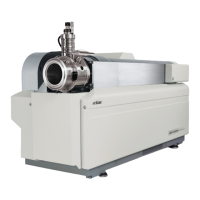
The API 4000 LC/MS/MS instrument is a Liquid Chromatography (LC) Mass Spectrometer (MS) that incorporates an Atmospheric Pressure Ionization (API) ion source. This site planning guide provides comprehensive information to familiarize customers with the necessary preparations and procedures for installing the API 4000 product and its associated peripherals. It details the requirements for laboratory layout and customer-supplied items, ensuring a smooth and safe installation process.
The API 4000 LC/MS/MS instrument is designed for advanced analytical applications, combining the separation power of liquid chromatography with the high sensitivity and specificity of tandem mass spectrometry. This integration allows for the identification and quantification of compounds in complex samples. The instrument houses a mass spectrometer and provides connection panels for gas inputs, exhaust, and electronic interfaces for the data acquisition system. The Atmospheric Pressure Ionization (API) ion source is a key component, facilitating the ionization of analytes at atmospheric pressure before they enter the vacuum system of the mass spectrometer. This process is crucial for analyzing a wide range of compounds, particularly those that are thermally labile or non-volatile.
The instrument's operation relies on several types of input gases, each requiring specific purities and pressures for optimal performance. These include UHP (99.999%) nitrogen for curtain and CAD gas, zero air or UHP nitrogen for Gas 1 and Gas 2, and clean, dry, oil-free air or nitrogen for the source exhaust. The internal gas division and control system ensures precise delivery for various functions, such as TurboIonSpray nebulizer gas, heater (turbo) gas, APCI probe nebulizer gas, and cooling and sheath gas.
The data acquisition system, typically an Analyst computer workstation supplied by Applied Biosystems/MDS SCIEX, is integral to the instrument's function. It manages the instrument's parameters, collects data, and processes the results. The communication between the mass spectrometer and the Analyst computer is established via an IEEE 488 cable, with a recommended maximum distance of 4 meters (13 ft) to ensure reliable communication.
The API 4000 LC/MS/MS is designed for use in a commercial laboratory environment, adhering to strict international standards such as EN 61326-1:1997, EN 61010-1, EN 61010-2-061, and Class A of CISPR publication 11 and EN 55011:97. The instrument is intended for research use only and is not for use in diagnostic procedures.
For optimal operation, the instrument requires a stable ambient temperature between 15 °C and 30 °C (59 °F to 86 °F) with a relative humidity of 20 to 80%, noncondensing. The laboratory environment should be clean, dust-free, free of smoke and corrosive fumes, not prone to excessive vibration, out of direct sunlight, and away from radiators. An air conditioning unit with a capacity of 2550W (8700 Btu/h) is necessary to manage the heat load from the mass spectrometer, roughing pump(s), and the TurboIonSpray or Nebulizer heater. Operation above 2000 m (6500 ft) above sea level is not recommended.
The instrument's physical setup requires a sturdy bench capable of supporting a minimum weight of 242 kg (529 lb). A movable bench is recommended for the API system, or a fixed bench with 1 m (3.3 ft) of rear clearance and sufficient space underneath for the roughing pump(s). The roughing pump(s) should be located underneath the API instrument on mounting or damping plates, or on the floor within 1.5 m (5 ft) of the unit. The Line Adjustment Transformer (LAT) option, if used, should be located behind the instrument bench or on a special bench shelf.
The gas supply connections are critical for operation. Three separately regulated gas lines with shut-off valves and fittings are required. These include lines for Gas 1 and Gas 2 (zero grade air, 100 psig, up to 17 L/min), source exhaust pump (oil-free air, < 50 psig, up to 6 L/min), and curtain and CAD gas (UHP nitrogen, 60 psig, up to 5 L/min). Compression fittings are preferred for gas line connections, and only Teflon tape is acceptable for sealing threaded fittings. Soldered fittings are not acceptable unless thoroughly cleaned afterward.
Electrical requirements include two separate, 220 VAC (207-242 VAC), 15 amp circuits at 50/60 Hz, each with two NEMA 6-15R receptacles (four in total) located no more than 1.8 m (6 ft) from the bench. These circuits power the API 4000 mass spectrometer and the roughing pump(s). Additional outlets are needed for LC pumps, autosamplers, Analog-to-Digital Converter boxes, and ultraviolet (UV) detectors. The Line Adjustment Transformer (LAT) is recommended if the voltage specification cannot be met, and a power conditioner may be needed if line voltage fluctuates significantly. An Uninterruptable Power Supply (UPS) is required to ensure continuous operation during power interruptions, allowing for an orderly shutdown.
Regular maintenance and proper site setup are crucial for the longevity and performance of the API 4000 LC/MS/MS instrument. The site planning guide emphasizes several aspects related to maintenance and safety.
The roughing pump(s) must not be placed in an enclosed area without proper ventilation, as this can lead to premature failure, overheating, and severe damage to the instrument. The customer is provided with an installation kit that includes a smoke eliminator (mist filter) for the roughing pump(s), along with fittings and tubing to connect them to a fume hood or other vents.
The source exhaust pump expels solvent vapors and effluent from the ion source housing. This effluent must be drained to a supplied 10 L (3 gallon) HDPE drain vessel and vented to a fume hood or an outside port. The drain vessel should NOT be stored in an enclosed storage area, and the drain system should be checked regularly and replaced when necessary with materials not susceptible to attack by analyzed samples. Glass or other brittle materials are explicitly prohibited for the drain vessel.
A customer-supplied vent system is recommended for the roughing pump(s) and ion source exhaust. This system should produce a static vacuum of approximately 2 cm (0.75 in) of water. Smooth stainless steel tubing is preferred over flexible tubing to reduce friction loss. Elbows should turn at a 45-degree angle, and a minimum number of elbows should be used. The duct casing and venting system should be made of materials suitable for temperatures up to 70 °C (158 °F) and meet local building standards. The blower should be located as close to the discharge outlet as possible, with airtight joints on the discharge side. The outlet end should have a backdraft damper and extend above the roof for proper dispersal, away from open windows or inlet vents. The exhaust end should also be equipped with an exhaust stack to improve efficiency. The blower must have a power indicator light near the instrument.
Gas cylinders must be securely fastened to an immovable bulkhead or permanent wall, conforming to local safety and building codes. They should be stored in a vertical position with the valve cap in place, away from heat or ignition sources, and in well-ventilated areas if confined. Cylinders must be clearly marked to identify contents and status. Only approved regulators and hose connectors should be used, with left-hand thread fittings for fuel gas and right-hand thread fittings for oxidant and support gas. Gas hoses should be arranged to prevent damage, and periodic gas leak tests using a soap solution on all joints and seals are recommended.
The customer is responsible for supplying HPLC or MS grade methanol, acetonitrile, and water, as well as the appropriate gas regulators. Applied Biosystems/MDS SCIEX Customer Service Representatives will supply necessary fittings, plugs, tubing, and cables within specified distances and will test and qualify the API system. However, they will not supply regulators, shut-off valves, electrical receptacles, solvents, or gases. Qualified personnel are required for the installation of all plumbing, fixtures, and electrical installations to ensure compliance with local bylaws and biohazard regulations.
 General
| Mass Analyzer | Triple Quadrupole |
|---|---|
| Ionization Source | Turbo V™ Source |
| Software | Analyst® Software |
| Polarity | Positive and Negative |
| Ionization Modes | ESI, APCI |
| Scan Speed | 4000 Da/sec |
| Scan Types | MRM, Precursor Ion Scan, Neutral Loss |
| Resolution | Unit Resolution |
| LC Compatibility | HPLC, UHPLC |
| Sensitivity | 1 pg (S/N > 50:1) |

 To Next Page