
 Need help?
Do you have a question about the Medela Nipple Shield and is the answer not in the manual?
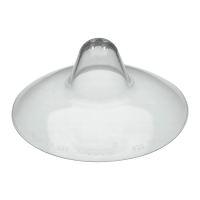
Medela nipple shields are an effective tool for new breastfeeding mothers with latch-on problems.
Some babies have difficulty latching onto the breast due to flat or inverted nipples.
Other babies are slow to learn latch-on. A nipple shield can temporarily assist attachment to the breast.
A nipple shield can slow down the flow of milk for babies with an overactive let-down response.
Always wash the nipple shield in hot soapy water and rinse in hot water before and after use.
Place the nipple shield in hot water prior to nursing to make it more pliable and adhere better.
Turn the shield inside-out, place it over the breast, and flip it right-side out to enclose the nipple.
Position the open section of the Contact™ nipple shield where the baby's nose will contact the breast.
Support the breast with a “C” hold and place thumb on top, fingers below, away from the areola.
Tickle baby's lower lip until mouth opens wide, then quickly pull baby onto the nipple shield.
Remove shield after a minute or two and try attaching baby to the breast without it.
Sanitize nipple shields by thoroughly boiling in water for 20 minutes.
Store with the nipple facing upwards in a clean and dry covered container.
The Medela Nipple Shield is a specialized tool designed to assist new breastfeeding mothers who experience certain challenges during nursing. Its primary function is to provide an effective solution for latch-on problems, an overactive let-down response, or issues related to flat or inverted nipples. By addressing these common difficulties, the nipple shield aims to enable continued breastfeeding without interruption until the underlying problems are resolved.
For mothers with flat or inverted nipples, the nipple shield can be particularly beneficial. These nipple types can make it difficult for some babies to latch onto the breast effectively. The nipple shield creates a larger, more defined area for the baby to latch onto, while the act of breastfeeding itself helps to draw out the mother's nipple. This process can gradually make it easier for the baby to latch directly onto the breast without the shield over time.
Another key usage feature of the Medela Nipple Shield is its ability to help babies who are slow to learn how to latch during the first week of life. In such cases, the shield can temporarily assist the baby in attaching to the breast, providing a consistent shape and surface that the baby can grasp. As the baby practices and develops the proper technique, the shield can eventually be phased out. The shield is made of silicone, a material chosen by Medela for its minimal odor and taste, which helps ensure acceptance by the baby.
The nipple shield also serves as an aid for mothers experiencing an overactive let-down response. An overactive let-down can cause milk to flow too quickly, leading to the baby choking or pulling off the breast. By using the nipple shield, the flow of milk can be slowed down, allowing the baby to nurse more comfortably and continuously. As the baby matures and becomes more coordinated in their sucking and swallowing, the need for the nipple shield in this context typically diminishes.
It is crucial to emphasize that the Medela Nipple Shield should always be used under the direction of a healthcare professional or lactation consultant. This ensures that the shield is used appropriately for the specific challenges faced by the mother and baby, and that proper guidance is provided for its effective integration into the breastfeeding routine.
Regarding usage, the manual provides clear instructions for preparation and application. Before and after each use, the nipple shield must be washed in hot soapy water and thoroughly rinsed in hot water. This ensures hygiene and prevents the buildup of milk residue. To enhance its pliability and adherence to the breast, it is recommended to place the nipple shield in hot water prior to nursing. A small amount of lanolin cream applied under the rim (but not in the nipple portion) can also help the shield stick better to the breast.
When applying the shield, the mother should handle it by the rim and turn it inside-out halfway. It is then placed over the breast, ensuring the nipple is centered inside the nipple portion of the shield. The shield is then flipped right side out, enclosing as much of the nipple and areola as possible. If using the Contact™ nipple shield, the open section should be positioned where the baby's nose will contact the breast, allowing for skin-to-skin contact and facilitating the baby's natural rooting reflex.
To help the baby latch, the mother should support the breast with a "C" hold, placing her thumb on top of the breast and nipple shield, and her fingers below, away from the areola. The baby's lower lip should be tickled with the nipple shield until the baby opens wide. Once the baby's mouth is open wide, the baby should be quickly pulled onto the nipple shield, ensuring that as much of the nipple and shield as possible are taken into the baby's mouth.
For babies with latching difficulties, the nipple shield is intended for temporary use. After one or two minutes of breastfeeding with the shield, it should be removed, and an attempt made to attach the baby directly to the breast without the shield. This practice should be continued with each feeding until the baby is able to latch on independently. Some babies may only require one or two sessions with the nipple shields, while others might need more time and practice.
Maintenance features for the Medela Nipple Shield are straightforward and essential for its longevity and safe use. Beyond daily washing, the nipple shields should be sanitized by thoroughly boiling them in water for 20 minutes. While some healthcare providers may recommend washing in hot soapy water, boiling provides a deeper level of sanitization. It is always advisable to check with a healthcare provider for specific cleaning instructions tailored to individual needs. After cleaning, the nipple shield should be stored with the nipple facing upwards in a clean, dry, and covered container to maintain hygiene and protect it from environmental contaminants.
For additional support with breastfeeding, mothers are encouraged to contact a healthcare professional or lactation consultant. Resources such as the Breastfeeding National Network (BNN) are available for finding breastfeeding specialists in the US and Canada, or information can be accessed online through Medela's website. This comprehensive support system underscores Medela's commitment not only to providing effective tools but also to ensuring mothers have access to expert guidance throughout their breastfeeding journey. The Medela Nipple Shield, therefore, is more than just a device; it is a supportive aid designed to empower mothers to overcome common breastfeeding challenges and achieve their breastfeeding goals.
 General
| Material | Silicone |
|---|---|
| Size Options | 16mm, 20mm, 24mm |
| BPA Free | Yes |
| Reusability | Yes |
| Sterilizable | Yes |
| Quantity | 2 per pack |
| Usage | Helps with latch-on difficulties or flat/inverted nipples |

 To Next Page