55
The declared vibration value, which has been
measured by a standardised test method,
can be used to compare dierent tools with
each other and for a preliminary assessment
of exposure. The measurement values have
been determined in accordance with
EN 60745-2-13:2009.
WARNING!
The actual vibration level when using power
tools may dier from the specied maximum
value, depending on how the tool is used.
It is therefore necessary to determine which
safety precautions are required to protect
the user, based on an estimate of exposure
in actual operating conditions (taking into
account all stages of the work cycle, e.g. the
time when the tool is switched o and when
it is idling, in addition to the start-up time).
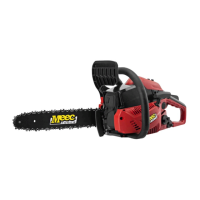
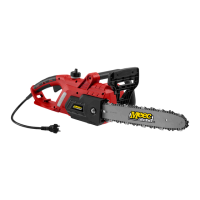
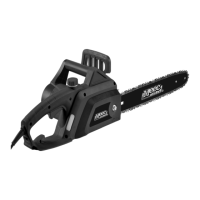
DESCRIPTION
1. Front handle
2. Kickback guard
3. Chain
4. Bar
5. Sprocket nose
6. Lock nut
7. Casing
8. Bumper spike
9. Clamping screw
10. Screw
11. Oil hole
12. Chain drive sprocket
13. Power switch
14. Lock button
15. Back handle
16. Power cord
17. Stress reliever
18. Hand guard
19. Ventilation openings
20. Sight glass for oil level
21. Filler cap for chain oil
22. Bar guard
23. Spanner
FIG. 1
ASSEMBLY
WARNING!
Incorrect assembly of the parts for the electric
chain saw can result in the risk of fatal and/
or serious personal injury. Do not use the
chain saw if it has not been completely
assembled and all parts have been correctly
tted and tightened.
FITTING THE BAR AND CHAIN
1. Undo the nut on the cover and remove
the cover.
2. Turn the chain tensioning screw forwards.
3. Place the bar with the slot over the guide.
4. Put the chain round the sprocket. Check
the direction of rotation.
5. Put the chain round the bar.
6. Fit the cover.
7. Tighten the nut loosely.
NOTE:
Note the positioning of the guide when
tting the chain.
CHECKING THE CHAIN TENSION
Check the chain tension before using for
the rst time, after the rst cut, and then
about every 10 minutes. The links hanging
underneath the bar should be in full contact



 To Next Page