
 Need help?
Do you have a question about the MikroTik RouterBOARD 750G and is the answer not in the manual?
The RouterBOARD 750G is a compact and versatile networking device designed for various routing and network management tasks. It functions primarily as a router, enabling network connectivity and traffic management for both home and small office environments. The device is preconfigured to facilitate a quick setup, making it accessible even for users with limited networking experience.
At its core, the RouterBOARD 750G serves as a network router, facilitating the connection of multiple devices to a single internet source. It manages network traffic, assigns IP addresses, and provides basic firewall capabilities to secure the network. The device is capable of handling Gigabit Ethernet speeds, ensuring high-speed data transfer across the local network and to the internet. It supports the MikroTik RouterOS operating system, which offers a wide range of advanced networking features, including routing protocols, VPN, quality of service (QoS), and more. This makes it suitable for scenarios requiring more sophisticated network control than typical consumer-grade routers. The device can also be configured to boot from the network, allowing for centralized management and deployment of its operating system using tools like MikroTik Netinstall.
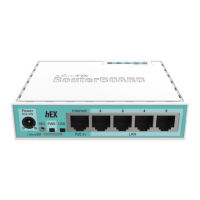
The RouterBOARD 750G is designed for ease of use, starting with its initial setup. Users can connect their WAN cable to port 1 and their LAN computers to ports 2-5. For immediate network access, LAN computers should be configured to obtain IP addresses automatically via DHCP. The device's default IP address is 192.168.88.1, accessible through a web browser or the MikroTik Winbox utility.
Powering Options: The device offers flexible powering options. It can be powered via a direct-input power jack, accepting 8-28V DC, or through its first Ethernet port using passive Power over Ethernet (PoE), also accepting 8-28V DC. This PoE capability simplifies deployment in locations where a power outlet might not be readily available, allowing power to be delivered over the Ethernet cable itself. The typical power consumption is low, ranging from 2.4W to a maximum of 3.6W under full load, making it an energy-efficient choice.
Ethernet Ports: The RouterBOARD 750G features five individual Gigabit Ethernet ports. These ports support automatic cross/straight cable correction (Auto MDI/X), meaning users do not need to worry about using specific types of Ethernet cables (straight-through or crossover) when connecting to other network devices. This simplifies cable management and reduces potential connection errors. The first Ethernet port is unique as it also accepts passive PoE input, further enhancing its deployment flexibility.
Initial Configuration: Upon the first connection, the device presents a simple firewall configuration on the WAN port. Users are given the option to keep this default configuration or clear it to implement their own custom settings. This guided initial setup helps users quickly establish a secure and functional network.
Winbox Utility: For more advanced configuration and management, the MikroTik Winbox utility is the recommended tool. Winbox allows users to connect to the device using its default IP address (192.168.88.1) with the username "admin" and no password initially. If an IP connection is not available, Winbox can also connect to the device using its MAC address, providing a reliable fallback for initial access or troubleshooting.
The RouterBOARD 750G incorporates several features to facilitate maintenance, troubleshooting, and system recovery.
Reset Options: The device includes two primary reset mechanisms:
Firmware Updates and Support: MikroTik provides ongoing support and updates for its RouterOS operating system. Users can find instructions and resources on the MikroTik website, including information on RMA procedures for failed units. The manual emphasizes that all goods come with a one-year warranty, covering defects in materials and workmanship under normal use. For specific support questions, users are directed to contact MikroTik's support team via email. The availability of detailed documentation and a support channel ensures that users can maintain their device effectively and resolve any issues that may arise.
Operating System: The device runs MikroTik RouterOS, starting from version v4. This operating system is known for its robustness and extensive feature set, allowing for highly customized network configurations. Regular updates to RouterOS often include bug fixes, security enhancements, and new features, which contribute to the long-term maintainability and security of the device.
 General
| CPU Cores | 1 |
|---|---|
| RAM | 64 MB |
| Ethernet Ports | 5 |
| Operating System | RouterOS |
| PoE Input | Yes |
| PoE Output | Yes |
| Storage | 16 MB |
| Power Input | 8-30V DC |


 To Next Page