EasyManua.ls Logo

Millipore NovAseptic GMP Series - User Manual

Millipore NovAseptic GMP Series
40 pages
Print Icon
To Next Page IconTo Next Page
Loading...
NovAseptic
®
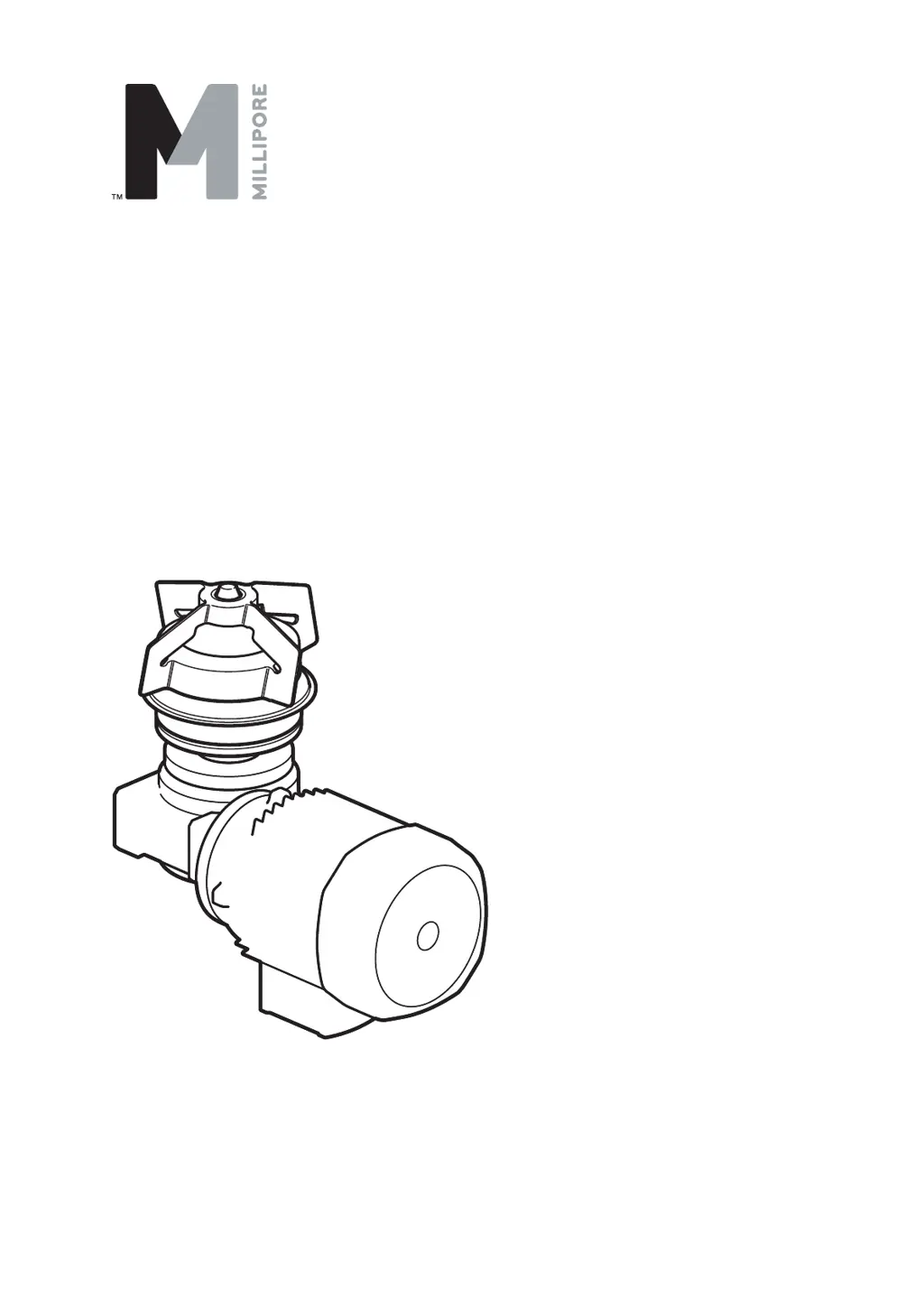
GMP Mixer
Installation and User Guide

Questions and Answers

  • R
    Rebecca ThompsonAug 15, 2025
    How to troubleshoot a Millipore Mixer when the motor/mixing head does not rotate?
    • E
      Elizabeth SpearsAug 16, 2025
      If the motor or mixing head of your Millipore mixer isn't rotating, first check the power supply to ensure it's properly connected. If that's not the issue, the overload protection might have tripped; in this case, check the setting amp value and the ambient temperature. Also, a heavy load of particles stuck to the magnets can prevent rotation, so clean the unit thoroughly.
  • S
    scottjonesAug 18, 2025
    What to do if the outer drive head scratches the tank plate on my Millipore NovAseptic GMP Mixer?
    • N
      Nicole ContrerasAug 19, 2025
      If the outer drive head of your Millipore mixer is scratching the tank plate, several factors could be at play. The shaft or hole-shaft in the gearbox might be bent, in which case you should contact Millipore service. Ensure the drive unit is correctly installed. Particles stuck to the magnets can also cause scratching, so remove them. Review the tank plate welding instructions and verify tolerances if deformation occurred during welding. Lastly, check if the outer drive head is loose; if so, position it onto its lower end against the shaft and tighten it.
  • D
    Derrick SimsAug 21, 2025
    Why is the mixing head scratching against the tank plate on my Millipore Mixer?
    • P
      popejenniferAug 21, 2025
      If the mixing head of your Millipore mixer is scratching against the tank plate, it could be due to several reasons. The male bearing might be worn out and needs replacement. The female bearing holder could be damaged, requiring repair of the mixing head. A loose male bearing can also cause this issue; remove it, inspect for damage, and reinstall if undamaged, checking the rotation direction. Particles stuck to the magnets can also cause scratching, so remove them. Finally, deformation after welding can be a cause; review the welding instructions and verify tolerances.
  • K
    Kathryn WeeksAug 25, 2025
    What causes magnetic disconnection (decoupling) in a Millipore Mixer?
    • J
      James CarlsonAug 25, 2025
      If your Millipore mixer experiences magnetic disconnection of the mixing head, also known as decoupling, it could be due to several reasons. Review the guidelines under “Operation/Starting the Mixer” to ensure correct addition of substances and avoid dry running. Unexpected changes in viscosity or density can cause this; consult your Millipore representative. Ensure the rotational direction of the mixing head is correct by inspecting and reinstalling the male bearing. Increasing the ramp time can address short acceleration/retardation times. Lastly, remove any particles stuck to the magnets.
  • L
    Leslie Bell IVAug 27, 2025
    Why does my Millipore NovAseptic GMP Mixer show a high amp value?
    • C
      Carl RossAug 27, 2025
      If your Millipore mixer shows a high amp value, it could be due to a high ambient temperature; try chilling the environment. Alternatively, the motor may be mechanically overloaded; check all transmissions.
  • R
    Rachel MillerAug 30, 2025
    Why is the mixing head running eccentrically on my Millipore Mixer?
    • D
      dunnbrendaAug 30, 2025
      If the mixing head on your Millipore mixer is running eccentrically, it could be because the male bearing is not properly in place. Remove the male bearing, inspect it and the tank plate for damage. If undamaged, reinstall the bearing and check the rotation direction of the mixing head. Also, worn out bearings can cause this issue, so replace the male bearing and/or repair the mixing head.
  • T
    Tammy RodriguezSep 2, 2025
    What causes an abnormal noise in my Millipore Mixer?
    • M
      michael48Sep 2, 2025
      If your Millipore mixer is making an abnormal or rumbling noise, it might be due to a deep vortex; reduce the speed and ensure the mixing head is fully covered with liquid. Cavitation could also be the cause; investigate the pressure, temperature, and speed. Another potential cause is dry running; review the guidelines under “Operation /Starting the Mixer”.
  • S
    simpsonjeffreySep 5, 2025
    Why is my Millipore Mixer experiencing a loss of running speed?
    • A
      Alisha FarrellSep 5, 2025
      If your Millipore mixer is losing running speed, check the power supply to ensure correct incoming power. Also, check the fuses to ensure no phases are missing.
  • T
    tannermartinSep 9, 2025
    What to do if the speed counter shows an incorrect number of signals on my Millipore Mixer?
    • B
      Brian BrownSep 9, 2025
      If the speed counter on your Millipore mixer shows an incorrect number of signals, ensure that the speed sensor unit is completely aligned and in contact with the drive unit flange without any gap. Refer to speed counter user guide 00101788PU for detailed instructions.
  • K
    Kevin PruittSep 12, 2025
    What to do if the speed counter shows no signal on my Millipore NovAseptic GMP Mixer?
    • M
      Michelle VazquezSep 12, 2025
      If the speed counter on your Millipore mixer shows no signal, it could be due to corroded socket pins or a worn cable. In either case, replace the speed counter.

Summary

Operator and Equipment Safety

NovAseptic GMP Mixer Components

Mixing Head

Detailed description and handling instructions for the mixing head component (GM#/12#).

Male Bearing

Explanation of the male bearing's function and mounting (GM#/2#).

Tank Plate and Flanged Tank Plate

Information on tank plates (GM#/3#) and flanged tank plates (GM#/312), including mounting.

Drive Unit

Required Tools

Additional Equipment

Optional Equipment

Installation and Operating Parameters

Mixing Head, Male Bearing, and Tank Plate Parameters

Defines operating parameters like temperature, pH, viscosity, and speed for key components.

Drive Unit Parameters

Details ambient temperature limits for the drive unit.

Noise and Vibrations

Information on noise and vibration levels measured according to industry standards.

Installation

Male Bearing Installation

Step-by-step guide for installing the male bearing, including safety precautions.

Mixing Head Installation

Drive Unit Installation

Electrical Installation

AC Motor Installation

DC Motor Installation

Speed Counter Installation

Control Cabinet Installation

Variable-Frequency Drive

Operation

Starting the Mixer

Detailed steps on how to safely start the NovAseptic GMP Mixer.

Operating Notes

Key considerations and best practices for operating the GMP Mixer during use.

Disassembly

Storage

Recycle and Disposal

Cleaning and Sterilizing Procedures

Cleaning in Place (CIP)

Detailed instructions for cleaning the mixer in place using various methods.

Sprayball and Rotary Jethead Cleaning

Specific steps for cleaning the mixer using sprayball or rotary jethead techniques.

Submerged Cleaning

Instructions for cleaning the mixer by submerging components in cleaning liquid.

Magnetic Particles in Cleaning

Guidance on handling magnetic particles during cleaning processes to prevent damage.

Sterilizing in Place (SIP)

Other Sterilization Methods

Installation Checklist

Install the Control Cabinet

Commissioning

Valid Regulations

Ensuring compliance with AFS 1999:4 and Council Directive 97/23/EC for pressure equipment.

Installation Qualification Checklist

Installation Qualification

Parameters affecting installation qualification, such as liquid density, viscosity, and vessel geometry.

Check Points

Frequency Converter Settings

Detailed list of adjustable parameters for frequency converters used with the mixer.

Maintenance Checklist

Spare Parts

Troubleshooting

Standard Warranty

Millipore NovAseptic GMP Series Specifications

General IconGeneral
BrandMillipore
ModelNovAseptic GMP Series
CategoryMixer
LanguageEnglish

Related product manuals