
 Need help?
Do you have a question about the Milwaukee M12 FID and is the answer not in the manual?
Detailed technical data including model, speed, torque, weight, and operating conditions.
Essential safety warnings and instructions for operating power tools to prevent injury.
Safety advice specific to impact drivers, including handling, noise, and working practices.
Further guidance on safe working, tool maintenance, and environmental considerations.
Explanation of the drive control button for adjusting rotation speed (RPM) for different applications.
Factors affecting fastening torque, including battery, speed, accessories, and fastener condition.
Techniques for effective impacting, avoiding damage, and achieving desired torque with fasteners.
Optimal practices for charging, storing, and protecting battery packs for extended life.
Information on tool shutdown due to overload and battery temperature protection.
Regulations and precautions for transporting lithium-ion batteries by road and commercially.
Explanation of warning symbols and guidelines for tool maintenance and spare parts.
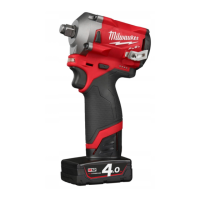
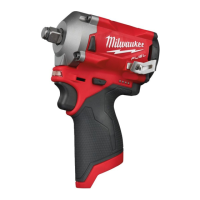
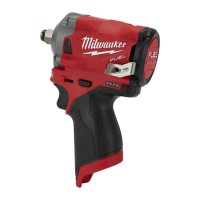
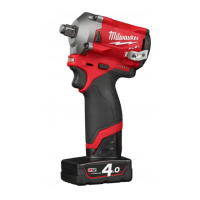
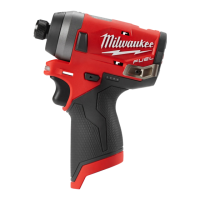
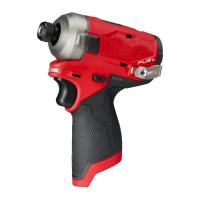
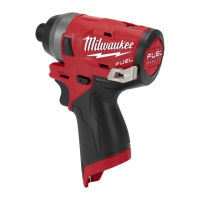
The Milwaukee M12 FID is a cordless impact driver designed for heavy-duty applications, offering robust performance and user-friendly features. It is part of the M12 system, known for its compact size and powerful capabilities. The tool is primarily used for tightening and loosening nuts and bolts, making it suitable for various tasks where a mains connection is unavailable.
The impact driver operates by delivering rotational force combined with rapid, short-duration impacts to drive fasteners. This mechanism allows it to apply high torque efficiently, especially useful for stubborn or large fasteners. The tool features a drive control button that allows users to adjust the rotation speed (RPM) for different applications. It offers multiple speed modes (1, 2, 3, and a self-tapping screw mode), providing versatility for various tasks.
In self-tapping screw mode, the tool initially drives at full RPM until the screw taps, then slows down for better control as the screw seats into the workpiece. This intelligent control helps prevent over-tightening and damage to the material or fastener. The direction of rotation can be easily switched using a slide switch, allowing for both forward (tightening) and reverse (loosening) operations. A central "lock" position on this switch prevents accidental activation, enhancing safety during transport or when the tool is not in use.
The tool is powered by a Milwaukee M12 battery pack, which is inserted into the base of the handle. An integrated battery fuel gauge, indicated by a series of LED lights, shows the remaining charge, allowing users to monitor battery status at a glance. The number of illuminated LEDs corresponds to the charge level (e.g., four lights for 100%, one light for 25%).
For enhanced visibility in dimly lit work areas, the M12 FID is equipped with an LED light that illuminates the workpiece when the trigger is pressed. This feature ensures precise fastening, even in challenging environments.
The M12 FID is designed for ease of use and operator comfort. Its compact and ergonomic design, including an insulated gripping surface, ensures a secure and comfortable hold, reducing fatigue during prolonged use. The tool reception is a standard 1/4" (6.35 mm) hex, allowing for quick and easy bit changes. To insert a bit, the user simply pushes it into the chuck until it clicks into place. To remove a bit, the chuck is pulled forward, and the bit can then be withdrawn.
The drive control button, typically located near the base of the tool, allows for quick adjustments to the speed settings. This is crucial for adapting the tool's performance to different fastener types and materials. For example, lower speeds are suitable for delicate tasks, while higher speeds are used for heavy-duty applications.
The forward/reverse slide switch is conveniently placed above the trigger, allowing for one-handed operation. Pushing the switch to the right engages forward rotation, while pushing it to the left engages reverse. The central position locks the trigger, preventing unintended starts.
The battery pack is easily inserted and removed from the bottom of the handle. To insert, the battery is slid into the slot until it clicks. To remove, a release button on the battery pack is pressed, and the battery is pulled out. This quick-change system minimizes downtime.
For portability and easy access, the tool features a belt clip, allowing users to attach it to their belt or pocket. This keeps the tool within reach while working at height or moving around a job site.
Proper maintenance is essential for ensuring the longevity and optimal performance of the M12 FID. Users are advised to remove the battery pack before performing any work on the machine, such as changing accessories or making adjustments, to prevent accidental starts.
The tool's design emphasizes durability, but regular checks are recommended. Users should ensure that the battery contacts and charger contacts are kept clean to maintain efficient charging and power transfer. Battery packs should be stored in a cool, dry place, away from moisture and extreme temperatures, especially if not used for extended periods.
In case of high torque, binding, stalling, or short-circuit situations, the tool is designed to vibrate for a few seconds and then shut off to protect itself and the battery. To reset, the user simply needs to release and re-press the trigger. If the internal temperature of the battery becomes too high, the battery will shut down and needs to be placed on the charger to cool down and reset.
The manual advises against disposing of used battery packs or electric tools with household waste. Instead, they should be collected separately and returned to an environmentally compatible recycling facility. Milwaukee distributors offer services to retrieve old batteries for recycling.
For any components that need replacement and are not described in the manual, users should contact Milwaukee service agents. Only genuine Milwaukee accessories and spare parts should be used to ensure compatibility and maintain the tool's performance and safety standards.
 General
| Voltage | 12V |
|---|---|
| IPM | 0-4, 000 |
| LED Light | Yes |
| Chuck Type | 1/4" Hex |
| Fuel Gauge | Yes |
| Battery Type | M12 REDLITHIUM |
| RPM | 0-3, 300 |




 To Next Page
