
 Need help?
Do you have a question about the Mitsubishi Electric MSZ-EF35VEB and is the answer not in the manual?
Explains warning and caution symbols and their meanings.
Essential safety advice to prevent serious injury or death.
Necessary steps to prevent minor hazards and damage.
Information on how to properly dispose of the product.
Labels components of the indoor unit.
Labels parts of the remote controller.
Labels components of the outdoor unit.
Step-by-step guide to insert batteries.
Instructions to set the current time on the remote.
Explains AUTO, COOL, DRY, HEAT, and FAN modes.
How to operate the unit without the remote.
How to select and adjust fan speed settings.
How to adjust airflow direction and vane positions.
How to save and recall preferred settings.
Explanation of the Econo Cool feature and its benefits.
Instructions to set the unit to turn on or off at specific times.
Step-by-step guide to set weekly timers for operation.
How to view saved weekly timer configurations.
Instructions for cleaning Nano platinum and air cleaning filters.
Instructions for cleaning the front panel of the indoor unit.
Key recommendations for optimal cleaning and maintenance.
Common problems and solutions for the indoor unit.
Addressing cooling, heating, airflow, and sound issues.
Troubleshooting outdoor unit and timer-related issues.
Steps to take before storing the unit for extended periods.
Procedures for restarting the unit after a long period of non-use.
Recommended and avoided installation places for optimal performance.
Guidelines for proper electrical setup and safety.
Details on capacity, power, pressure, and noise levels.
Information on guaranteed operating range and important notes.
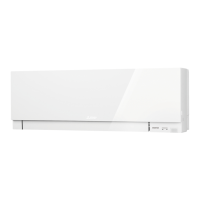
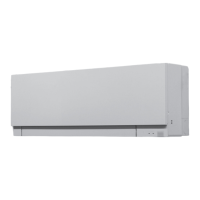
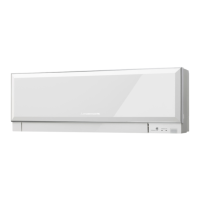
This document describes the MITSUBISHI ELECTRIC Split-Type Air Conditioners, specifically the MSZ-EF22VEW, MSZ-EF25VEW, MSZ-EF35VEW, MSZ-EF42VEW, MSZ-EF50VEW, MSZ-EF22VEB, MSZ-EF25VEB, MSZ-EF35VEB, MSZ-EF42VEB, MSZ-EF50VEB, MSZ-EF22VES, MSZ-EF25VES, MSZ-EF35VES, MSZ-EF42VES, and MSZ-EF50VES indoor units. It provides comprehensive operating instructions, safety precautions, and maintenance guidelines to ensure correct and safe usage.
The MITSUBISHI ELECTRIC Split-Type Air Conditioner is designed to provide comfortable indoor climate control through various operating modes: AUTO, COOL, DRY, HEAT, and FAN.
The unit features an "Auto restart function" which automatically resumes operation in the last set mode after a power failure or main power interruption. If a timer was set, it will be cancelled, and the unit will start operation when power is restored.
The air conditioner is operated primarily via a remote controller, which features an operation display section, temperature buttons, operation select button, fan speed control button, vane control button, i-save button, ECONO COOL button, TIME/TIMER set buttons, WEEKLY TIMER set buttons, RESET button, and CLOCK button. The remote controller should be placed where its signal can be received by the indoor unit, typically within 6 meters.
Emergency Operation: If the remote controller cannot be used, emergency operation can be activated by pressing the emergency operation switch (E.O.SW) on the indoor unit. Each press cycles through Emergency COOL, Emergency HEAT, and Stop. During emergency operation, the set temperature is 24°C, fan speed is Medium, and the horizontal vane is set to Auto. The first 30 minutes are a test run, with no temperature control and high fan speed.
Multi System Operation: When two or more indoor units are connected to one outdoor unit, simultaneous cooling/fan and heating operations are not possible. If conflicting modes are selected, the unit selected last will enter standby mode.
Regular cleaning and maintenance are crucial for optimal performance, energy efficiency, and prevention of mold growth.
Installation and Electrical Work: The air conditioner should be installed by a qualified dealer due to specialized knowledge and skills required to prevent water leakage, fire, or electric shock. A dedicated power supply with appropriate breaker capacity must be provided. The unit should not be installed where flammable gas could leak. Proper earthing is essential to prevent electric shock, and an earth leakage breaker may be necessary in humid areas. Ensure proper drainage of water from the unit. The outdoor unit should be placed at least 3 meters away from TV/radio antennas to prevent interference. Avoid installing the unit in areas with excessive machine oil, salty air, sulfide gas, oily smoke, high-frequency equipment, or where the outdoor unit's airflow is blocked.
Troubleshooting: The manual provides a comprehensive troubleshooting guide for common issues related to the indoor unit, remote controller, cooling/heating performance, airflow, sound, and timer operation. It advises users to stop operation and consult their dealer if abnormal conditions persist, such as water leakage, blinking operation indicator lamps, frequent breaker trips, or abnormal sounds.
 General
| Cooling Capacity | 3.5 kW |
|---|---|
| Heating Capacity | 4.0 kW |
| Power Supply | 220-240 V, 50 Hz |
| Outdoor Unit Dimensions (HxWxD) | 550 x 800 x 285 mm |
| Energy Efficiency Class Cooling | A+++ |
| Energy Efficiency Class Heating | A+ |
| Noise Level (Indoor) | 21 dB(A) |
| Refrigerant | R32 |
| Color | Black |
| Coefficient of Performance (COP) | 4.0 |
| Outdoor Unit Dimensions (WxHxD) | 800 x 550 x 285 mm |
| Type | Wall Mounted |
| Indoor Unit Weight | 10.5 kg |
| Noise Level (Outdoor) | 50 dB(A) |



 To Next Page

