Used with permission. Copyright © API 2012
Attachment Parenting International
35
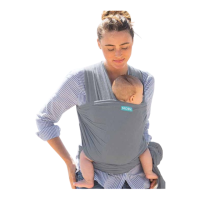
Moby® Wrap
36
The Comfortable Baby Carrier
Ensure Safe Sleep,
Physically & Emotionally
Babies and children have needs at night
just as they do during the day, from hunger,
loneliness, and fear, to feeling too hot or too cold.
They rely on parents to soothe them and help them
regulate their intense emotions. Sleep training
techniques can have detrimental physiological and
psychological eects. Safe cosleeping benets both
babies (or children) and parents.
Provide Consistent, Loving Care
Babies and young children have an intense
need for the physical presence of a consistent,
loving, responsive caregiver, ideally a parent. If it
becomes necessary, choose an alternate caregiver
who has formed a bond with the child and who
cares for her or him in a way that strengthens the
attachment relationship. Keep schedules exible, and
minimize stress and fear during short separations.
Practice Positive Discipline
Positive discipline helps a child develop a
conscience guided by his or her own internal
discipline and compassion for others. Discipline that
is empathetic, loving, and respectful strengthens the
connection between parent and child. Rather than
reacting to behavior, discover the needs leading
to the behavior. Communicate and craft solutions
together while keeping everyone’s dignity intact.
Strive for Balance
in Personal & Family Life
It is easier to be emotionally responsive when
you feel in balance. Create a support network,
set realistic goals, put people before things, and
don’t be afraid to say “no.” Recognize individual needs
within the family and meet them to the greatest
extent possible without compromising your physical
and emotional health. Be creative, have fun with
parenting, and take time to care for yourself.
Prepare for Pregnancy,
Birth & Parenting
Become emotionally and physically prepared
for pregnancy and birth. Research available
options for healthcare providers and birthing
environments, and become informed about routine
newborn care.
Feed with Love and Respect
Breastfeeding is the optimal way to satisfy
an infant’s nutritional and emotional
needs. “Bottle nursing” adapts breastfeeding
behaviors to bottle-feeding to help initiate a secure
attachment. Follow the feeding cues for both infants
and children, encouraging them to eat when they
are hungry and stop when they are full. Oer healthy
food choices and model healthy eating behavior.
Principles of
Parenting
Attachment Parenting International
promotes the conditions that are
vital for the optimal development of
children. These are at the core of API’s educational
mission and are encompassed in API’s
Eight Principles of Parenting:
API’s Eight Principles of Parenting
Respond with Sensitivity
Build the foundation of trust and empathy
beginning in infancy. Tune in to what your
child is communicating to you, then respond
consistently and appropriately. Babies cannot be
expected to self-soothe; they need calm, loving,
empathetic parents to help them learn to regulate
their emotions. Respond sensitively to a child who is
hurting or expressing strong emotion, and share in
his or her joy.
Use Nurturing Touch
Touch meets a baby’s needs for physical
contact, aection, security, stimulation, and
movement. Skin-to-skin contact is especially
eective, such as during breastfeeding, bathing, or
infant massage. Carrying or babywearing also meets
this need while on the go. Hugs, snuggling, back
rubs, massage, and physical play help meet this
need in older children.
1
2
3
4
5
6
7
8
API's Mission
Educate and support all parents
in raising secure, joyful, and
empathic children in order to
strengthen
families and create a
more
compassionate world.
API Membership
API has provided almost 20 years of
grassroots, global, compassionate,
support to families everywhere! Help
spread the word and impact the
community through an API membership.
API oers free membership that includes
great e-newsletters and The Attached
Family electronic magazine. Join today!
attachmentparenting.org
Discover Moby



 To Next Page
 Loading...