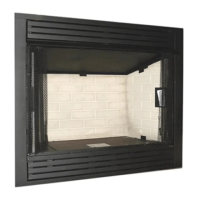
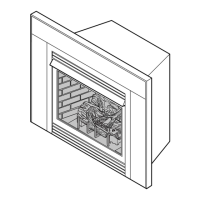
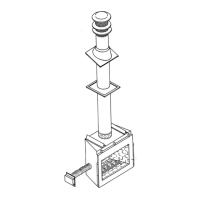
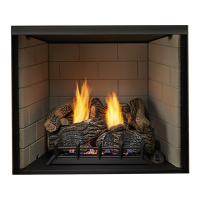
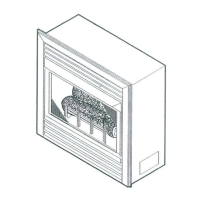
This document provides installation instructions for the Monessen Hi/Lo Variable Flame Height Kit and Remote Control, designed for various Monessen fireplace models including GG18NV, GG18PV, GG24NV, GG24PV, NB18NV, NB18PV, NB24NV, and NB24PV. This kit enhances the functionality of your fireplace by allowing remote control over the flame height, offering greater convenience and ambiance customization.
Function Description
The Monessen Hi/Lo Variable Flame Height Kit integrates a stepper motor and a remote control system into your existing fireplace valve, enabling precise adjustment of the flame height. Traditionally, fireplace flame height might be manually adjusted or fixed. This kit upgrades the system to allow for variable flame height control via a handheld remote, providing a more dynamic and user-friendly experience.
At its core, the kit consists of a Hi/Lo SIT Stepper Motor, which is the mechanical component responsible for modulating the gas flow to the burner, thereby controlling the flame height. This motor is specifically designed for either Natural Gas (NG) or Liquid Propane (LP) applications, with distinct models (820 NG-3.5 and 820 LP-10) to ensure compatibility and proper operation with your fuel type. The stepper motor replaces the existing regulator on the valve, integrating directly into the gas control system.
The remote control aspect is managed by a Pro-Flame Receiver Kit and a Pro-Flame Transmitter (the handheld remote). The receiver connects to the fireplace's control valve and the stepper motor via a series of wire harnesses. It acts as the intermediary, receiving signals from the transmitter and translating them into commands for the stepper motor. The transmitter, or remote, is the user interface, allowing you to wirelessly send commands to the receiver to adjust the flame height. This wireless communication eliminates the need for manual adjustments at the fireplace itself, offering convenience from a distance.
The system is designed to be integrated seamlessly with the existing gas valve. The installation process involves removing the current regulator and replacing it with the Hi/Lo stepper motor, ensuring a proper seal with a rubber gasket. Electrical connections are then made to link the stepper motor, the control valve, and the receiver using the provided wire harnesses. Once installed and properly synchronized, the system allows for remote adjustment of the flame height, providing a more sophisticated and flexible fireplace operation.
Usage Features
The primary usage feature of this kit is the ability to remotely control the flame height of your Monessen fireplace. This means you can adjust the intensity and visual appeal of your fire from the comfort of your couch, without having to get up and interact directly with the fireplace controls.
To begin using the system, you'll first need to install batteries in both the remote transmitter and the receiver. Once powered, the receiver has a three-position slider switch that needs to be set to the "Remote" position to enable wireless control. A crucial step in setting up the system is synchronizing the remote transmitter with the receiver. This is achieved by pressing a "PRG" (program) button on the receiver, which typically results in audible beeps for confirmation, followed by pressing the "ON" button on the remote. This pairing process ensures that your remote specifically controls your fireplace, preventing interference from other devices.
Once synchronized, the remote transmitter provides intuitive control over the flame height. While the specific buttons for flame adjustment are not detailed in this document, a typical Pro-Flame remote would include buttons to increase or decrease the flame height, offering a range of settings from a low, gentle flicker to a high, robust blaze. This variability allows you to tailor the ambiance of your room to your preference, whether you desire a subtle background glow or a more prominent, heat-generating fire.
The remote control functionality also extends to turning the fireplace on and off, providing a complete wireless control solution for your fireplace. This enhances safety by allowing you to operate the fireplace from a safe distance and adds a layer of modern convenience to your home heating and decorative appliance. The system is designed to be user-friendly, with clear audible feedback (beeps) during the synchronization process to guide you through setup.
Maintenance Features
While the document primarily focuses on installation, several aspects relate to the ongoing maintenance and care of the system to ensure its longevity and safe operation.
A critical maintenance feature is the requirement for installation by a qualified service agency. This is not just a recommendation but a safety imperative. Professional installation ensures that all components are correctly fitted, electrical connections are secure, and the gas system is properly sealed and tested. Incorrect installation can lead to serious hazards such as fire, explosion, or carbon monoxide production, resulting in property damage, personal injury, or loss of life. Therefore, entrusting the initial setup to a professional is the first and most important step in ensuring long-term, safe operation.
After installation, the document emphasizes checking for gas leaks. This is performed by turning on the gas supply and using a soapy water solution on all connections. The appearance of bubbles indicates a leak, which must be addressed immediately by a qualified technician. This leak check is a standard safety procedure for any gas appliance installation or modification and is crucial for preventing dangerous gas leaks.
Another important check involves verifying the manifold pressure. Using a small flathead screwdriver and a manometer, the installer must confirm that the manifold pressure meets the specified values: 3.5" for Natural Gas (NG) and 10" for Liquid Propane (LP). Correct manifold pressure is vital for the efficient and safe combustion of gas, ensuring that the flames are stable, properly sized, and that the appliance operates within its design parameters. Incorrect pressure can lead to poor performance, incomplete combustion, and potential safety issues.
The document also highlights the importance of handling logs with care. Before installation, the logs must be removed from the unit and set aside. When handling logs, especially if the unit has been in operation, it's recommended to wear gloves as they may be hot to the touch. Logs should be placed on a non-combustible surface to prevent damage or fire. Proper reinstallation of the logs, following the instructions in your fireplace's installation/use and care manual, is also essential for both aesthetic appeal and correct airflow within the firebox, which impacts combustion efficiency.
Battery replacement for both the remote transmitter and the receiver will be a routine maintenance task, although the frequency is not specified. When replacing batteries, it's important to use the correct type and size as recommended by the manufacturer to ensure proper functioning of the remote control system.
Finally, the document includes a general warning that logs may be hot to the touch and advises handling them with gloves and placing them on a non-combustible surface when removed from the unit. This serves as a constant reminder for user safety during any interaction with the fireplace's internal components, whether for maintenance or other reasons. Adhering to all instructions and warnings provided in this manual and the fireplace's main manual is key to maintaining the device safely and effectively.



 To Next Page
 General