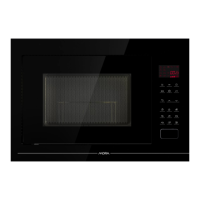
This document is an instruction manual for the MORA MT101WH and MT102BH microwave ovens. It provides comprehensive information on the appliance's function, technical specifications, usage, and maintenance.
Function Description
The MORA microwave oven is designed for household use, specifically for heating food and beverages using electromagnetic energy. It is intended for indoor use only. The appliance operates by generating microwaves that interact with food molecules, causing them to heat up.
Important Technical Specifications
- Power Consumption: 230V~50Hz, 1050W
- Output Power: 700W
The oven includes a glass tray and a turntable ring assembly, which are essential for proper operation. The appliance is designed to be used freestanding, with specific clearance requirements for installation to ensure proper ventilation and prevent overheating.
Usage Features
The microwave oven features a control panel with a power knob and a timer knob for setting cooking parameters.
Operation Instructions:
- Setting Cooking Power: Turn the power knob to the desired level. The power levels are indicated by symbols:
- 17% micro.: Soften ice cream
- 33% micro.: Soup stew, soften butter, or defrost
- 55% micro.: Stew, fish
- 77% micro.: Rice, fish, chicken, ground meat
- 100% micro.: Reheat, milk, boil water, vegetables, beverage
- Setting Cooking Time: Turn the timer knob to the desired time according to your food cooking guide. The timer ranges from 0 to 35 minutes.
- Automatic Start: The microwave oven automatically starts cooking once the power level and time are set.
- Cooking Completion: The unit will emit a "Dong" sound when the cooking time is up.
- Safety Precaution: Always set the timer to "O" (zero) when the unit is not in use. Operating the microwave oven without food can lead to overheating and damage to the magnetron.
Utensils:
The manual provides a detailed list of materials suitable for microwave oven use and those to be avoided.
- Materials you can use: Browning dish (ensure at least 3/16 inch (5mm) above turntable), dinnerware (microwave-safe only, no cracks/chips), glass jars (remove lid, for warming only), glassware (heat-resistant oven glassware only, no metallic trim, no cracks/chips), oven cooking bags (follow manufacturer's instructions, no metal tie, make slits for steam), paper plates and cups (for short-term cooking/warming, do not leave unattended), paper towels (to cover food, for short-term cooking), parchment paper (to prevent splattering or for steaming), plastic (microwave-safe only, follow manufacturer's instructions, "Microwave Safe" label, slit/pierce/vent boiling bags), plastic wrap (microwave-safe only, to retain moisture, do not touch food), thermometers (microwave-safe meat and candy thermometers), wax paper (to prevent splattering and retain moisture).
- Materials to be avoided: Aluminum tray (causes arcing, transfer food to microwave-safe dish), food carton with metal handle (causes arcing, transfer food to microwave-safe dish), metal or metal-trimmed utensils (shields food, causes arcing), metal twist ties (causes arcing, fire hazard), paper bags (fire hazard), plastic foam (may melt or contaminate liquid at high temperatures), wood (dries out, splits/cracks).
Installation:
The oven should be placed on a level surface with adequate open space for vents.
- Minimum installation height: 85cm.
- Rear surface against a wall.
- Minimum clearance: 30cm above the oven, 20cm between the oven and adjacent walls.
- Do not remove the legs from the bottom.
- Avoid blocking intake/outlet openings.
- Keep away from radios and TVs to prevent interference.
- Plug into a standard household outlet with matching voltage and frequency.
- Do not install over a range cooktop or other heat-producing appliances.
- The accessible surface may become hot during operation.
Maintenance Features
Cleaning:
Regular cleaning is crucial for maintaining the appliance's lifespan and preventing hazardous situations.
- Before Cleaning: Always unplug the appliance from the power supply.
- Oven Cavity: Clean with a slightly damp cloth after each use.
- Accessories: Clean in soapy water.
- Door Frame, Seal, and Neighboring Parts: Clean carefully with a damp cloth when dirty.
- Oven Door Glass: Do not use harsh abrasive cleaners or sharp metal scrapers, as they can scratch the surface and cause shattering.
- Cleaning Tip for Cavity Walls: Place half a lemon in a bowl, add 300ml (1/2 pint) water, and heat on 100% microwave power for 10 minutes. Wipe the oven clean with a soft, dry cloth.
- Steam Cleaner: Do not clean the appliance with a steam cleaner.
Safety Interlocks and Repairs:
- It is hazardous for anyone other than a competent person to carry out service or repair operations involving the removal of covers that protect against microwave energy exposure.
- If the door or door seals are damaged, the oven must not be operated until repaired by a competent person.
Grounding Installation:
- The appliance must be grounded to reduce the risk of electric shock.
- It is equipped with a grounding wire and plug.
- Consult a qualified electrician if grounding instructions are unclear.
- If an extension cord is necessary, use a 3-wire grounding-type cord with an electrical rating at least as great as the appliance's rating. The cord should be arranged to avoid draping over surfaces where it can be pulled or tripped over.
Troubleshooting:
The manual includes a troubleshooting guide for common issues:
- Microwave oven interfering with TV reception: Normal, similar to other small electrical appliances.
- Dim oven light: Normal in low-power microwave cooking.
- Steam accumulating on door, hot air out of vents: Normal, steam from food escapes through vents and may condense on cooler surfaces.
- Oven started accidentally with no food in: Forbidden, dangerous, can damage magnetron.
- Oven cannot be started: Check if power cord is plugged in tightly (unplug and replug after 10 seconds), check for blown fuse or tripped circuit breaker (repair by professional), check outlet with other appliances.
- Oven does not heat: Check if the door is closed well.
General Safety Precautions:
- Do not operate with the door open.
- Do not place objects between the oven front face and the door, or allow soil/cleaner residue to accumulate on sealing surfaces.
- Do not heat liquids or foods in sealed containers.
- Monitor food in plastic or paper containers due to ignition risk.
- If smoke is emitted, switch off/unplug and keep the door closed.
- Handle heated beverages carefully due to delayed eruptive boiling.
- Stir/shake contents of feeding bottles and baby food jars, and check temperature before consumption.
- Do not heat eggs in their shell or whole hard-boiled eggs.
- The appliance is not to be installed behind a decorative door to avoid overheating (not applicable for appliances with decorative door).
- Only use the recommended temperature probe (if applicable).
- The microwave oven shall not be placed in a cabinet unless tested in a cabinet.
- The microwave oven must be operated with the decorative door open (for ovens with a decorative door).
- The microwave oven is intended for heating food and beverages; drying food, clothing, warming pads, slippers, sponges, damp cloth, and similar items may lead to injury, ignition, or fire.
- Metallic containers are not allowed during microwave cooking.
- The appliance is intended to be used freestanding, and its rear surface should be placed against a wall.

 Need help?
 General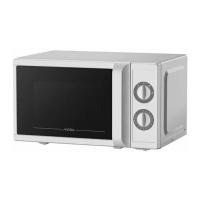

 To Next Page