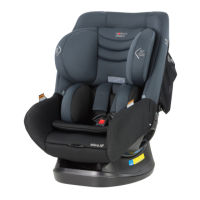
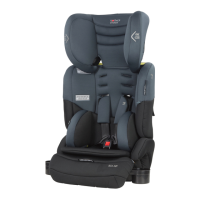
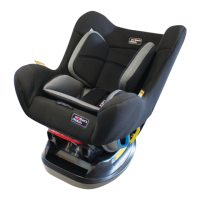
The provided document is an instruction manual for the Mother's Choice Glide unharnessed booster seat.
Function Description:
The Mother's Choice Glide is a child restraint system designed for use in vehicles. It functions as an unharnessed booster seat, suitable for children approximately 4 years old up to approximately 6-8 years old. The primary purpose of this booster seat is to position the child correctly so that the vehicle's lap-sash seatbelt fits safely and effectively, reducing the risk of injury or death in a crash. It is designed to be used with a lap-sash seatbelt and must be attached to a child restraint upper anchorage point in the car. The booster seat helps ensure the lap belt sits low across the child's thighs and the sash belt fits diagonally across the chest and on the shoulder, rather than across the neck or face.
Important Technical Specifications:
- Age/Weight Suitability: Approximately 4 years old to approximately 6-8 years old.
- Restraint Type: Unharnessed booster seat.
- Vehicle Seatbelt Compatibility: Must be used with a lap-sash seatbelt. Not suitable for use with just a lap belt or a child harness.
- Anchorage System: Requires attachment to a child restraint upper anchorage point in the vehicle.
- Shoulder Height Markers: Features both upper (Marker A: Older Child) and lower (Marker B: Young Toddler) shoulder height markers to indicate appropriate usage.
- Lower Marker (Marker B): Child's shoulders must be in-line with or above this marker when the headrest is in the lowest position. If below, the child should remain in their previous child restraint.
- Upper Marker (Marker A): When the child's shoulders reach this upper marker (headrest at highest position), or the child no longer fits, the booster seat is no longer suitable.
- Headrest Positions: Fitted with 6 height positions for adjustment.
- Attachment Bolt Torque: Maximum torque for the attachment bolt is 20 Nm.
- Australian/New Zealand Standard: Certified Product, Australian Standard AS/NZS 1754 Lic 40071 (SAI Global). The replacement cover must meet AS/NZS 8005.
Usage Features:
- Quick Start Guide: Provides a simplified overview of installation for booster mode, including loosening the tether, pushing to adjust, clicking the seatbelt, and attaching the top tether.
- Installation: Detailed instructions for preparing the vehicle, including locating the top tether anchorage point. Illustrations show correct and incorrect attachment of the top tether clip (upright vs. flat).
- Anchorage Fitting Installation: Instructions for cars fitted with an upper anchorage point and for sedans not fitted with one, including drilling a 9mm hole for sedans (recommended to be done by a child restraint fitting station or licensed motor mechanic).
- Correct Vehicle Position: Illustrations demonstrate correct and incorrect placement of the booster seat in different vehicle types (e.g., rear-facing seats are incorrect).
- Securing and Adjusting Top Tether Strap: Steps include pressing the adjuster button to loosen, attaching the hook to the anchor point, and pushing down on the child restraint with a knee while pulling the free end of the strap to tighten. Emphasizes ensuring the seat base is not lifted and storing excess webbing.
- Positioning Booster in the Vehicle: Instructions on using only the vehicle's lap-sash seatbelt and ensuring the headrest is adjusted so the bottom is even with or slightly higher than the top of the child's shoulders. Warnings against using a lap-only belt or placing the sash belt under the arm or behind the back.
- Securing Your Child in the Vehicle: Steps for placing the child, positioning the sash belt through the sash guide in the headrest, ensuring the lap belt is low on the hips, and fastening/tightening the buckle. Emphasizes that the vehicle's seatbelt must not be twisted.
- Adjustable Headrest: The headrest can be lifted up to raise it to the desired position or pushed down to lower it. Force may be needed for adjustment.
- Adjusting Lap-Sash Belt: Guides on positioning the lap belt across the child's lap and the shoulder belt over the child's chest and into the seat sash guide.
- Cup Holders: Features swing-out cup holders on either side for convenience, which can be pushed back when not in use.
- 3 Point Test: A test to determine if a child is ready to transition out of a booster seat, checking sash belt position, lap belt position, and knee bend.
Maintenance Features:
- Caring for Seat Fabrics:
- Headrest Cover: Removed by separating velcro around sash guides and the back of the headrest.
- Main Body Cover: Removed by separating velcro at the back of the seat, pulling around the armrest, and freeing elastic under the seat and from cup holders.
- Washing: Covers can be machine washed in lukewarm water on the 'delicate' cycle.
- Drying: Tumble dry for 10-15 minutes on low heat.
- Prohibitions: DO NOT BLEACH, DO NOT DRY CLEAN, DO NOT IRON.
- Refitting: Instructions provided for refitting headrest and main body covers.
- Cleaning the Plastic Shell: Sponge clean with mild soap and cool water. NEVER clean with ammonia or bleach-based, or spirit-type cleaners.
- Regular Checks: Periodically check the seat for worn parts, torn material, and stitching. If damage is found, DO NOT modify the seat; replace it.
- Cover Replacement: VERY IMPORTANT: Only replace the cover with a manufacturer's supplied replacement cover with identical shoulder height markers or a replacement cover meeting AS/NZS 8005.
- Aftermarket Accessories: Use of aftermarket accessories not provided with the restraint can reduce safety and cause injury or death. Refer to page 12 for approved extension straps and belt converter.
- Crash Policy: Destroy the restraint if it has been in a severe crash, even if no damage is visible.
- Cover Requirement: DO NOT USE THIS RESTRAINT WITHOUT THE COVER.
- Always read and follow all instructions for maximum protection.
- No child restraint can guarantee absolute protection from a crash; proper use reduces risk.
- Do not leave children unattended in the car.
- Do not alter or modify the restraint; repairs must be done by the manufacturer or agent.
- Do not allow the restraint to come into contact with polishes, oils, bleach, and other chemicals.
- Always secure the loose end of the top tether strap.
- This restraint is not suitable for use where the top tether strap may fall into a split in the seat back or off the side of the seat.
- Must be used in cars with forward-facing seats with a lap-sash seatbelt.
- Not approved for use with ISOFIX low anchorages.
- Check local legislation regarding child restraint use in the front seat.
- Child restraints must not be attached to unsound metal or to wood or synthetic structures.
- When drilling for anchorage points, avoid fuel lines, fuel tanks, electrical wiring, or radio speakers.
- Webbing straps must be protected from sharp corners and edges.
- The anchor fitting must only be used as described and not hooked onto any other object.
- Improper placement of the safety seat increases the risk of serious injury or death.
- Secure or remove hazardous cargo before using this child restraint to prevent injury or damage.
Customer Support:
- Australia: Customer Service Team: 1300 809 526 (Mon-Fri, 8:30am - 5:00pm AEST), email: customerservice@dorel.com.au, website: www.dorel.com.au.
- New Zealand: Customer Service Centre: (09) 274 1040 NZ wide: 0800 628 000 (toll free) (Mon-Fri, 8:00am - 4:00pm).
- Product Registration: Online at www.motherschoice.com.au/product-registration for safety notifications, ownership confirmation, and product improvement.
Guarantee:
Dorel Australia Pty Ltd provides a 6-year warranty on the seat and a 2-year warranty on the trim from the date of purchase, provided the product is used according to instructions. This warranty is in addition to consumer law rights. They offer refund, repair, or exchange for defective products within the warranty period. The warranty is void if the defect results from alteration, accident, misuse, abuse, or neglect. Proof of purchase (receipt) is required for warranty claims.

 Need help?
 General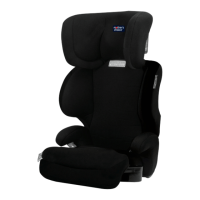

 To Next Page