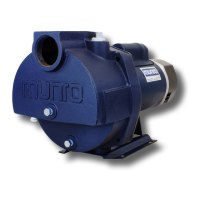
READ AND FOLLOW SAFETY
INSTRUCTIONS!
This is the safety alert symbol. When you see this
symbol on your pump or in this manual, look for one of the
following signal words and be alert to the potential for personal
injury.
warns about hazards that WILL cause serious
personal injury, death or major property damage if ignored.
warns about hazards that CAN cause serious
personal injury, death or major property damage if ignored.
warns about hazards that WILL or CAN cause
minor personal injury or property damage if ignored.
The label NOTICE indicates special instructions which are
important but not related to hazards.
MOTOR AND ELECTRICAL:
Carefully read and follow all safety instructions in this manual and
on the pump.
GENERAL SAFETY – ELECTRICAL
1. Every time work is to be performed on a pump,
the power supply should be terminated at the breaker box.
2. Follow all local electrical and safety codes,
including the National Electrical Code (NEC) and the
Occupational Safety and Health Act (OSHA).
3. Replace damaged or worn cords immediately.
4. Ground motor before connecting to power supply.
5. Use extreme caution around an operating pump
and motor – it may be hot enough to cause serious burns.
GENERAL OPERATION – ELECTRICAL
1. Before using pump, check your motor nameplate
for voltage. Your electric supply voltage and the stamped
nameplate voltage must match. Motors stamped 200 volts
only or 230 volts only must be used with that voltage only.
Motors stamped with two voltages (for example 230/460
volts) may be used with either supply voltage.
2. Check the connections against the wiring diagram
on the motor nameplate and make any changes necessary to
agree with your supply voltage.
3. Supply voltage must be within 10%, or nameplate
voltage. Incorrect voltage can cause re or seriously damage
motor and voids warranty. When in doubt, call a licensed
electrician. High voltage can shock, burn, or cause death.
4. Some models are equipped with three phase motors. Three
phase motors require magnetic starters.
GENERAL SAFETY – MOTOR
1. Disconnect the main power before handling the
unit for ANY REASON.
2. An operating motor can run between 250°F and
311°F depending on insulation rating. Never touch a motor
without rst determining the housing temperature.
3. Keep pump motor ventilated to reduce damage due to heat.
4. Motor is not waterproof and should never be
submersed into any liquid.
5. Motor is designed to work with up to a 15 degree angle of
water impact. Do not allow water to spray directly onto
motor. External motor protection should be used to eliminate
environmental concerns.
6. To reduce the risk of electric shock, the motor must be
securely and adequately grounded. Refer to National
Electric Code (NEC Article 250 – Grounding) for additional
information.
7. When in doubt, call a licensed electrician. High voltage
can shock, burn or cause death.
WIRING CONNECTION:
Refer to the connection diagram located on the nameplate of the
motor.
GROUNDING
1. Grounding the motor can be achieved by securing the
motor to a metal raceway system. Alternately a separate
grounding wire connected to bare metal on the motor
frame, or to the green grounding screw located inside the
motor terminal box, or other suitable means is acceptable.
(Refer to NEC Article 250 – Grounding for specics.)
2. Verify motor grounding provision on the nameplate before
connecting any wires to the motor.
ROTATION
1. When facing the suction tapping, all Munro pumps run in a
Counter-Clockwise (CCW) rotation only. Rotation from the
motor end perspective is Clockwise (CW) and is marked as
such on the motor nameplate.
CHECK MOTOR ROTATION
1. Remove the motor end cover to expose the motor shaft.
2. If hook-up is correct, the shaft will rotate clockwise.
3. If rotation is not clockwise, see motor nameplate for
installation information.
4. Tampering with, or reversing, the rotation will damage your
pump and void the warranty.
MOTOR PROTECTION
1. Fuses and circuit breakers are used as a safety device for
the wire circuit. They do NOT offer motor protection.
2. Consult local or national electric codes for proper fuse
protection based on the motor data located on the motor
nameplate.
T HERMAL OVERLOAD
1. Refer to motor nameplate to verify the presence of overload
protection.
2. Overload protects the motor from high and low voltage
irregularities.
3. All motors must be thermally protected – either within the
motor or externally.
4. The internal overload is usually automatic and
resets itself once the temperature has dropped to a safe point.
5. Frequent tripping of the overload indicates motor or power
problems. Immediate professional attention is recommended.
6. NEVER examine, make wiring changes or touch
the motor before disconnecting the electrical supply.
Thermal overload protectors automatically reset and can
close the electrical circuit without warning.
7. The overload should never be tampered with
or removed.
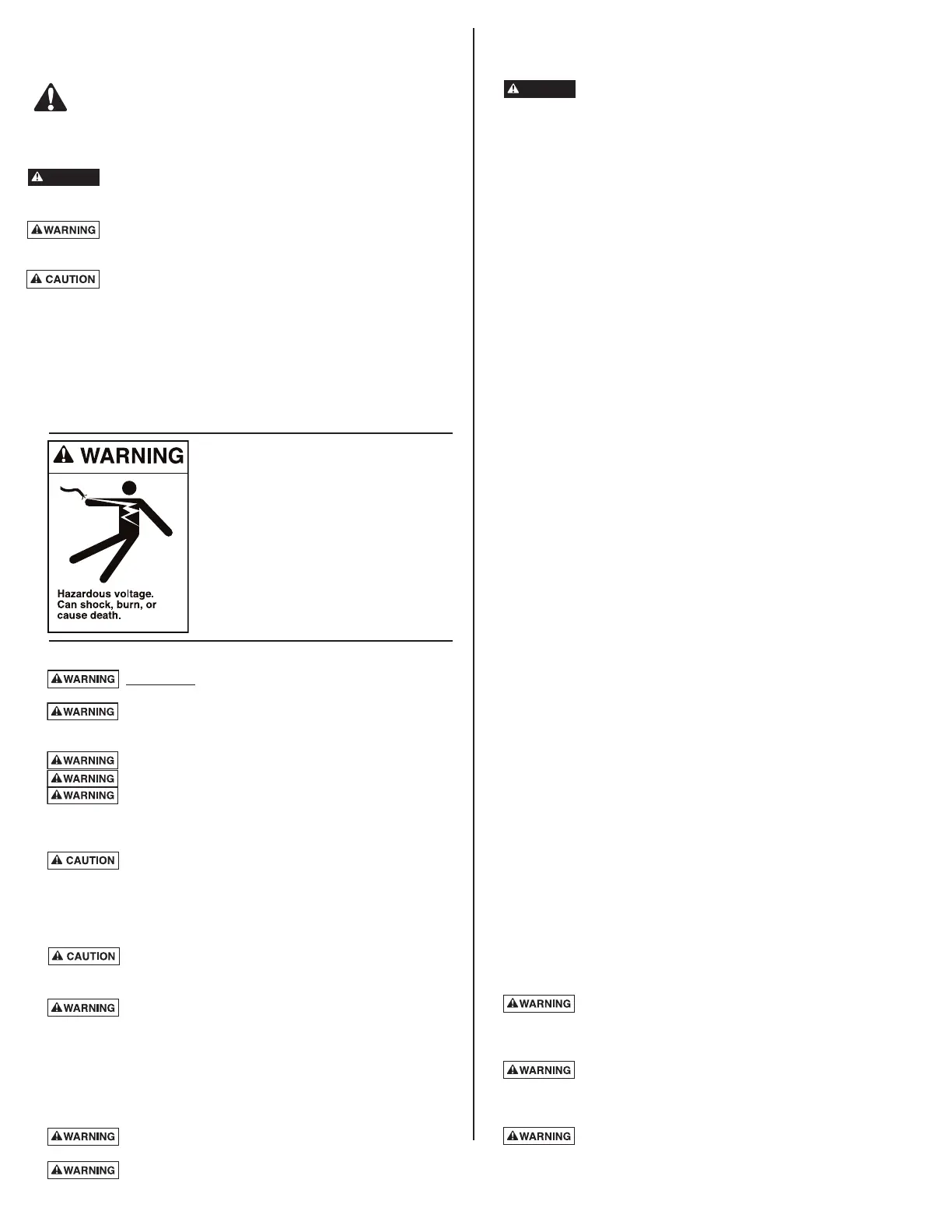
Electric pump motors can be
hazardous if not properly installed.
Call a licensed electrician if unsure
of any electrical connection.
Page 1


 To Next Page
 Loading...