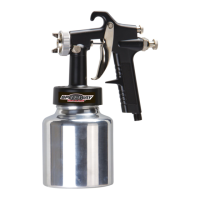
The device described in the manual is an LVLP Paint Spray Gun, Model: 50188, manufactured by North American Tool Industries (NATI). It is designed for applying paint and other coatings, utilizing Low Volume Low Pressure (LVLP) technology, which typically results in less overspray and more efficient material transfer compared to conventional spray guns.
Function Description
The primary function of the LVLP Paint Spray Gun is to atomize and apply liquid coatings, such as paint, onto various surfaces. It operates by connecting to a compressed air source, which drives the atomization process and propels the paint. The gun features several adjustable controls to fine-tune the spray pattern, fluid output, and air pressure, allowing for versatile application across different projects and paint types.
Key operational aspects include:
- Paint Atomization and Application: The gun mixes paint with compressed air to create a fine mist, which is then directed onto the work surface.
- Adjustable Spray Pattern: Users can modify the spray pattern from a horizontal fan to a vertical fan by rotating the nozzle, and further adjust the pattern from flat/open to round/closed using a dedicated knob. This flexibility allows for precise application on various shapes and sizes.
- Fluid Control: A fluid knob regulates the amount of paint released, enabling adjustments for different paint viscosities and desired coating thicknesses.
- Air Pressure Control: The gun requires a regulated air supply, and its performance is optimized within a specified pressure range. An air control knob allows for fine-tuning of the air pressure during operation.
- Siphon Feed System: The paint is drawn from a cup located below the gun body, indicating a siphon feed mechanism.
Important Technical Specifications
The manual provides the following technical specifications for the LVLP Paint Spray Gun:
- Model: 50188
- Required Pressure: 35 PSI (Pounds per Square Inch)
- Average Air Consumption: 7.5 CFM (Cubic Feet per Minute)
- Paint Nozzle Size: 2.0mm
- Feed Type: Siphon
- Capacity: 33 fl. oz. (fluid ounces) for the paint cup
- Air Inlet: 1/4"
These specifications highlight that the gun is designed for moderate air pressure and consumption, making it suitable for use with a range of air compressors. The 2.0mm nozzle size suggests it can handle a variety of paint viscosities, from thinner stains to thicker coatings, though proper thinning is emphasized. The 33 fl. oz. capacity is generous for many painting tasks, reducing the frequency of refills.
Usage Features
The LVLP Paint Spray Gun incorporates several features to enhance its usability and the quality of the finish:
- Work Area Setup: Emphasizes the importance of a clean, well-lit work area, securing workpieces, and routing air hoses safely to prevent hazards.
- Paint Preparation: Instructions for thinning paint according to manufacturer directions and straining it to prevent clogs are provided, crucial for optimal spray quality. The paint cup should be filled no more than 2/3 full.
- Test Spraying: Users are advised to test the consistency of the paint on scrap material before applying it to the actual workpiece, allowing for adjustments to thinning or air pressure.
- Fan Direction Adjustment: The nozzle can be rotated 90 degrees by loosening a lock ring to switch between horizontal and vertical fan patterns, accommodating different application orientations.
- Pattern Adjustment Knob: A dedicated knob allows for continuous adjustment of the spray pattern from a wide, flat fan to a concentrated round pattern, offering precision for various painting needs.
- Fluid Adjustment Knob: This knob controls the amount of paint flow, enabling users to achieve the desired coating thickness and prevent issues like too fine a spray (requiring more fluid or less air) or globs of paint (requiring less fluid).
- Spraying Technique: Detailed guidance on maintaining a correct gun angle (perpendicular to the surface), moving the arm rather than just the wrist, and maintaining a steady distance and speed for an even finish. It explicitly warns against pivoting the wrist or waving the gun.
- Triggering Technique: Instructions for "Paint Stroke Triggering" advise starting gun movement before squeezing the trigger and releasing the trigger while still moving at the end of a stroke to prevent paint buildup and ensure a smoother finish. Applying two thin coats instead of one thick coat is recommended.
- Safety Devices: The manual recommends incorporating a filter, regulator with pressure gauge, oiler, in-line shutoff valve, and quick coupler for best service, emphasizing the shut-off ball valve as an important safety device for immediate air supply control. It also warns against installing a female quick coupler on the tool itself to prevent accidental operation.
Maintenance Features
Proper maintenance is crucial for the longevity and performance of the spray gun, and the manual outlines several key procedures:
- Pre-Use Inspection: Before each use, users should inspect the tool for loose screws, misalignment or binding of moving parts, clogged nozzle, damaged supply hose, cracked or broken parts, and any other condition affecting safe operation.
- Lubrication: If an automatic oiler is not used, a few drops of pneumatic tool oil should be added to the airline connection before operation and after each hour of continual use. Lubrication of threaded connections with non-silicon oil or light lubricant is recommended after cleaning and before storage.
- Cleaning After Each Use: This is a critical step to prevent clogs and ensure proper function.
- Emptying and cleaning the paint cup with solvent.
- Filling the paint cup with solvent and spraying it through the gun into a container until the solvent runs clean, shaking the gun during the process.
- Disconnecting from the air source and releasing any residual air pressure by squeezing the trigger.
- Removing and soaking the nozzle in solvent, using an old toothbrush and toothpicks for cleaning. A warning is given not to immerse the entire spray gun or use metal objects to clean the nozzle.
- Inspecting the fluid needle for bends and replacing it if damaged.
- Wiping down the spray gun body with appropriate solvent.
- Solvent Disposal: Instructions to dispose of cleaning solutions according to the solvent manufacturer's directions and local hazardous waste standards.
- Air Supply Maintenance: Daily maintenance of the air supply components (compressor, filter, regulator, oiler) according to their respective manufacturers' instructions.
- Storage: Storing the tool in a dry, secure area out of reach of children.
- Troubleshooting Guide: A comprehensive guide is provided to diagnose and correct common issues such as sputtering spray, failure to spray, overspray, fluid tip leakage, and air leaking from the nozzle. This guide links symptoms to possible causes and offers corrective actions, emphasizing safety precautions and disconnecting the air supply before servicing. Examples include thinning paint for a heavy center pattern, opening the fluid knob for a light center pattern, cleaning the nozzle for clogs, and replacing damaged parts.
The manual also includes important safety warnings, such as California Proposition 65 warnings regarding dust and chemicals, general safety instructions (keeping work area clean, avoiding explosive atmospheres, wearing PPE, proper tool handling), and specific safety instructions (using only rated accessories, proper air supply connection, two-hand operation, vibration precautions). It stresses the importance of qualified personnel for tool service and using only identical replacement parts.


 To Next Page
 General