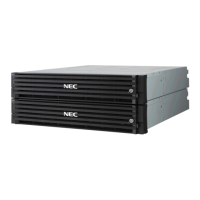
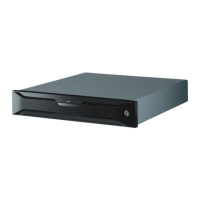
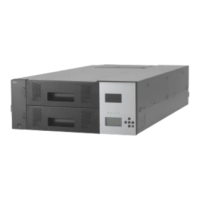
The Built-In AIT (Advanced Intelligent Tape) is a device designed for data storage and backup, offering robust performance and reliability. It is available in various models, including AIT-1, AIT-2, and AIT-3, each with different storage capacities and tape lengths.
Function Description
The primary function of the Built-In AIT is to provide high-capacity data storage and backup solutions. It uses AIT data cartridges, which are available in different generations (AIT-1, AIT-2, AIT-3) and offer varying tape lengths and compressed memory capacities. The device is designed to be installed in a basic processing unit, either as a 5.25-inch or 3.5-inch device, depending on the model.
The Built-In AIT supports data compression, which effectively doubles the storage capacity of the cartridges. It also features an Automatic System Recovery (ASR) function, which allows for backing up the operating system, hardware composition, and applications, enabling restoration in case of system failure.
Important Technical Specifications
Performance:
- Memory Capacity (Compressed):
- AIT-3 Data Cartridge (tape length: 230 m): 200 GB
- AIT-2 Data Cartridge (tape length: 230 m): 100 GB
- AIT-2 Data Cartridge (tape length: 170 m): 72 GB
- AIT-1 Data Cartridge (tape length: 230 m): 70 GB
- AIT-1 Data Cartridge (tape length: 170 m): 50 GB
- Compression Efficiency: 2x
- Bit Error Rate: 10^-17 or less
- Data Transfer Rate (Non-Compressed Mode):
- AIT-3, AIT-2: 12 MB/s
- AIT-1: 8 MB/s
- Burst Data Transfer Speed (SCSI): 160 Mbyte/second (max., synchronous). Actual speed may vary depending on the connection environment.
- Initialize Time: Less than 5 seconds
- Load Time: Average 14 seconds
- Unload Time:
- AIT-1 Data Cartridge (tape length: 170 m): Average 21 seconds
- AIT-1 Data Cartridge (tape length: 230 m), AIT-2 Data Cartridge (tape length: 170 m) or AIT-3 Data Cartridge (tape length: 230 m): Average 24 seconds
- Rewind Time:
- AIT-1 Data Cartridge (tape length: 230 m), AIT-2 Data Cartridge (tape length: 170 m) or AIT-3 Data Cartridge (tape length: 230 m): Average 105 seconds
- AIT-1 Data Cartridge (tape length: 170 m): Average 80 seconds
Environmental Requirements:
- During Operation:
- Temperature: 10 °C to 35 °C
- Humidity: 20% to 80% (no dew condensation allowed)
- Highest dry bulb temperature: 26 °C
- During Non-Operation:
- Temperature: -40 °C to 70 °C
- Humidity: 5% to 95% (no dew condensation allowed)
Power Supply Specification:
- Voltage: 5 V ± 5%
- Current (Typical): 1.6 A
- Current (Maximum): 1.9 A
Dimensions:
- 5.25-inch device: 41.2 mm (height) x 149.0 mm (width) x 172.2 mm (depth). Weight: 1.05 kg.
- 3.5-inch device: 41.2 mm (height) x 101.6 mm (width) x 172.2 mm (depth). Weight: 0.78 kg.
Usage Features
Installation and Setup:
- The Built-In AIT can be installed as either a 5.25-inch or 3.5-inch device by attaching or removing brackets.
- SCSI ID Setting: The device allows setting the SCSI ID using jumper pins on the rear. It is crucial to ensure that the SCSI ID is not duplicated with other SCSI devices.
- Parity Function Setting: The parity function can be enabled or disabled using a jumper pin.
- DIP Switch Settings: DIP switches on the bottom of the unit allow for configuring various settings, including Terminator Power, Fan control, Terminator Mode, and Data Compression (DC Control 1 and 2).
- Tape Device Driver Installation: Drivers for Windows 2000, Windows XP, and Windows Server 2003 are provided on a CD and must be installed on the basic processing unit.
Handling Data Cartridges:
- Insertion: Data cartridges are inserted into the cartridge slot after opening the dust cover. The cartridge must be oriented correctly.
- Ejection: Cartridges are ejected by pressing the EJECT button. The device automatically rewinds the tape before ejection.
- Write-Protect: A write-protect plug on the data cartridge can be set to "SAFE" (write disable) or "REC" (write enable) to prevent accidental data overwriting.
- Labeling: Labels should be applied to specific positions on the cartridge, avoiding the INDEX label area to prevent read errors.
- Storage: AIT data cartridges should be stored in a protective case in a clean, dust-free, and vertically oriented environment.
ASR (Automated System Recovery) Function:
- The ASR function, supported by Windows XP and Windows Server 2003, allows users to back up the OS, system state, hardware composition, and applications. This enables system restoration from a floppy disk in case of a crash.
LED Indication:
- The front panel LEDs indicate the status of the drive and the AIT data cartridge, including:
- OFF: No data cartridge set.
- ON: Data cartridge set.
- Blink (Slow): Set data cartridge operating normally (Write/Read).
- Blink (Fast): Set data cartridge operating normally (Other than Write/Read).
- ALL LED Blink (Fast): Malfunction.
- TAPE MOTION LED: Indicates tape movement.
- CLEANING REQUEST LED: Indicates that cleaning is required.
- REPLACE TAPE LED: Indicates a data cartridge error.
Maintenance Features
Cleaning:
- Cleaning the Read/Write Head: The read/write head should be cleaned using an AIT Cleaning Cartridge. The CLEANING REQUEST LED will illuminate when cleaning is required. The cleaning cartridge is automatically ejected after approximately 35 seconds.
- Cleaning the Built-In AIT: The device's surface can be cleaned with a soft cloth moistened with water or detergent. Avoid using chemicals like benzine or thinner, which can deform or discolor the unit.
- Cleaning Cartridge Usage: A cleaning cartridge can be used for about 70 times. It is recommended to replace it when spent or if the cleaning cartridge ends because the tape came to an end.
Service Life:
- The service life of an AIT data cartridge depends on temperature and humidity. It is recommended to replace the cartridge once a day, or every two years if used less frequently.
- The tape magnetic layer is composed of chemicals that deteriorate over time. The tape service life is generally serviceable for about 3 years in a typical storage environment.
Troubleshooting:
- The manual provides a comprehensive troubleshooting checklist to address common issues such as:
- The drive not turning on or the LED not lighting up.
- The drive not being properly detected during startup or after OS startup.
- The cartridge not being detected or the backup process not performing correctly.
- The backup process not performing correctly or the backup software not correctly detecting the drive.
- The backup process not performing correctly (LED flashing/error display).
- Inability to eject the data cartridge or cleaning cartridge.
- The cartridge magazine not ejecting.
- Data cartridge errors.
- Cleaning cartridge ejection issues.
Important Notes for Maintenance:
- Do not disassemble, repair, or alter the Built-In AIT.
- Do not insert needles or metal objects into ventilation holes.
- Keep water or foreign matter away from the Built-In AIT.
- Do not hold the DC cable with a wet hand.
- Do not connect/disconnect the cable while your hands are wet.
- Do not install the device while the power is turned on.
- Do not connect the DC cable into the outlet as far as it goes.
- Do not connect the Built-In AIT by unspecified cabling.
- Do not use any damaged power cord.
- Use only the authorized cable.
- Do not close the ventilation hole.
- Do not connect/disconnect the interface cables before unplugging the power plug.
- Do not use the unspecified interface cables.
- Do not use or store this product in corrosive environments.
- Avoid installing this product in an environment with excessive metal flakes or conductive particles.
- High temperatures can damage internal components.
- Do not insert your hands into the cartridge load compartment.
- Do not touch the Built-In AIT when it thunders.
- Keep away pets.
- Do not use a cellular phone or a pager near the device.

 Need help?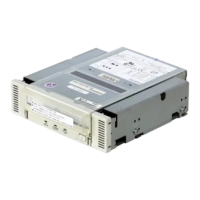

 To Next Page
 General