
 Need help?
Do you have a question about the Nihon Bisoh BISOMAC210 and is the answer not in the manual?
Provides general guidance for safe operation, understanding the manual, and operator responsibilities.
Outlines requirements for handling, maintenance, inspections, and repairs by trained and certified personnel.
Explains the meaning of safety symbols like WARNING, CAUTION, and NOTE for risk assessment.
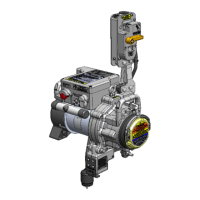
Describes the main hoist unit, its parts, and their respective functions with visual aids.
Explains the function and components of the BISOLOCK fall arrest device for safety.
Details the function and components of the BISOLOAD overload detection device for load management.
Details technical specs for BISOMAC210: load, voltage, current, speed, dimensions, weight, control system.
Lists specifications for BISOLOCK: model, rated load, activation speed, dimensions, and self-weight.
Provides specifications for BISOLOAD: model, rated load, dimensions, self-weight, and activation load.
Details specifications for NIHON BISOH designated wire ropes, including diameter, construction, and load.
Guides on installing BISOLOCK and BISOLOAD safety devices onto the BISOMAC unit.
Details connecting the BISOMAC to the power supply, including connector types and precautions.
Explains the procedure for inserting and securing the suspension wire rope into the BISOMAC.
Covers lifting and attaching the hoist to the platform using specified bolts and torque.
Instructs operators to perform daily inspections as per Section 7 before operation.
Provides guidance on safely transporting the hoist, detaching components, and weight information.
Covers basic operation like lifting, lowering, and the use of the emergency stop button.
Details daily inspection of rigging materials like bolts, clamps, and wire ropes for damage or wear.
Outlines procedures to inspect wire rope for waviness, broken wires, diameter, rust, and exposure to heat.
Covers pre-operation inspections of the hoist, including bolts, cables, connectors, and power connections.
Describes tests for platform lifting and the functionality of the emergency stop switch.
Details testing the emergency controlled descent lever for safe lowering during power loss.
Explains how to test the BISOLOCK's ability to hold wire rope and stop platform descent.
Lists possible causes and solutions when the hoist fails to start or operate.
Addresses issues where the hoist descends but cannot ascend or exhibits pumping problems.
Troubleshoots scenarios where the motor is active but the wire rope is not winding.
Details problems where wire rope is reeved, but the platform remains stationary.
Explains causes and solutions for the hoist lifting at an unusually slow rate.
Discusses troubleshooting for abnormal sounds from the hoist or its safety components.
Provides solutions for the BISOMAC unit becoming excessively hot during operation.
Troubleshoots issues where the hoist moves upwards but cannot be lowered using the DOWN button.
 General
| Brand | Nihon Bisoh |
|---|---|
| Model | BISOMAC210 |
| Category | Chain Hoists |
| Language | English |

 To Next Page