6564
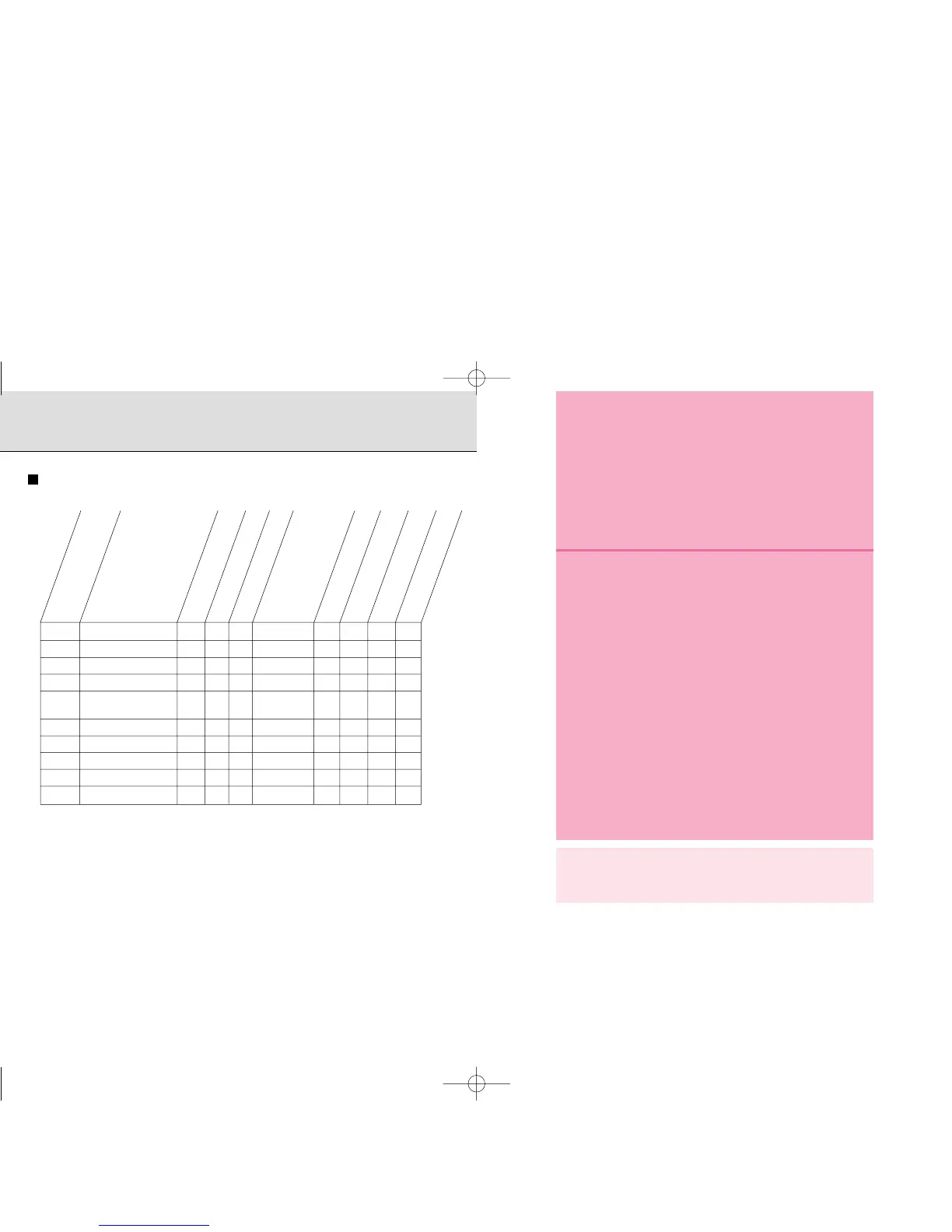
The following chart lists available modes when an AF Nikkor is attached
(except IX-Nikkor, AF-S or AF-I lens).
AF mode
Exposure mode
AF-Assist Illuminator
Flexible Program
Exposure compensation
Metering system*
1
Normal sync
Red-Eye Reduction
Red-Eye Reduction with
Slow Sync
Slow Sync
z Auto-Servo AF r — — Matrix wr——
P Auto-Servo AF rrr Matrix rrrr
S Auto-Servo AF r — r Matrix rr——
A Auto-Servo AF r — r Matrix rrrr
M*
2
Auto-Servo AF r — r
Centre-
rr——
Weighted
x Auto-Servo AF r — — Matrix wr——
c Auto-Servo AF — — — Matrix wr——
v Auto-Servo AF r — — Matrix wr——
b Continuous Servo AF — — — Matrix wr——
n Auto-Servo AF r — — Matrix — — rw
r : Can be set.
w : Automatically selected when the exposure mode is set. (Can be changed to
another flash sync mode.)
— : Cannot be set.
*1 When Auto Exposure Lock (page 49) is used, Centre-Weighted Metering is selected in any
exposure mode.
*2 Only Manual exposure mode can be used when a non-CPU lens is attached.
Camera’s exposure meter cannot be used and aperture cannot be set with camera’s aperture
button and Command Dial. (Select the aperture using the lens’ aperture ring.) See “Lens
Compatibility” on page 32.
• With built-in Speedlight, each flash sync mode is controlled with the Matrix
Balanced Fill-Flash (page 58); however, flash sync mode changes to Centre-
Weighted Fill-Flash with Manual exposure mode.
Available Mode Combinations
MISCELLANEOUS
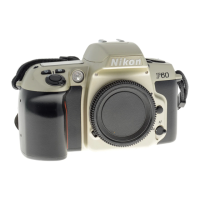
The Nikon F60/F60D is a high-
performance, precision instrument,
designed to give you superior pictures.
You’ll want to take good care of your
camera to ensure the best
performance. Take time to review this
section thoroughly, as doing so will
add to your picture taking pleasure.
We’ve also included information about
optional accessories and a detailed
section with technical specifications.
Please read them carefully.
F60 (E) 02.12.27 5:34 PM Page 64


 To Next Page