EasyManua.ls Logo

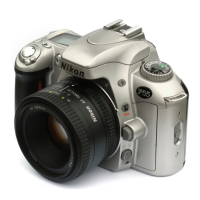
Nikon F80S - User Manual

Nikon F80S
59 pages
Print Icon
To Next Page IconTo Next Page
Loading...
En
INSTRUCTION MANUAL
(En)
F80 (E)-Thailand 02.12.27 5:20 PM Page 1

Table of Contents

Questions and Answers

  • B
    Brandon JordanAug 16, 2025
    What to do if 'Err' blinks on my Nikon Film Camera?
    • M
      Mike BryantAug 16, 2025
      If 'Err' blinks on your Nikon Film Camera, it indicates a malfunction. Try releasing the shutter again. If the warning persists or appears frequently, contact an authorized Nikon dealer or service center.
  • S
    Summer SanchezAug 19, 2025
    What to do if shutter speed indication blinks on Nikon F80S?
    • L
      lsnyderAug 19, 2025
      The shutter speed indication blinks because a shutter speed faster than the sync speed is selected in S or M mode. To take a flash picture, release the shutter as it is. The shutter speed will automatically shift to 1/125 sec.
  • J
    Jasmine DavisAug 22, 2025
    What to do if electronic analog exposure display blinks on Nikon Film Camera?
    • C
      Charlotte GreerAug 22, 2025
      The electronic analog exposure display blinks because the subject's brightness is beyond the camera’s exposure range. If the subject is too bright, use an ND filter. If the subject is too dark, use flash. Note that the display remains blinking when a Speedlight is used.
  • S
    Sandra MyersAug 25, 2025
    Why does HI appear on my Nikon Film Camera?
    • J
      Jonathon BrownAug 26, 2025
      The 'HI' indication appears as an overexposure warning, meaning the subject is too bright. To resolve this: in P mode, use an ND filter; in S mode, select a faster shutter speed; in A mode, select a smaller aperture (larger f-number). If the warning persists in S or A mode, use an ND filter.
  • R
    Ronnie GilmoreAug 27, 2025
    Why does Lo appear on my Nikon Film Camera?
    • P
      Pamela MillerAug 28, 2025
      The 'Lo' indication appears as an underexposure warning, meaning the subject is too dark. To fix this: in P mode, use flash; in S mode, select a slower shutter speed; in A mode, select a larger aperture (smaller f-number). If the warning persists in S or A mode, use flash as well.
  • P
    patricklucasAug 31, 2025
    What to do if o–– and frame counter blink on Nikon F80S?
    • K
      Kaitlin SmithAug 31, 2025
      The 'o––' and frame counter blink because the camera back was opened during film rewind. To resolve this, immediately close the camera back and restart rewinding the film by pressing the two buttons.
  • J
    James LittleSep 3, 2025
    What to do if 'End' blinks on my Nikon F80S?
    • M
      Michael MendezSep 3, 2025
      The 'End' indication blinks because the end of the film roll has been reached (when ·1 is selected). To rewind the film, press the two film rewind buttons.
  • A
    Amber FieldsSep 6, 2025
    What does it mean when / blinks on my Nikon Film Camera?
    • M
      Michelle TaylorSep 6, 2025
      The '/' blinking indicates that autofocus is not possible. You should focus manually.
  • H
    hbrownSep 9, 2025
    Why does 'buLb' blink on my Nikon F80S Film Camera?
    • A
      adamgambleSep 9, 2025
      The 'buLb' indication blinks because the shutter speed is set to 'buLb' in S mode. To resolve this, cancel the 'buLb' setting by selecting a shutter speed of 30 seconds or faster, or switch to M mode to perform a Long Time Exposure.
  • B
    Brandon BrewerSep 12, 2025
    Why fiblinks for 3 sec. after flash on Nikon F80S?
    • A
      Amanda WilliamsSep 12, 2025
      The fiblinks for 3 seconds after flash indicates that the flash fired at full output, potentially causing underexposure. To correct this, shoot again after verifying the focus distance, aperture, or flash shooting distance range.

Summary

Nomenclature

Main Command Dials

Identifies the Main-Command Dial and Sub-Command Dial for camera control.

Shutter Release Button

Identifies the primary button for taking photographs.

Exposure Mode Selector

Identifies the dial for selecting exposure modes.

Focus Mode Selector

Identifies the control for selecting autofocus modes.

LCD Panel and Viewfinder Display

LCD Panel Information

Details the information displayed on the camera's LCD panel.

Viewfinder Display Elements

Explains the various indicators and symbols visible in the viewfinder.

Command Dials

Using Dials for Settings

Explains how to use Main and Sub-Command Dials for various camera functions.

Exposure Control with Dials

Details dial usage for exposure modes like Program, Shutter-Priority, and Aperture-Priority.

Introduction

Camera Features Overview

Highlights key features of the F80/F80D/F80S camera.

Using Nikon Brand Accessories

Emphasizes using Nikon brand accessories for optimal performance.

About This Manual

Basic Operation Guide

Outlines the steps for basic camera operation.

Detailed Operation and Notes

Refers to detailed explanations of camera functions and battery notes.

BASIC OPERATION

Shooting Modes Overview

Lists the shooting modes and functions covered in the basic operation section.

Install Batteries and Check Battery Power

Battery Installation Procedure

Provides instructions for installing batteries and checking power.

Battery Power Indication

Explains how battery status is indicated on the LCD and viewfinder.

Mount Lens

Attaching and Detaching Lenses

Provides instructions on mounting and removing lenses from the camera body.

Lens Compatibility Check

Explains how to identify and check different types of Nikkor lenses.

Load Film

Film Loading Procedure

Details the steps for loading DX-coded film into the camera.

Film Advance Mode Selection

Explains how to set the film advance mode selector.

Set Focus Mode, AF Area Mode and Focus Area

Focus Mode and AF Area Selection

Explains how to set focus mode and select AF Area modes.

Focus Area Selector Lock

Explains how to lock the selected focus area.

Set Metering System and Exposure Mode

Metering System Selection

Explains how to select metering systems (Matrix).

Exposure Mode Selection

Details selecting the exposure mode (Auto-Multi Progam).

Hold Camera and Focus

Proper Camera Grip

Provides guidance on how to hold the camera correctly for stable shooting.

Composing and Focusing

Explains how to compose shots and use autofocus by pressing the shutter release.

Confirm Indications in Viewfinder and Release Shutter

Viewfinder Indications Check

Details how to confirm viewfinder information before releasing the shutter.

Shutter Release and Film Advance

Explains the process of releasing the shutter and automatic film advance.

Using Built-In Speedlight

Speedlight Charging and Operation

Explains how to release, charge, and use the built-in Speedlight.

Situations for Speedlight Use

Lists scenarios where using the built-in Speedlight is beneficial.

About Metering System and Exposure

Metering System Explained

Describes the function and types of metering systems available.

Exposure Control Principles

Explains how shutter speed and aperture control light exposure.

Lens Compatibility

CPU Nikkor Lens Compatibility

Lists compatible CPU Nikkor lenses and their functions.

Non-CPU Lens Usage

Explains how to use non-CPU lenses and their limitations.

Film

Setting and Confirming Film Speed

Details how to set and confirm the film speed, including DX coding.

Mid-roll Film Rewind

Explains how to rewind film before the roll is finished.

Autofocus

Focus Mode Selector Operation

Explains how to set the focus mode (Single Servo AF, Continuous Servo AF).

AF Area Mode Selection

Details how to select AF Area modes like Single Area AF and Dynamic AF.

AF Area Mode-continued

Dynamic AF Mode with Closest Subject Priority

Explains the Dynamic AF Mode with Closest Subject Priority feature.

Autofocus Mode Combinations

Shows how focus mode and AF Area mode combine for different operations.

Focus Area

Selecting Focus Area

Details how to select the focus area using the selector and lock lever.

AF-Assist Illuminator Function

Explains the automatic AF-Assist Illuminator for low light.

Focus Lock

Focus Lock Operation

Explains how to lock focus on a subject outside focus areas or in tricky situations.

Situations Where Autofocus May Not Work As Expected

Manual Focus Operation

Explains how to use manual focus when autofocus fails.

Manual Focus using Electronic Rangefinder

Describes using the electronic rangefinder for manual focusing.

Exposure Metering System

Metering System Selection

Explains how to select metering systems (Matrix, Centre-Weighted, Spot).

Metering System Characteristics

Details the characteristics of each metering system.

Shooting in Each Exposure Mode

P: Auto-Multi Progam Mode

Explains how to use the Auto-Multi Progam exposure mode.

Flexible Program Function

Details how to use Flexible Program within Auto-Multi Progam.

Program Chart Explanation

Shows the exposure control chart for Auto-Multi Progam mode.

Shooting in Each Exposure Mode-continued

S: Shutter-Priority Auto Mode

Explains how to use the Shutter-Priority Auto exposure mode.

Shooting in Each Exposure Mode-continued

A: Aperture-Priority Auto Mode

Explains how to use the Aperture-Priority Auto exposure mode.

Shooting in Each Exposure Mode-continued

M: Manual Exposure Mode

Explains how to use the Manual exposure mode for full control.

Electronic Analog Exposure Display

Details the viewfinder's electronic analog display for exposure confirmation.

Auto Exposure Lock

Selecting Metering for AE Lock

Explains how to select metering for Auto Exposure Lock.

Performing AE Lock

Details the steps to position focus, press shutter, and press AE-L button.

Exposure Compensation

Setting Exposure Compensation Value

Explains how to set exposure compensation using the Main-Command Dial.

Auto Exposure Bracketing Function

Introduces the Auto Exposure Bracketing feature for shooting multiple exposures.

Auto Exposure Bracketing-continued

Bracketing Settings and Order

Details how to set bracketing shots and EV value, and their order.

Multiple Exposure Function

Explains how to perform multiple exposures on a single frame.

Multiple Exposure-continued

Multiple Exposure Shooting Procedure

Describes the steps for composing, focusing, and shooting multiple exposures.

Long Time Exposure

Setting Up for Long Exposure

Explains how to set the camera for long exposures (Bulb mode).

Dioptre Adjustment;LCD Illuminator

Dioptre Adjustment for Viewfinder

Explains how to adjust the viewfinder dioptre for vision correction.

LCD Illuminator Use

Details how to use the LCD illuminator for viewing in the dark.

Depth-of-Field Preview;Film Plane Indicator

Depth-of-Field Preview Function

Explains how to use the depth-of-field preview button.

Film Plane Indicator Explained

Identifies the film plane indicator and its purpose.

Self-Timer Operation

Setting and Activating Self-Timer

Details how to set the film advance mode selector for self-timer operation.

CUSTOM SETTING

Overview of Custom Setting Features

Introduces the Custom Setting feature for personalizing camera functions.

Menu;Features of Custom Setting

Creating Custom Settings

Explains how to select menu numbers and options to create custom settings.

Cancelling Custom Settings

Describes how to reset custom settings to their initial factory defaults.

Custom Setting Menu Options List

Lists available custom setting options like film rewind and bracketing order.

Menu;Features of Custom Setting-continued

Focus Area and AE Lock Settings

Details custom settings for focus area selection and AE Lock behavior.

Dynamic AF and AE-L;AF-L Button Settings

Explains custom settings for Dynamic AF and the AE-L/AF-L button.

Menu;Features of Custom Setting-continued

Command Dial and Film Rewind Customization

Details custom settings for Command Dial functions and film rewind modes.

Self-Timer and Meter Switch-off Settings

Explains custom settings for self-timer duration and auto meter switch-off delay.

ISO Film Speed for Data Imprint (F80 S)

Details custom setting for ISO film speed when imprinting data on F80S.

Two-Button Reset

Performing Two-Button Reset

Explains how to reset specified settings to their original initial settings.

FLASH PHOTOGRAPHY

Benefits of Nikon Flash Technology

Highlights the advantages of using the camera's flash system.

Flash Photography Using Built-In Speedlight

Built-in Speedlight Features and Modes

Describes the built-in Speedlight's coverage, guide number, and TTL flash modes.

3 D Multi-Sensor Balanced Fill-Flash Explained

Details the 3D Multi-Sensor Balanced Fill-Flash technology.

Ready-Light and Accessory Shoe

Explains the ready-light indicator and the accessory shoe for external flash.

Flash Sync Mode Features

Front-Curtain Sync and Slow Sync Modes

Explains the Front-Curtain Sync and Slow Sync flash modes.

Rear-Curtain Sync and Red-Eye Reduction Modes

Details the Rear-Curtain Sync and Red-Eye Reduction flash modes.

Red-Eye Reduction with Slow Sync Mode

Explains the combined Red-Eye Reduction with Slow Sync mode.

Using the Built-In Speedlight

Setting Metering and Sync Mode

Details setting metering and flash sync mode before using the built-in Speedlight.

Exposure Mode and Shutter Speed Confirmation

Explains confirming exposure mode and shutter speed when using flash.

Flash Shooting Distance Range

Provides a table showing flash shooting distances based on film speed and aperture.

Usable Lenses with Built-In Speedlight

Lens Compatibility Table for Built-in Speedlight

Lists lenses and their compatibility with the built-in Speedlight, including limitations.

Flash Exposure Compensation

Setting Flash Exposure Compensation

Explains how to adjust flash output level for desired exposure.

Optional Optional Speedlights

Optional Speedlight Compatibility Table

Shows compatibility of various optional Speedlights with camera modes.

Notes on Using Optional Speedlights

Provides important notes and recommendations for using external Speedlights.

About Depth of Field and Focus Tracking

Understanding Depth of Field

Explains the concept of depth of field and how aperture affects it.

DATA BACK

Imprinting Date;Time on Photos

Explains how to imprint date and time data onto photographs.

Adjusting Date and Time and Imprinting Data

Setting the Date and Time

Provides step-by-step instructions for setting the camera's date and time.

Selecting Date Display Format

Explains how to choose the format for date and time display.

Adjusting Date and Time and Imprinting Data-continued

Imprinting Date;Time on Pictures

Details the process of taking a picture to imprint the set date/time.

Imprinting Shooting Data (F80 S only)

Selecting Shooting Data Imprint

Explains how to select shooting data imprint using the dial.

MISCELLANEOUS

Camera Care and Maintenance

Introduces the importance of camera care for optimal performance.

Optional Accessories

Battery Pack MB-16 and Eyepiece Correction Lenses

Describes optional battery packs and eyepiece correction lenses.

Lenses and Filters

Lists available lenses and types of filters compatible with the camera.

Cable Release and Speedlight Accessories

Details optional cable releases, Speedlights, and controllers.

Soft Cases and Straps

Mentions available soft cases and camera straps.

Camera Care

Cleaning Camera Body and Lens

Provides instructions for cleaning the camera body, mirror, and lens.

Handling Precautions (Vibration, Electric Fields, Temperature)

Covers precautions against shock, electric fields, and temperature changes.

Storage and Battery Removal

Advises on proper storage and battery removal for long-term inactivity.

Notes on Batteries

Battery Handling and Warnings

Lists warnings and guidelines for handling camera batteries safely.

Troubleshooting

Battery Error Indicators (FEE, Err)

Explains common battery-related error indications and their remedies.

Troubleshooting-continued

Film Error Indicators (End, Err)

Details error indications related to film loading and end of roll.

Exposure Error Indicators (H, Lo, bulb)

Explains error indications related to exposure and flash.

Specifications

Camera Specifications Overview

Lists general specifications like exposure modes, lens mount, and autofocus system.

Viewfinder and Metering Specifications

Details viewfinder characteristics and metering system specifications.

Exposure and Film Speed Specifications

Covers exposure compensation, bracketing, and film speed settings.

Specifications-continued

Shutter, Sync, and Flash Specifications

Lists specifications for shutter, sync contact, built-in Speedlight, and flash control.

Film Advance, Rewind, and Exposure Data

Details specifications for film advance, rewind, multiple exposure, and data imprinting.

Power Source and Battery Confirmation

Covers power source options and battery status confirmation.

Specifications-continued

Film Roll Usability and Long Exposure Times

Provides data on usable film rolls and long exposure duration.

Custom Setting Menu Options

Lists the available options within the Custom Setting menu.

Custom Setting Menu

Custom Setting Menu Options (1-11)

Lists custom setting functions from 1 to 11, including film rewind and focus area.

Custom Setting Menu Options (12-19)

Lists custom setting functions from 12 to 19, covering dials, timers, and data imprint.

Nikon F80S Specifications

General IconGeneral
BrandNikon
ModelF80S
CategoryFilm Camera
LanguageEnglish

Related product manuals