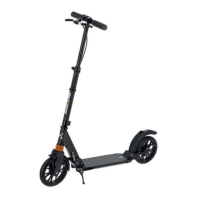
The NILS Extreme WH200 is a recreational scooter designed for users who enjoy outdoor activities and require a robust and reliable mode of transport. This user manual provides comprehensive instructions for assembly, usage, maintenance, and safety, ensuring a safe and enjoyable experience for all riders.
Function Description:
The WH200 scooter is primarily intended for recreational riding. It is not designed for professional sports, acrobatic maneuvers, or extreme stunts like running and jumping on the scooter, which are explicitly stated as dangerous. The scooter features inflatable wheels, which contribute to a smoother ride over various terrains compared to solid wheels. It is equipped with a hand-operated brake system for effective speed control and stopping. The handlebar height is adjustable, allowing users to customize the scooter to their preferred riding posture and comfort. The overall design emphasizes stability and ease of use for general recreational purposes.
Important Technical Specifications:
- Dimensions: The scooter measures 152 cm in length, 65 cm in width, and 105 cm in height. These dimensions indicate a relatively large and stable scooter, suitable for adults and older children.
- Maximum User Weight: The WH200 can support a maximum user weight of 120 kg, making it suitable for a wide range of users.
- Weight: The scooter itself weighs 9 kg, which is a moderate weight for a scooter of its size with inflatable wheels, balancing portability with robustness.
- Handlebar Adjustment Range: The handlebar height can be adjusted between 81 cm and 105 cm. This feature allows riders of different heights to find a comfortable and ergonomic riding position.
- Brake System: The scooter is equipped with a hand-operated brake system. The manual details how to adjust the brake blocks and cable tension to ensure optimal braking performance, with a recommended distance of 0.3 – 0.5 cm between the rim and the brake block.
Usage Features:
- Assembly: The scooter requires assembly by an adult. The process involves attaching the front wheel, mudguards, and steering column. Detailed instructions are provided for each step, including tightening axle nuts, guiding brake cables, and securing the steering column. It is crucial to ensure all screws are firmly tightened for safety.
- Safety Precautions: The manual strongly emphasizes safety. Riders are advised to possess appropriate skills for scooter riding and to familiarize themselves with both riding and braking techniques before use. Children should always ride under adult supervision. The use of safety pads, protective helmets, and reflective elements is highly recommended to minimize injury risk.
- Riding Surface: Riders should choose a smooth, clean, and dry surface for riding. Steep, slippery, dusty, stony, or wet terrains should be avoided to prevent accidents and ensure optimal performance of the inflatable wheels.
- Speed Control: Riders should always adapt their speed to their skill level and the prevailing conditions. The hand-operated brakes are the primary method for reducing speed and stopping.
- Handlebar Adjustment: The tilt angle of the handlebars can be adjusted by loosening four screws on the handlebar head. It's important to note that this adjustment will also change the height of the handlebars, and all screws must be retightened securely after adjustment to prevent the handlebars from folding down during use.
- Braking Techniques: To stop, riders should maximally reduce speed using the handbrakes and then carefully dismount or step off the scooter.
Maintenance Features:
- Regular Maintenance: Regular maintenance is crucial for ensuring the safety and extending the lifespan of the scooter.
- Cleaning and Drying: After each ride, the scooter should be thoroughly cleaned and dried. This helps prevent corrosion and keeps the components in good condition.
- Debris Removal: Small stones and other foreign elements that may get lodged between the scooter's components should be removed to prevent damage and ensure smooth operation.
- Component Inspection: Parts such as wheels, bearings, and axles are subject to wear and tear during use. These items are not covered by warranty, and their condition should be regularly checked. Worn-out parts should be replaced with new ones as necessary to maintain safety and performance.
- Brake System Check: The brake system should be checked and adjusted regularly. All screws related to the brake system must be tight, and the brakes should function correctly. Faulty brakes pose a significant safety hazard.
- Storage: The scooter should be stored in a dry place to protect it from environmental damage.
The NILS Extreme WH200 is a well-designed recreational scooter that prioritizes user safety and durability through clear instructions for assembly, usage, and maintenance. Its adjustable features and robust construction make it a versatile option for various riders seeking a reliable and enjoyable outdoor experience.

 Need help?
 General

 To Next Page