EM-84
< REMOVAL AND INSTALLATION >
[VQ40DE]
CAMSHAFT
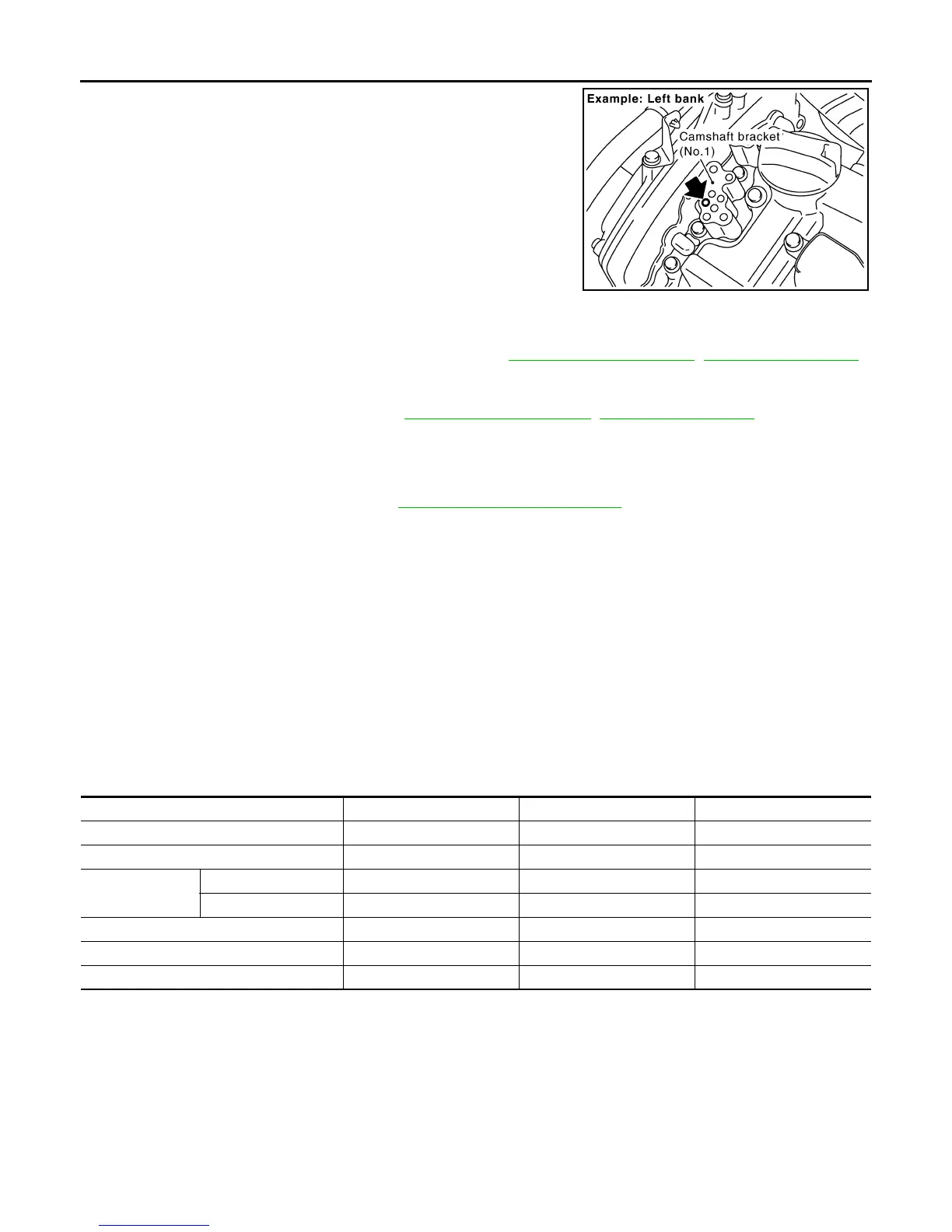
4. Crank the engine, and then make sure that engine oil comes out
from camshaft bracket (No. 1) oil hole. End cranking after check-
ing.
WARNING:
• Be careful not to touch rotating parts (drive belts, idler
pulley, and crankshaft pulley, etc.).
CAUTION:
• Engine oil may squirt from intake valve timing control
solenoid valve installation hole during cranking. Use a
shop cloth to prevent the engine components and the
vehicle.
• Do not allow engine oil to get on rubber components such
as drive belt or engine mount insulators. Immediately wipe off any splashed engine oil.
• Clean oil groove between oil strainer and intake valve timing control solenoid valve if engine oil does not
come out from camshaft bracket (No. 1) oil hole. Refer to LU-6, "Lubrication Circuit"
, LU-6, "System Chart".
5. Remove components between intake valve timing control solenoid valve and camshaft sprocket (INT),
and then check each oil groove for clogging.
• Clean oil groove if necessary. Refer to LU-6, "Lubrication Circuit"
, LU-6, "System Chart".
6. After inspection, installation of the remaining components is in the reverse order of removal.
INSPECTION AFTER INSTALLATION
• Before starting engine, check oil/fluid levels including engine coolant and engine oil. If less than required
quantity, fill to the specified level. Refer to MA-13, "Fluids and Lubricants"
.
• Use procedure below to check for fuel leakage.
• Turn ignition switch ON (with engine stopped). With fuel pressure applied to fuel piping, check for fuel leak-
age at connection points.
• Start engine. With engine speed increased, check again for fuel leakage at connection points.
• Run engine to check for unusual noise and vibration.
NOTE:
If hydraulic pressure inside timing chain tensioner drops after removal and installation, slack in the guide
may generate a pounding noise during and just after engine start. However, this is normal. Noise will stop
after hydraulic pressure rises.
• Warm up engine thoroughly to make sure there is no leakage of fuel, exhaust gas, or any oils/fluids including
engine oil and engine coolant.
• Bleed air from passages in lines and hoses, such as in cooling system.
• After cooling down engine, again check oil/fluid levels including engine oil and engine coolant. Refill to spec-
ified level, if necessary.
• Summary of the inspection items:
*Power steering fluid, brake fluid, etc.
PBIC2869E
Item Before starting engine Engine running After engine stopped
Engine coolant Level Leakage Level
Engine oil Level Leakage Level
Transmission/
transaxle fluid
A/T and CVT Models Leakage Level/Leakage Leakage
M/T Models Level/Leakage Leakage Level/Leakage
Other oils and fluids* Level Leakage Level
Fuel Leakage Leakage Leakage
Exhaust gas — Leakage —
Revision: January 2013 2013 Xterra



 To Next Page