•
Special aluminium valves are fitted to mount
the TPMS sensors on the wheels. The TPMS
sensor is fixed at the wheels by a nut. The nut
needs to be correctly fitted at a torque setting
of 7.5 ± 0.5 Nm. If the TPMS sensor is tight-
ened exceeding the limit, there is a possibility
the sensor grommet will be damaged. If the
sensor is tightened under the limit, there is a
possibility to cause an air leak.
•
Use Genuine NISSAN or equivalent valve caps
that comply with the factory-fitted valve cap
specifications.
•
Do not use metal valve caps.
•
Fit the valve caps properly. Without the valve
caps the valve and tyre pressure monitor sen-
sors could be damaged.
•
Do not damage the valves and sensors when
storing the wheels or fitting different tyres.
•
Replace the sensor grommet and washer ev-
ery six years (for example during a tyre
change). Once they have been removed, the
sensor grommet and washer cannot be re-
used and must be replaced. The TPMS sen-
sors can be used again.
OPERATION
Meter information
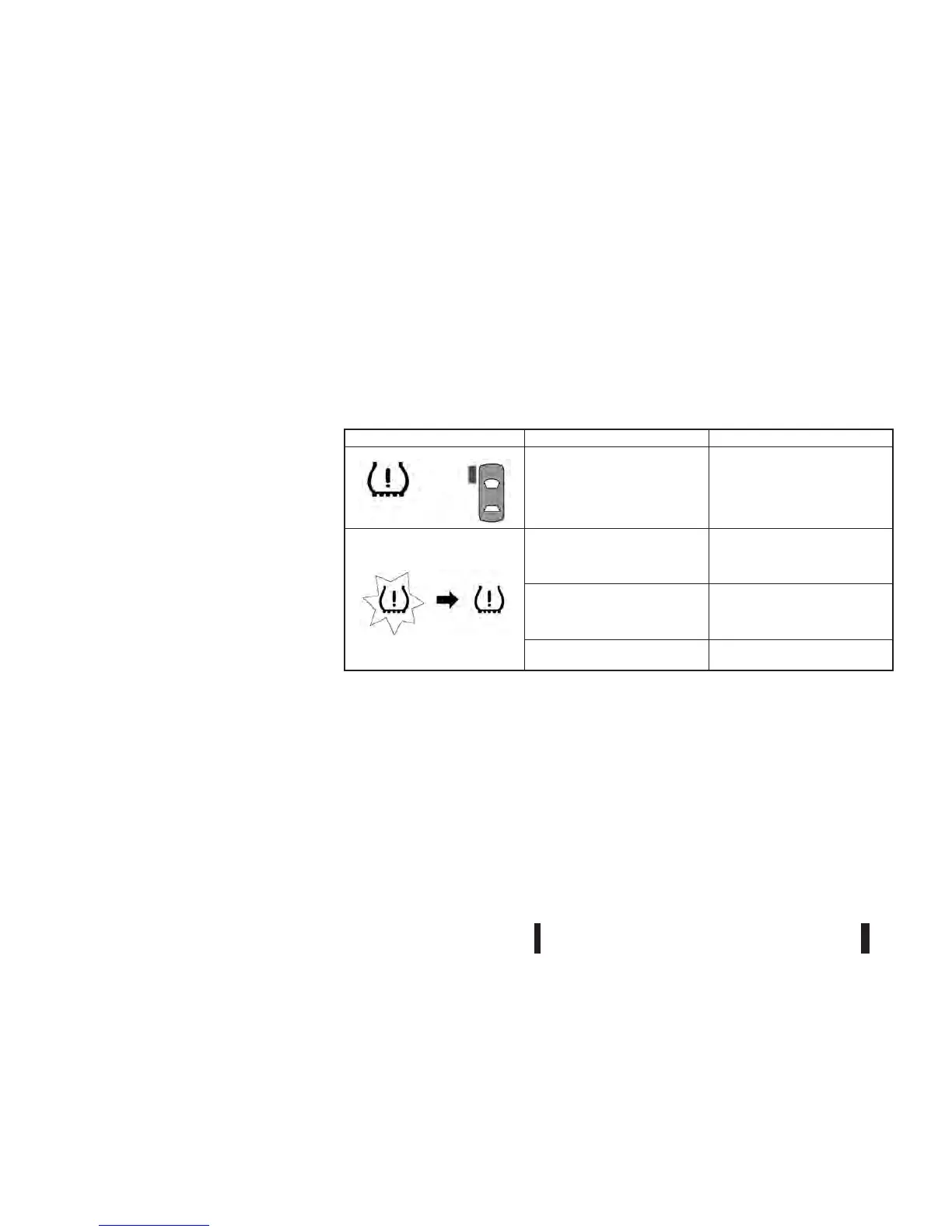
TPMS indicator light(s) Possible cause Recommended action
m
Low tyre pressure
1) Inflate tyre to the correct pressure
2) Reset TPMS
See “TPMS reset” in the “5. Start-
ing and driving” section
m
Genuine NISSAN TPMS sensor is not
detected at one or more wheels
Check if the TPMS sensors are
present.
If no sensor is present add a genuine
NISSAN TPMS sensor
TPMS radio communication interfer-
ence between TPMS wheel sensor
and TPMS receiver due to external
sources.
Drive away from the area of interfer-
ence
TPMS parts malfunction
If the problem persists contact a
NISSAN dealer or qualified workshop
5-6 Starting and driving



 To Next Page