EasyManua.ls Logo

Nitchi MH-5 - User Manual

Nitchi MH-5
25 pages
Print Icon
To Next Page IconTo Next Page
Loading...
NITCHI-MATIC
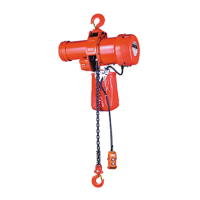
ELECTRIC CHAIN HOIST
MODELS
MH5 MHT5 MHC5
TROLLEYS MECHANICAL JOINING TYPE
MODELS: MET5, MGT5 AND MPT5
Operating Instructions Booklet
The hoist operator must receive this operating instructions booklet!-
Thoroughly read this operating instructions booklet before operating the
trolley and electric chain hoist.
Carefully store this operating instructions booklet after reading it.
This operating instructions booklet contains important information that will be
necessary when inspecting and maintaining the trolley and electric chain hoist.
-
-
The hoist operator must read this operating instructions booklet!
-
The above information will be required when purchasing spare parts and when making inquiries.
Copy them from the name plate on the hoist and save them for future reference.
Customers notes:
N.B.
Model
Serial No.
Date Purchased

Other manuals for Nitchi MH-5

Question and Answer IconNeed help?

Do you have a question about the Nitchi MH-5 and is the answer not in the manual?

Summary

SAFETY PRECAUTIONS

OVERALL HANDLING

SAFETY PROCEDURES PRIOR TO USE

Details essential checks and preparations before operating the hoist to ensure safety.

SAFETY PROCEDURES DURING OPERATION

CONDITIONS OF USE

INSTALLATION

CIRCUIT BREAKERS

POWER SOURCE CABLE

SETTING THE TROLLEY ONTO THE BEAM

CONNECTING THE HOIST TO THE TROLLEY

CONNECTING THE POWER SOURCE CABLE

INSPECTION AFTER INSTALLATION

INSPECTION & MAINTENANCE

INSPECTION BEFORE USE

Specifies essential checks to perform on the hoist before each period of operation.

INSPECTION POINTS

HOOK & CHAIN INSPECTION

ADJUSTING THE BRAKE

ADJUSTING THE ELECTROMAGNETIC BRAKE

Provides step-by-step instructions for adjusting the electromagnetic brake system of the hoist.

TROUBLE-SHOOTING

Overview

The Nitchi-Matic Electric Chain Hoist is a robust lifting device designed for vertical lifting, lowering, and horizontal transportation of loads. It is available in several models, including MH-5, MHT-5, and MHC-5, with capacities ranging from 0.5 to 5 tons. The hoists can be paired with mechanical joining type trolleys (M-ET-5, M-GT-5, M-PT-5) or motorized, geared, or plain trolleys.

Function Description:

The Nitchi-Matic Electric Chain Hoist operates via a pendant push-button switch, allowing for precise control over load movement. It is engineered for industrial applications where reliable and safe material handling is crucial. The hoist's design incorporates features to prevent dangerous situations such as load drops or electrical shocks, emphasizing safety through strict operating procedures and warning provisions.

Important Technical Specifications:

Models:

  • MH-5 (Hook Suspended Type): Available in 0.5 to 5-ton capacities.
    • Hoisting Speed (50Hz/60Hz): Ranges from 2.6/3.1 m/min (5-ton) to 8.6/10.0 m/min (0.5-ton).
    • Output (50Hz/60Hz): Ranges from 0.83/1.0 kW (0.5-ton) to 2.5/3.0 kW (2-5-ton).
    • Load Chain Diameter: 7.1 mm (0.5-1 ton), 11.2 mm (2-5 ton).
    • Falls: 1 (0.5-3 ton), 2 (5-ton).
    • Minimum Headroom: 550 mm (0.5-ton) to 925 mm (5-ton).
    • Protection: IP43 (not for use in rain or dusty environments).
    • Duty Rating: 30 minutes.
    • Grade: M5 (0.5, 2, 5-ton), M4 (1, 3-ton).
  • MHT-5 (Hook Suspended Type 2-Speed): Available in 0.5 to 5-ton capacities.
    • Hoisting Speed (Fast 50Hz/60Hz): Ranges from 1.9/2.2 m/min (5-ton) to 8.0/9.4 m/min (0.5-ton).
    • Hoisting Speed (Slow 50Hz/60Hz): Ranges from 0.5/0.6 m/min (5-ton) to 1.9/2.2 m/min (0.5-ton).
    • Output (Fast 50Hz/60Hz): Ranges from 0.83/1.0 kW (0.5-1 ton) to 1.83/2.2 kW (2-5 ton).
    • Output (Slow 50Hz/60Hz): Ranges from 0.21/0.25 kW (0.5-1 ton) to 0.46/0.55 kW (2-5 ton).
    • Load Chain Diameter: 7.1 mm (0.5-1 ton), 11.2 mm (2-5 ton).
    • Falls: 1 (0.5-3 ton), 2 (5-ton).
    • Minimum Headroom: 550 mm (0.5-ton) to 925 mm (5-ton).
    • Protection: IP43.
    • Duty Rating: 20/20 minutes (slow/fast).
    • Grade: M5 (0.5, 2, 5-ton), M4 (1, 2.6, 3-ton).
  • MHC-5 (Hook Suspended Type Single-Phase): Available in 0.5 to 1-ton capacities.
    • Hoisting Speed (50Hz/60Hz): 5.4/6.4 m/min (0.5-ton), 2.7/3.2 m/min (1-ton).
    • Output (kW): 0.62 kW.
    • Load Chain Diameter: 7.1 mm.
    • Falls: 1.
    • Minimum Headroom: 550 mm (0.5-ton), 560 mm (1-ton).
    • Protection: IP43.
    • Duty Rating: 15 minutes.
    • Grade: M5 (0.5-ton), M4 (1-ton).
  • EMT-MH-5 (Electric Chain Hoist with Motorized Trolley): Available in 0.5 to 5-ton capacities.
    • Traversing Speed (50Hz/60Hz): 20/24 m/min (0.5-3 ton), 10/24 m/min (5-ton).
    • Trolley Motor Output: 0.2 kW (0.5-1 ton), 0.4 kW (2-3 ton), 0.4/0.75 kW (5-ton).
    • Breadth of Beams (b): 75-175 mm.
    • Minimum Radius for Curve: 1.0 m (0.5-2 ton), 1.5 m (3-5 ton).
    • Protection: IP42 (trolley).
    • Duty Rating: 30 minutes (hoist), 20/20 minutes (trolley).
  • MHG-5 / MHP-5 (Electric Chain Hoist with Geared/Plain Trolley): Available in 0.5 to 5-ton capacities.
    • Breadth of Beams (b): 75-175 mm.
    • Minimum Radius for Curve: 1.0 m (0.5-1 ton), 1.2 m (2-ton), 1.5 m (3-5 ton).
    • Protection: IP42 (trolley).
    • Duty Rating: 30 minutes (hoist).

General Operating Conditions:

  • Temperature: -15°C to +40°C.
  • Humidity: Under 90%.
  • Enclosure Status: Not for use in ambient conditions with steam or explosive gases.
  • Power Source: As specified on the nameplate.
  • Trolley Beam: To be used only on designated beams.

Usage Features:

Safety Precautions:

  • DANGER: Incorrect usage can lead to death or serious injuries.
  • CAUTION: Incorrect usage can lead to light injuries or property damage.
  • Prohibited Actions: Never lift more than the rated load, lift people, lift loads over people, modify the hoist, use deformed hooks, use a malfunctioning hoist, abuse limit switches, or remove/obscure warnings.
  • Mandatory Actions: Always read instructions, ensure the operator is familiar with procedures, check and lubricate the load chain, check the brake, check safety latches, use genuine Nitchi parts, set the load properly, confirm safety latch closure, take up slack carefully, use within duty rating, avoid excessive inching, and ensure the motor stops before reversing.
  • Electrical Safety: Hoist must be efficiently grounded, and an independent circuit breaker of appropriate capacity must be installed. Power source must be turned off before maintenance or phase changes.

Trolley Installation:

  • Adjusting Trolley Width: Collars are used to adjust the width between trolley wheels to match beam width. This involves removing hexagonal nuts, side-plates, moving collars, and re-tightening.
  • Setting onto Beam: Can be inserted from the end of the beam (after removing stoppers) or assembled on the beam by removing side-plates, setting geared wheels, and re-attaching.
  • Curved Beams: For curved trolley beams, geared wheels must be installed on the outside of the curve.
  • Connecting Hoist to Trolley: For geared/plain trolleys, the hoist is connected using a top hook pin and split pin, ensuring correct facing direction. Direct-coupled trolleys are pre-assembled.

Power Source Cable:

  • Cable Type: Use appropriate sized cabtyre cable (tough-rubber sheathed).
  • Cable Length: Use larger cables for longer lengths or when hoist and motorized trolley operate simultaneously.
  • Feeding Method: Install a messenger wire (Ø6 mm steel cable) parallel to the trolley beam with cable carriers. Alternative methods include cable carrier, trolley duct, or trolley wire methods.
  • Connections: Only connect at the hoist, terminal box, and power source switch. Do not use lengthened cables.

Maintenance Features:

Lubrication:

  • Gear Box: Add heavy-duty grease (disulfide molybdenum grease) during disassembly. Regular lubrication is not typically needed.
  • Oil Level Check: Check oil level during periodic inspection. Low oil can cause abnormal noise or malfunction of the mechanical load brake.
  • Load Chain: Apply machine oil or gear oil to the load chain, especially at contact points.

Circuit Breakers:

  • Installation: Always install a dedicated circuit breaker for the hoist, independent of other machinery.
  • Selection: Select an adequate capacity circuit breaker based on the hoist's rated load and motor power.

Inspection After Installation:

  • Load Chain: Ensure it's free from twists, lubricated, and without deformation or kinks.
  • Electrical Wiring: Connect power source at a terminal box with a main circuit breaker. Ensure proper grounding and correct phase connection.

Inspection & Maintenance (General):

  • Frequency: Daily, monthly, and annual inspections are essential.
  • Personnel: All inspections and repairs must be carried out by competent, authorized personnel.
  • Safety During Inspection: Turn off power, hang a "under inspection" sign, and inspect without a load.
  • Consultation: Consult authorized Nitchi dealers for repairs or replacement parts.

Inspection Before Use:

  • Load Chain: Confirm lubrication, absence of deformation/elongation/twists/kinks.
  • Hooks: Check for elongation or deformation within limits. Safety latches must be in good condition.
  • Pendant Switch: Must function properly.
  • Limit Switch & Brake: Confirm correct functioning without a load.
  • Trolley/Crane: Must be free of faults.

Monthly and Annual Inspections:

  • Monthly: Inspect the hoist and record all inspections/repairs.
  • Annual: Thoroughly check all sections of the hoist and keep detailed records.

Inspection Points (MH-5 Series Hoists):

  • Body: External view (no cracks/deformation), abnormal sound (normal), side-plates (no wearing/deformation), gears/bearings (no wearing/cracks, well lubricated), load sheave (no wearing/cracks), opening (same as new hook), holders (no cracks/deformation).
  • Hooks: Bottom swivel hook (rotates smoothly), rivets for holder (no wear/deformation).
  • Load Chain: Dimensions (refer to table), visual condition (no rust/cracks/wear/deformation), gear teeth (sufficient oil).
  • Lubricant: Load chain (well lubricated at contact points).
  • Limit Mechanism: Limit switch (motor stops when handle pushed up, test lifting/lowering without load), stop-holder (bolts/nuts tightened, no cracks).
  • Brake Mechanism: Brake (functions positively, slippage within 1% of lift distance in 1 minute).
  • Electrical Components: Power source/pendant cable (no breakage/damage/disconnection), push-button switch (contacts functioning positively), switch box (limit switch/contactor functioning correctly), motor (no humming/overheating), insulation resistance (exceeds 2MΩ by DC 500V Megger).
  • Others: Bearings (smoothly engaging with shafts), chain collecting bucket (free of rust/dirt/grease), bolts/nuts (good condition/secure), name-plate (clearly observable).

Inspection Points (Trolleys - Plain/Geared/Motorized):

  • Side Plates: No bending, cracks, or deformations.
  • Bolts, Nuts, Cotter-pins, Snap-rings: No looseness, breakage, or missing.
  • Trolley Wheels: No excessive wear on tread/gear sections, well lubricated, rotates smoothly.
  • Bearings: Properly engaged with shafts, rotates smoothly.
  • Capacity Mark: Distinctly observable.
  • Handwheels (Geared Trolleys): Correctly meshing with hand chain, no cracks/wear.
  • Shaft Area of Handwheels (Geared Trolleys): Well lubricated, rotates smoothly.
  • Hand Chain (Geared Trolleys): No excessive elongation/deformation preventing smooth meshing.
  • Reduction Gear Section (Motorized Trolley): No flaws, cracks, wear, well lubricated, no backlash.
  • Brake Mechanism (Motorized Trolley): Stops smoothly without coasting too long.
  • Power Source/Pendant Cable (Motorized Trolley): No breakage/damage/disconnection.
  • Motor (Motorized Trolley): No humming/overheating.
  • Insulation Resistance (Motorized Trolley): Exceeds 2MΩ by DC 500-volt Megger.

Test Running After Periodic Inspection:

  • Test Running: Operate hoist smoothly, first without load, then with rated load.
  • Limit Switch Function: Test with and without load.
  • Noise/Vibration: Check during hoisting/lowering.
  • Brake Slippage: Check amount of slippage.
  • Over-loading Test: Test run with 125% overload.

Hook & Chain Inspection:

  • Hooks: Measure dimension "A" of new hook for future reference. Replace if deformation is visually noticeable or if dimension "A" differs from recorded value.
  • Load Chain: Measure sections in contact with the load sheave. Replace if extensively worn or deformed, or if a chain gauge can be fully inserted. Measure when straight and without load.

Adjusting the Brake (Electromagnetic Brake):

  • Procedure: Turn off power, remove motor cover, open body cover B, disconnect brake lead wire, remove bearing U-nut, remove M5/M6 hexagon socket head cap screws, remove brake unit.
  • Clearance Measurement: Measure clearance (dimension A) of the brake unit with a feeler gauge. Adjustment needed if clearance is 0.8 mm or larger (MH-5 MHT-5) or 1.8 mm or larger (MHC-5).
  • Adjustment: Tighten nylon hexagon nut clockwise to reduce clearance to 0.3-0.5 mm (MH-5 MHT-5) or 1.3-1.5 mm (MHC-5). Ensure equal clearance at all points.
  • Reassembly: Set rotation prevention plate, pass brake lead wire, attach brake unit, tighten adjusting nut for brake (360 degrees in reverse direction for MHC-5), tighten M5 hexagon socket head cap screws, firmly tighten bearing U-nut, connect brake lead wire, attach body cover B, mount motor cover.
  • Brake Wheel Working Limit: Replace brake wheel if thickness reaches critical dimension (6 mm for MH-5 MHT-5, 5 mm for MHC-5).

How to Use Chain Limit Gauge:

  • Periodically check the full length of the load chain with the chain gauge.
  • Replace the load chain if any section allows the chain gauge to be fully inserted.
  • Measure the load chain when it is straight and unloaded.

Nitchi MH-5 Specifications

General IconGeneral
BrandNitchi
ModelMH-5
CategoryIndustrial Electrical
LanguageEnglish