This document describes the NOD Carbonator, a sparkling water maker designed for home use. It offers a convenient, affordable, and environmentally friendly way to carbonate water, allowing users to customize their preferred level of carbonation.
Function Description
The NOD Carbonator is a device that carbonates water using a CO2 gas cylinder. Users fill a water bottle with cold, clean water, attach it to the machine, and then press a button to inject CO2, creating sparkling water. The process involves attaching a gas cylinder, filling and attaching the water bottle, carbonating the water, and then ventilating the bottle to release remaining pressure before unscrewing it.
Important Technical Specifications
Carbonator:
- Height: 423 mm
- Width: 125 mm
- Depth: 240 mm
- Weight: ≈950 g
Water Bottle:
- Height: 265 mm
- Diameter: 85.5 mm
- Weight: 209 g
- Volume: ≈ 0.8 L (up to the filling line)
CO2 Bottle:
- Weight: 425 g
- Diameter: Ø 60 mm
- Compatible with standard gas cylinders approved for use with machines from all major brands worldwide. Using other gas cylinders may damage the machine or cause safety risks.
Usage Features
Attaching the Gas Cylinder:
- Remove the spill tray grid and lay the machine on its side with the lever upwards.
- Unscrew the plastic sealing from the cylinder top.
- Carefully insert the gas cylinder through the hole at the bottom, screwing it clockwise until fastened. Do not overtighten.
- To replace, lay the machine on its side, unscrew counterclockwise, and pull it out.
Carbonation Process:
- Fill the water bottle: Rinse the bottle with lukewarm water before first use. Fill with cold, clean water up to the marked filling line. Overfilling may cause water to spill into the tray.
- Attach the water bottle: Screw the water bottle into the water bottle socket counterclockwise (when viewed from above). Do not overtighten; ensure it sits properly.
- Carbonate the water: Push the button downwards until a sound is heard from the valve.
- Ventilate the bottle: Release the button to its horizontal position. The remaining pressure will be released with a puff sound. Then unscrew the water bottle.
Maintenance Features
Rinsing the Water Bottle:
- Use clean, lukewarm water with a mild detergent.
- If using a dishwasher brush, ensure it is suitable for plastic bottles and will not leave scratches.
- Do not use solvents, strong detergents, or abrasive substances.
- Never clean the water bottle in the dishwasher: The bottle is designed to withstand double the working pressure but its integrity is quickly destroyed if exposed to temperatures above 40°C. Most dishwashers operate at higher temperatures.
Emptying the Spill Tray:
- Water that flows through the machine during carbonation ends up in the spill tray, often due to overfilling the water bottle.
- Remove the water with a dish-cloth.
General Safety:
- Always handle products with gas and high pressures with care.
- Read the safety section carefully before use.
Water Bottle Safety:
- Never carbonate anything other than plain water: If water contains sugar or other compounds, valves may malfunction, and the product could be dangerous. Do not add fruit slices, ice, or flavorings directly to the water bottle before carbonation. Use a pitcher or mix directly in a glass. Rinse the water bottle thoroughly before filling it with water.
- Do not put fruits, vegetables, or herbs in the water bottle before carbonating.
- Do not put flavors or syrup into the water bottle before carbonating.
- Do not carbonate wine, juice, or milk.
- Do not put ice in the water bottle before carbonating.
- Do not try to re-carbonate old, flat soda.
- Do not use the water bottle after its expiry date, as the plastic may have weakened. Replace it with a new one for safety reasons.
- Never use a bottle that has been deformed, discolored, scratched, or has received cracks.
- Never put the bottle in the freezer.
- Keep bacteria and bad odors away by always keeping the bottle clean and storing it with the cap screwed on.
- Do not use water bottles from other brands: This can damage the machine and pose a safety risk.
- Never inject gas into an empty water bottle: This can lead to higher pressure inside the bottle, causing a serious safety risk.
Carbonator Safety:
- Keep the sparkling water maker away from potential heat sources: The pressure in the gas cylinder depends on ambient temperature. The carbonator is optimized for use at room temperature. If the cylinder gets too hot, it could be dangerous to use the machine.
- Do not place the sparkling water maker in a sunny window.
- Do not place it close to a hot radiator.
- Do not place it near an open flame.
- Do not use it in extremely hot conditions.
- Do not transport the sparkling water maker with the gas cylinder attached: Always unscrew the gas cylinder during transport.
- Keep the sparkling water maker away from children: Children are too creative to use this product.
- Always use your sparkling water maker in an upright position: If used in other ways than standing upright, dangerous levels of CO2 could accumulate in the water bottle during carbonation.

 Need help?
 General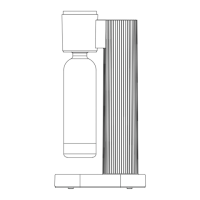

 To Next Page