
 Need help?
Do you have a question about the NOHMI FDGJ103-D-X/XHT and is the answer not in the manual?
Detector adjusts sensitivity automatically to maintain stable performance despite light reception changes.
Light output can be verified using indicator lamps without a voltmeter.
Product's assembled unit design allows for flexible installation based on site conditions.
Emphasizes reading the manual and understanding caution markings for safe operation.
Lists locations unsuitable for installation to prevent malfunction, such as direct rain or extreme temperatures.
Specifies installation height requirements and when to use a protective cover.
Stresses secure scaffolding and ensuring no one is under the installation area.
Warns against touching sensitive parts, the heater, and unauthorized modifications.
Lists essential tools like screwdrivers and specialized items for installation.
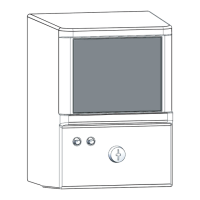
Identifies external components like indicator lamps, lens, transmitter, and receiver.
Illustrates the internal and external components from side and bottom perspectives.
Outlines the sequence for installing and adjusting the light receiver unit.
Outlines the sequence for installing and adjusting the light transmitter unit.
Details wiring procedures and maximum line resistance for panel connectivity.
Step-by-step guide for physically mounting the detector and securing its cover.
Instructions for connecting wires and setting monitoring range and light emission cycle.
Describes the process of connecting the heater to its power supply using insulated connectors.
Guides coarse adjustment of the light axis by viewing through holes.
Details energizing the detector and changing between adjustment modes.
Explains how to switch the detector to adjustment mode using the MONITOR/ADJUST switch.
Steps for fine-tuning the light axis based on indicator lamp patterns for optimal output.
Specific instructions for performing fine adjustments in horizontal and vertical directions.
Procedure to return the detector to normal monitoring mode after adjustment.
Covers securing the detector cover and lists indicator lamp flickering patterns.
Details the sequence of indicator lamp flickers during fine adjustment.
Continues fine adjustment steps and offers supplementary advice on flickering.
Explains the meaning of various detector statuses and indicator lamp behaviors.
Addresses issues causing the trouble lamp to flicker and the required actions.
Details the causes of trouble signals and how to reset the detector.
Identifies problems from faulty connections or incorrect settings and their resolutions.
Emphasizes safety during maintenance and proper mode management.
Covers checking installation stability and cleaning procedures for the detector.
Advises on performing regular functional tests for alarms and operations.
Details model numbers, national approval, and type classifications.
Lists sensitivity ranges and rated voltage/current for detector operations.
Identifies compatible fire control panels and systems for integration.
Specifies maximum detectors per line and required line characteristics.
Explains indicator lamp operations and permissible ambient conditions.
Lists outside dimensions, materials used, and weight of the detector.
 General
| Brand | NOHMI |
|---|---|
| Model | FDGJ103-D-X/XHT |
| Category | Security Sensors |
| Language | English |

 To Next Page
