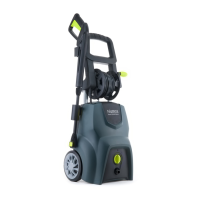
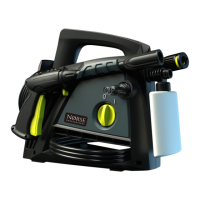
This document is an operation manual for the NØRSE PROFESSIONAL SK135 Electric Pressure Washer.
Function Description:
The NØRSE PROFESSIONAL SK135 is an electric pressure washer designed for various cleaning tasks. It utilizes high-pressure water to effectively remove dirt and grime from surfaces. The device can be used with or without detergent, offering flexibility for different cleaning needs. It is equipped with a motor that drives the pump to generate the necessary water pressure. The pressure washer is designed for ease of use, with features like quick connectors and a hose reel for convenient setup and storage.
Important Technical Specifications:
- Working Pressure: 13.5 MPa / 135 BAR / 2000 PSI
- Allowable Pressure: 20.5 MPa / 205 BAR / 3000 PSI
- Maximum Flow Rate: 500 Litres / hour
- Motor Capacity: 2400 Watt
- Power Supply Voltage: 240V ~ 50HZ
- Intake Water Pressure: Min 0.1MPa / Max 1MPa
- Max Input Temperature: 50 °C
- Dimensions: 380 x 355 x 735mm
- Weight: 16.7 Kg
- Insulation: Double-insulated machine, meaning it does not require grounding.
- Electrical Safety: The electrical supply connection must be made by a qualified person and comply with IEC 60364-1. It should include a residual-current device / circuit breaker that will interrupt the supply if the current to earth exceeds 30 mA for 30 ms.
Usage Features:
- Quick Start Guide: The manual provides a quick start guide for immediate setup, including attaching the handle, hose reel crank, high-pressure hose, extension lance, and variable nozzle.
- Water Supply: The appliance requires a properly connected water supply hose. It is crucial to ensure the water supply is on the same level as the washer to avoid initial suction issues. The device is not meant to pump hot water.
- On/Off Switch: The machine is operated using an on/off switch (6).
- Spray Gun and Nozzles: The spray gun (17) features a trigger (17d) and a trigger lock (17b, 17c) for safety. It comes with various nozzles for different applications:
- Variable Nozzle (19): Allows adjustment of the spray pattern for general cleaning.
- Detergent Nozzle (19): Creates the correct pressure for drawing and mixing detergent, applying an even mix.
- 90° Turbo Nozzle (27): Angles a powerful rotating jet for hard-to-reach areas.
- 20° Fixed Nozzle (28): Used for general cleaning purposes with a focused and powerful spray.
- Detergent Application: The pressure washer has a detergent tank (7c) with a regulator (7a) for adjusting detergent flow. Users are advised to use mild, environmentally friendly detergents and avoid aggressive chemicals to prevent damage and health risks. The manual outlines a detailed procedure for detergent application, including surface preparation, initial high-pressure rinse, and detergent application techniques.
- Drawing from a Barrel: The manual includes instructions for drawing water from a barrel, requiring a supplied hose and filter set.
- Cleaning Angle: The optimum angle for spraying water against a surface is 45 degrees to avoid damaging surfaces.
- Safety Precautions:
- Always read the manual carefully before use.
- Ensure all safety devices are operating properly.
- Stay alert and hold the gun firmly during operation.
- Do not operate when fatigued or under the influence of alcohol/drugs.
- Keep the operation area clear of electrical equipment, persons, animals, and pets.
- Do not point the gun at anyone.
- Avoid overreaching or standing on unstable supports.
- Protect eyes, skin, and respiratory system from detergent.
- Disconnect power and water supply in case of an accident.
- Wear safety goggles, ear protection, and protective clothing.
- Never put hands or fingers over the spray tip.
- Never try to stop or deflect leaks.
- Do not use an inlet pressure exceeding the operating pressure of any parts.
- Never spray flammable liquids or use in areas containing combustible dust, liquids, or vapours.
- Do not spray electrical apparatus and wiring.
- Use only original spare parts.
- Maintain inlet water between 0.01MPa and 0.4MPa.
- Replace damaged mains cables by the manufacturer or qualified personnel.
- Use only extension cords intended for outdoor use and matching the machine's electrical rating.
- Keep the hose away from sharp objects and replace damaged hoses.
- Do not disconnect the high-pressure outlet hose while the system is pressurized.
- Never operate the machine without all components connected.
- Check equipment regularly and repair/replace worn or damaged parts.
- Keep all connections dry and off the ground; do not touch the plug with wet hands.
- Do not use the machine if the supply cord or any important parts are damaged.
Maintenance Features:
- Cleaning Needle (12) and Lubricant Tube (13): Supplied with the product for maintenance. The lubricant tube should be filled with silicone grease.
- Nozzle Cleaning: Instructions are provided for removing dirt deposits from the nozzle hole using the cleaning needle.
- Quick Connector Filter (4): The quick connector filter from the water inlet (5) should be removed and rinsed with clean water using a damp tool for disassembly.
- Regular Cleaning: The machine should be cleaned every three months, and the filter and nozzle should be inspected prior to every use to ensure no debris impairs use.
- Post-Operation/Storage:
- Do not store the pressure washer outdoors in freezing conditions to prevent damage from expanding water.
- Always turn off the motor before turning off the water supply.
- To de-pressurize the machine, turn off the motor and water supply, then squeeze the gun trigger 2-3 times.
- Wipe all surfaces of the pressure washer with a clean, damp cloth after each use.
- Detergent System Flush: Ensure all detergent is flushed from the system before shutting down.
- Motor and Water Supply Shut-off: Turn off the motor and water supply after use.
- De-pressurizing: Trigger the gun to de-pressurize the system.
The manual also includes a troubleshooting section with common issues, possible causes, and corrective actions, as well as disposal regulations and CE certification information.

 Need help?
 General

 To Next Page